Howdy, Stranger!

It looks like you're new here. If you want to get involved, click one of these buttons!

Here's a statement of the obvious: The opinions expressed here are those of the participants, not those of the Mutual Fund Observer. We cannot vouch for the accuracy or appropriateness of any of it, though we do encourage civility and good humor.
  • Guidstone Defensive Market Fund - (GDMZX)
    I have a hard time buying into a 'defensive' fund that hasn't really encountered a 'hostile' market for it to prove its name. I also think it's kind of expensive and (speaking for myself) I don't like its financial exposure. So I'd take a pass on this personally, but each to their own.
  • M*: The Curse Of Benchmarks, Part II
    FYI: Does benchmarking fund managers harm the financial markets?
    Regards,
    Ted
    http://news.morningstar.com/articlenet/article.aspx?id=746826
  • Need your thoughts on Large Cap Growth Fund
    Does anyone own Jensen Quality Growth fund, JENSX?
    Fund Mojo describe this A+ fund (Mojo ranking system) this way:
    "Jensen Quality Growth J Fund seeks long-term capital appreciation. Jensen Quality Growth J Fund primarily invests in equity securities of approximately 20 to 30 companies. Generally, each company in which the Fund invests must have consistently achieved strong earnings and have a trend of increasing free cash flow over the prior ten years; be in excellent financial condition and be capable of sustaining outstanding business performance. The Fund may invest in securities when they are priced below their intrinsic values as determined by the adviser."
    Others receiving notable scores from Mojo:
    PARWX - A+
    FUNYX (I like the ticker) - Master
    SBLYX - Master
    fundmojo.com/mutualfund/bestmanager.php?category=Large+Growth
  • When Do Markets Close For Good Friday?
    FYI: Easter comes early this year, and U.S. financial markets will be closed on Good Friday, which falls on March 25, while U.K. and some continental markets will be closed for Easter Monday as well.
    Regards,
    Ted
    http://www.marketwatch.com/story/when-do-markets-close-for-good-friday-2016-03-22/print
  • Janus' Gross Says Valeant Based On Leverage, Financial Engineering
    FYI: The business model of Valeant Pharmaceuticals International Inc (VRX.TO), target of a securities investigation and under scrutiny for its pricing and accounting practices, "was based on leverage and financial engineering," fund manager Bill Gross of Janus Capital Group Inc (JNS.N) said Tuesday.
    Regards,
    Ted
    http://www.reuters.com/article/us-funds-janus-tweet-idUSKCN0WO2L4
  • The Berwyn Funds reorganizing to be part of Chartwell Investment Partners
    If the reorg is approved, and if you invest directly with Chartwell instead of thru a financial intermediary, there are a few notable nuts-and-bolts that will change [these are items that popped out as I did the quick read-thru; probably not comprehensive]:
    1. investing in a Berwyn fund will shift to the current Chartwell funds arrangement ($1000 initial min/ $100 subsequent min)
    2. if you set up the option, you will now be able to invest by giving telephone instruction, in addition to the snail mail route; however, min. phone investment is $1000, not $100 (I have no explanation for this difference)
    3. the new administrator and transfer agent will be UMB Fund Services.
  • The Greatest Investors
    FYI: Becoming a successful investor takes education, patience and maybe even a little luck.
    Historically, the market has returned a solid 12% per year on average. The icons we'll present here represent the pinnacle of the financial world. Each one has dramatically exceeded market performance. They have all made a fortune off their success and in many cases, they've helped millions of others achieve similar returns.
    These investors differ widely in the strategies and philosophies they applied to their trading; some came up with new and innovative ways to analyze their investments, while others picked securites almost entirely by instinct. Where these investors don't differ is in their ability to consistently beat the market.
    Regards,
    Ted
    http://www.investopedia.com/university/greatest/
  • Safe Withdrawal Rate
    Debt is a drag on one's available resources.
    If a newly minted retiree has had the discipline to pay off debt prior to retirement more power to them, but using your retirement nest egg to eliminate debt at the start of retirement seems counter intuitive to why these dollars where saved in the first place. If eliminating debt is a priority, keep working, stop saving for retirement and eliminate debt with working income, not your retirement nest egg.
    A very wise retiree once told me that prior to retirement try to live on your retirement income...save the extra or use it to pay down debt. One quickly realizes if they are ready to consider living on retirement income. If not, no harm...no foul...keep working.
    Also, I'm a big advocate of maintaining a monthly financial spreadsheet. Track everything and you will soon develop a picture that can be very helpful in decision making.
  • WealthTrack Encore Preview: Guest: John Dorfman, Chairman Of Dorfman Value Investments
    FYI:
    Regards,
    Ted
    March 17, 2016
    Dear WEALTHTRACK Subscriber,
    “Caution is appropriate.” So said Federal Reserve Chairwoman Janet Yellen in a press conference Wednesday after the Fed decided to halve the number of rate hikes planned this year, from four to two. With the Fed Funds’ target remaining between 0.25% and 0.50% another two increases would leave the benchmark rate below 1% by year-end.
    There were other significant developments this week. Donald Trump won four of the five Super Tuesday Republican primary races, including Senator Marco Rubio’s home state of Florida, causing Rubio to drop out. Despite a loss in Ohio’s primary to its Governor John Kasich, Trump has a comfortable delegate lead over his major challenger, Senator Ted Cruz. On the Democratic side, Hillary Clinton pulled well ahead of Senator Bernie Sanders.
    Also this week, U.S. crude-oil futures closed above $40 a barrel, the highest since December of last year and the Dow Industrials turned positive for the year in Thursday’s trading, after being down more than 10% in early February.
    New this week on our website, we’ll have a link to a report on how much workplace diversity affects the bottom line. It will be available to PREMIUM members tonight and to everyone else over the weekend. According to research published by McKinsey & Company, companies in the top quartile of racial and ethnic diversity are 35 percent more likely to have financial returns above their respective national industry medians. And companies in the top quartile for gender diversity are 15 percent more likely. Food for thought for management and investors!
    I have always been a big believer in meritocracy. I like to think that in America, people of equal skills, talent and education will be judged on their merits, not by who they are or where they come from, which is why I couldn’t figure out why more women were not advancing in the financial services industry. Women are certainly well represented on air, online and in print in financial journalism. But why are there still so few women in executive and management roles on Wall Street?
    Last week I got some surprising answers while emceeing a fascinating and enlightening conference on increasing gender diversity in the financial services industry. “Beyond Talk: Taking Action to Achieve Gender Balance in the Financial World” was co-sponsored by The California State Teachers’ Retirement System, known as CalSTRS and State Street Global Advisors.
    Leaders at both organizations have gone “beyond talk” and initiated practices to recruit, promote and mentor women in the industry. They are putting substantial resources into the effort.
    SSGA just launched the SSGA Gender Diversity Index ETF, symbol SHE, comprised of more than 140 U.S. companies which have greater numbers of women in leadership positions than other companies in their sectors. CalSTRS invested $250 million in SHE at its launch.
    On the television show this week, are you better off with a robot? That is the topic we are revisiting during this final weekend of winter fund-raising on public television. We are interviewing an under the radar value investor who created a robot portfolio to test the theory that statistically cheap stocks will outperform the market over time – and lo and behold they have.
    As a long-time financial journalist I have seen investment theories and strategies come and go. Wall Street firms have devoted billions in their quest to find proprietary magic formulas for outperformance.
    Michael Lewis’ best-selling book, now a movie, “The Big Short” did a masterful job of describing various mathematical and computer science algorithms that contributed to the financial crisis. They were so complex and arcane that even their creators and certainly their customers had little idea of what was in them and how they would really work in the real world.
    This week’s guest has a much simpler approach, which much to his surprise when he first tried it 17 years ago does work, but it comes with a large caveat: it is not appropriate in the vast majority of portfolios. He only applies some of it himself.
    He is John Dorfman, Chairman of Dorfman Value Investments, an investment management firm he founded in 1999 that manages money in separate accounts for high net worth individuals, family offices and a few institutions.
    He is a deep value investor who runs concentrated stock portfolios that have outperformed the S&P 500 by a wide margin over the years. Dorfman is also a journalist. I knew him at The Wall Street Journal and even though he switched to money management full time in 1997 he still writes financial columns.
    One of his most popular, which has been his first column of the year for the last 17 years, is devoted to his 10 stock robot portfolio.
    Dorfman starts with all U.S. stocks with a market value of $500 million or more. Then he eliminates those with debt greater than equity. He then picks the ten stocks selling for the lowest price earnings multiples of the past year’s earnings.
    The result is the “Robot Portfolio” has had a compound average annual return, with dividends included, of nearly 16%, compared to just over 4% for the S&P 500.
    Given the spectacular performance of his robot portfolio why doesn’t Dorfman just use that method for all of his accounts? He will tell us.
    If WEALTHTRACK isn’t showing on your local station this week due to local station fund-raising campaigns, you can always watch it on our website. You will also find a link to Dorfman’s 2016’s Robot Portfolio there.
    Thank you for watching. Have a great weekend and make the week ahead a profitable and productive one.
    Best Regards,
    Consuelo
    John Dorfman Website:
    http://dorfmanvalue.com/
  • Safe Withdrawal Rate
    Many retirees choose to take the lump sum option with the thought in mind to pay off all debt because they say it is impossible to do with the annuity option. Therefore reduced principal right out of the gate. Many are not sophisticated investors, many retired before the great recession, many have withdrawal rates too high...approved by financial advisers who know they will not get the assets unless they approve the high withdrawal rate. So they are way down the wrong path within two weeks of retirement.
  • RPHYX--- CASH POSITION AS OF 2/29/16 PER MORNINSTAR = CUT & PASTE
    RiverPark Short Term High Yield Fund.
    "(a) high yield bonds are a sliver of the portfolio". Does this mean that the fund is in violation of Rule 35d-1, requiring 80% of a fund's portfolio (at time of purchase) to reflect its name?
    M* reports the average credit rating to be B. (Note that M* computes average rating based on overall portfolio credit risk behavior; it does not compute a dollar weighted average of the securities' ratings).
    The holdings breakdown by M* are almost all (90%) junk.
    So it seems the benchmarking problem arises primarily from the second attribute you describe:
    "(b) it has a short to ultra-short average maturity while the group tends to intermediate term."
    See SEC Rule 35d-1 FAQ, Question 7
    https://www.sec.gov/divisions/investment/guidance/rule35d-1faq.htm
    "Q: How does rule 35d-1 apply to a fund that uses the term "high-yield" in its name?
    "A: The term "high-yield" is generally understood in the financial and investment community to describe corporate bonds that are below investment grade, commonly defined as bonds receiving a Standard & Poor's rating below BBB or a Moody's rating below Baa. Therefore, a fund using the term "high-yield" in its name generally must have a policy to invest at least 80% of its assets in bonds that are below investment grade. [The exception being tax-exempt or muni funds.]"
    FYI - "short term" is more fuzzy for the purpose of this rule. See
    http://www.mondaq.com/unitedstates/x/10770/Antitrust+Competition/SEC+Adopts+Rule+Prohibiting+Misleading+Mutual+Fund+Names
  • Safe Withdrawal Rate
    Hi Guys,
    Whenever a MFO discussion on retirement planning and drawdown schedule is initiated, my contributions are predictable and fairly consistent. Sorry about that, but I’m a firm believer that Monte Carlo methods are especially appropriate tools to provide actionable guidance.
    I believe I posted on this subject recently, but I’ve forgotten the Discussion title. So I will repost my comments as follows:
    “Simple heuristics (rules-of-thumb) are fine when making common everyday decisions like buying a hamburger or not, but are totally inadequate when making complex, significant decisions like those about retirement.
    The retirement when, where, how much do I need, drawdown rate, portfolio size and placements seem hopelessly intertwined to permit a comfortable and confident decision. But a financial tool is readily accessible that significantly attenuates doubt, and it’s not rule-of-thumb based.
    I’ve proposed this approach many times on MFO, but I don’t hesitate to do so once again. That tool is Monte Carlo simulation analyses. I do not apologize for being a broken record in this instance.
    Many such tools are easily accessible for free on the Internet. Two such codes that I have previously recommended are the PortfolioVisualizer and the MoneyChimp codes. Here are direct Links to these Monte Carlo simulators:
    https://www.portfoliovisualizer.com/monte-carlo-simulation
    http://www.moneychimp.com/articles/volatility/montecarlo.htm
    Please give them a few tries. The inputs are self-explanatory, and the codes are fast. Many scenarios can be explored over a short commitment of time. Endless what-if scenarios can be examined with end portfolio average value and portfolio survival likelihoods as their primary outputs. Thousands of cases are randomly constructed for the projected market returns.
    The PortfolioVisualizer tool has more user options, but the MoneyChimp version also does yeomen work. Since these are Monte Carlo-based codes, each time a simulation is made, expect slightly changed predictions. That somewhat captures the fragile nature of the uncertain future.
    Retirement decisions will be dramatically improved by application of these simulators. Imperfect analyses (even estimating the range of possible market returns is risky business) almost always beats poorly informed guesstimates. Before making a retirement decision, give the Monte Carlo codes a test ride. They are powerful stuff for everyone.
    And for normal circumstances and drawdown rates, a 2 million dollar portfolio is not necessary for a portfolio with some equity holdings. Do the analyses to challenge the robustness of that statement.”
    I hope my repost is helpful to some newer MFO members. Portfolio volatility degrades end wealth. That’s why when constructing a portfolio one goal is to minimize its standard deviation (volatility). Low component standard deviations and low component correlation coefficients work to accomplish that goal.
    A simple equation demonstrates the need to minimize portfolio standard deviation to achieve a higher cumulative return. Cumulative annual return is roughly equal to average annual return minus one-half times the square of the portfolio’s standard deviation. Note the minus sign. Standard deviation always operates to reduce average annual returns over the years.
    Good luck and good planning for your retirement, and for the likelihood of your portfolio’s survival.
    Best Wishes.
  • Lipper: Despite An Uptick In Equities; Fund Investors Remain Risk Adverse
    FYI: Generally ignoring mixed economic news, equity investors continued to follow the lead of oil prices throughout the fund-flows week ended March 2, 2016.
    Regards,
    Ted
    http://lipperalpha.financial.thomsonreuters.com/2016/03/55317/
  • Did You See Why The S&P 500 Is Outperforming Dividend Mutual Funds?
    FYI: Dividend mutual funds as a group lagged the S&P 500 stock index over the 10 years that ended going into Monday.
    The reasons for the underperformance are worth keeping in mind whenever you make buy or sell decisions in your portfolio, particularly the diversified portion — your mutual funds and ETFs. They could boost the octane in your funds’ fuel tank.
    Dividend funds lagged despite having outperformed as a group over the first half of the decade. But as the post-financial-crisis bull market picked up steam, the S&P 500 began to top dividend funds in total return.
    Regards,
    Ted
    http://www.investors.com/etfs-and-funds/mutual-funds/did-you-see-why-the-sp-500-is-outperforming-dividend-mutual-funds/
  • High Yield Corporate Mutual Funds
    @Junkster.Only presented the S A link as a primer for high yield options and comparisons.
    Here is another chart from the S A article that clearly shows your call of a bottom on February 11th.Even the much maligned FPACX is up 7.69% since then !
    image
    also @Junkster Risk-off to continue ? More for your perusal.
    MLPs had another ripping week as higher oil prices and E&P equity issuance attracted new capital propelling the benchmark index higher +7.21%, and a -8.72% YTD loss. Crude rose 10.2% for the week as lower production numbers were reported by EIA (table below) which seemed to trump the higher crude storage reported, along with more cooperative comments from OPEC members and Russia. The reality of lower crude production has been good news for MLP's, despite what those lower volumes may mean for some midstream assets
    http://mlpdata.com/mlp_newsevents/article_details?article_id=282&mbTrackingId=1
    "If you are Exxon, you have to be looking around at all of the wreckage in the energy sector these days and feel like a kid in a candy store,” said Spencer Cutter, an analyst at Bloomberg Intelligence. The debt offer is a sign that Exxon may "start picking up great assets at fire-sale prices" and "take advantage of the downturn and start shopping," he said.
    http://www.bloomberg.com/news/articles/2016-02-29/exxon-said-to-plan-bond-offering-after-rating-downgrade-threat
    Oil jumps as traders close short positions, U.S. producers cut rig count
    http://news.yahoo.com/oil-rises-traders-close-short-positions-u-producers-015805943--finance.html
    http://www.tradingeconomics.com/commodities
    Asian shares hit two-month highs on Monday, extending sharp gains from last week, following upbeat U.S. jobs data and a rebound in oil and commodity prices.
    http://news.yahoo.com/asian-shares-hit-two-month-high-solid-u-004607584--business.html
    Add 3/07 Latest From Otter Creek L/S Fund -2.32% since Feb 11th
    On the Bearish Side .From OTCRX March 7th posting of Feb Fact Sheet
    Market Commentary
    We continue to be mindful of both credit growth and credit conditions. Financial conditions remain tighter than several months ago and access to the high yield
    market has become more challenging since last year. In addition, despite the rise in equity markets recently, the spread on the 2 year and 10 year treasuries is
    the lowest since 2008 which does not bode well for future credit growth. We believe these dynamics are worth monitoring closely.
    Equity market valuations remain relatively unattractive, in our view. We estimate the S&P 500 is trading at approximately 16x-17x earnings – modestly above its
    historical average – despite fairly tepid sales and earnings growth. Given the ongoing deterioration in global growth trends, we see more downside than upside
    to earnings near-term. We are closely monitoring the potential for consumer spending to accelerate on the back of an improved labor market, better wage
    growth and low gas prices. A potential acceleration in consumer spending coupled with a further stabilization in the dollar and commodities could help drive
    improved earnings growth later in the year.
    Our long portfolio is structured around owning high quality companies benefiting from secular tailwinds, idiosyncratic ideas that should perform well regardless of
    the market environment, and special situations. Our short portfolio is structured to take advantage of companies overearning due to ultra-low interest rates and
    companies with a high likelihood of missing sales forecasts due to a weaker macro environment.
    As we enter March, we have approximately 20% of the Fund in cash. Considering the rise in equity markets over the past several weeks and the collapse in
    volatility, we have taken the opportunity to add to our highest conviction ideas by adding both common stock shorts and out of the money puts
    http://www.ottercreekfunds.com/media/pdfs/OCL_Factsheet.pdf
  • In Fledgling Exchange-Traded Fund, Striking A Blow For Women
    The article also notes that this fund (ticker: SHE) is one of a series of investment products concerned with issues of gender equity: WIL (an exchange-traded note), EQLT (an ETF) and PXWEX (a repurposed index fund) among them. Many other SRI funds screen for issues of gender equity in selecting their investments. In general, adding a gender equity screen seems not to dramatically affect performance; that is, you receive neither financial reward nor financial punishment for acting on your convictions by investing in such products.
    As ever,
    David
  • Have some money for a purchase in the next 2-3 years ...
    Better to Inquire about investment ideas @ M F O than some of these advisors !
    There's a phrase no one wants to read in a sweeping report about the financial advisers who handle their savings: economy-wide misconduct.
    By Bloomberg News | March 1, 2016 - 4:28 pm EST
    A new working paper by business school professors at the University of Chicago and University of Minnesota found that 7% of financial advisers have been disciplined for misconduct that ranges from putting clients in unsuitable investments to trading on client accounts without permission. That's a troubling mark for an industry that relies on the trust of clients. And some large, well-regarded firms have misconduct records that far exceed the average.
    Many fired advisers end up moving to firms that have higher rates of misconduct than their previous employer did, and they become repeat offenders. "Prior offenders are five times as likely to engage in new misconduct as the average financial adviser," the study found.
    "This is eye-opening and suggests not only that some firms have a high tolerance for misconduct on the part of their employees, but that their very business model is to attract the broker who can generate high revenue at the cost of repetitive disciplinary violations," said John Coffee, a professor at Columbia Law School in New York. "FINRA needs to focus on this."
    Many cases of misconduct arose around the issue of the "suitability" of investments. That would mean, for instance, that an adviser should not suggest that a 75-year-old client put most assets in a high-fee, aggressive-growth mutual fund. Often, the report found, investments involved in reported misconduct cases were insurance products.
    The first-of-its-kind study names names, listing 10 advisory firms with the highest misconduct rates, as well as those with the lowest.
    image
    http://www.investmentnews.com/article/20160301/FREE/160309989?template=printart
    @Shostakovich
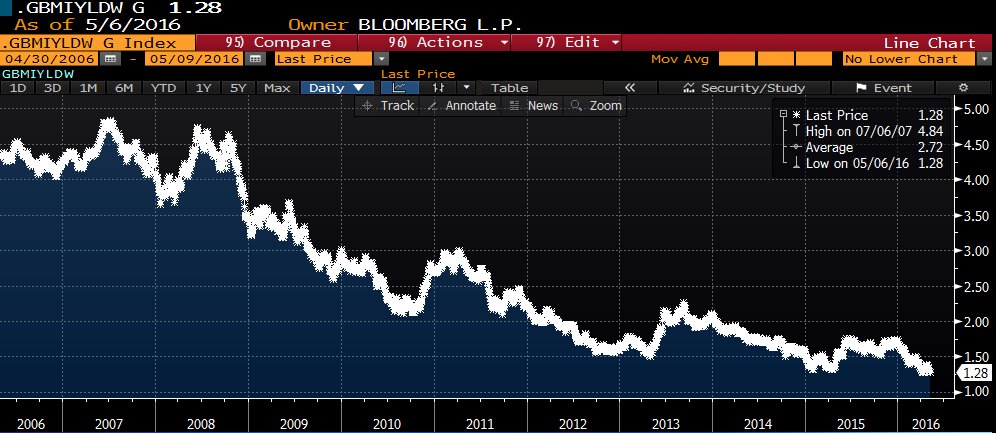
    I own this fund in the Global Bond space you mention.DHGAX
    Assets for the Fund
    $2,133,975,285
    Holdings
    206
    Dividend Frequency
    Quarterly
    Morningstar Category
    World Bond
    Lipper Category
    Global Income
    Average Maturity
    8.30 Years
    Duration
    6.83 Years
    30-Day Yield (as of
    1/31/16)
    Class A 1.27%
    Class I 1.62%
    TOP TEN SECURITIES1
    Australian Govt 3.25% 10/21/2018 10.04%
    Australian Government 3.25% 04/21/
    2025 4.43%
    Canadian Government, 2.25% 06/01/
    2025 3.79%
    Japan (30 Yr Issue) 1.7% 09/20/2044 3.47%
    Buoni Poliennali Del Tes 2.36142% 09/15/
    2024 2.66%
    France (Govt Of) 1% 11/25/2025 2.57%
    Canadian Government, 2.5% 06/01/2024 2.45%
    Canadian Government 1% 08/01/2016 2.11%
    U.S. Treasury Note 1.75% 12/31/2020 2.04%
    Buoni Poliennali Del Tes 1.05% 12/01/
    2019 2.03%
    https://public.dreyfus.com/documents/compliancedocs/factsheets/monthly/6940.pdf