
Howdy, Stranger!

It looks like you're new here. If you want to get involved, click one of these buttons!

Here's a statement of the obvious: The opinions expressed here are those of the participants, not those of the Mutual Fund Observer. We cannot vouch for the accuracy or appropriateness of any of it, though we do encourage civility and good humor.
  • IOFIX- Better late than never
    Now they tell me!!!!
    This summary prospectus change just came in my email. It is very specific for just a summary prospectus. More than I can ever recall. Seems more appropriate in a commentary or letter from the fund rather than a summary prospectus.
    March 23, 2020
    This information supplements certain disclosures contained in the Summary Prospectus of the
    AlphaCentric Income Opportunities Fund, dated August 1, 2019, and the Prospectus and
    Statement of Additional Information (“SAI”) for the Funds, each dated August 1, 2019, as
    supplemented January 24, 2020.
    ____________________________________________________________________
    AlphaCentric Income Opportunities Fund - Only
    The paragraph under the section of the AlphaCentric Income Opportunities Fund’s
    Summary Prospectus and Prospectus entitled “FUND SUMMARY - Principal Risks of
    Investing in the Fund – Liquidity Risk” is replaced in its entirety with the following:
    Liquidity Risk. Liquidity risk exists when particular investments of the Fund would be difficult
    to purchase or sell, possibly preventing the Fund from selling such illiquid securities at an
    advantageous time or price, or possibly requiring the Fund to dispose of other investments at
    unfavorable times or prices in order to satisfy its obligations. The global impact of the coronavirus
    on the economic and financial markets have caused severe market dislocations and liquidity
    constraints in fixed income markets including many of the securities the Fund holds. To satisfy
    shareholder redemptions, it is more likely the Fund will be required to dispose of portfolio
    investments at unfavorable prices compared to their intrinsic value.
    All Funds
    The section of the Funds’ Prospectus entitled “ADDITIONAL INFORMATION ABOUT
    THE FUNDS’ PRINCIPAL INVESTMENT STRATEGIES AND RELATED RISKS -
    Principal and Non-Principal Investment Risks – Market Risk” is replaced with the following:
    Market Risk. Overall market risks may also affect the value of the Fund. Factors such as domestic
    economic growth and market conditions, interest rate levels and political events affect the
    securities markets. Local, regional or global events such as war, acts of terrorism, the spread of
    infectious illnesses or other public health issues, recessions and depressions, or other events could
    have a significant impact on the Fund and its investments and could result in increased premiums
    or discounts to the Fund’s net asset value, and may impair market liquidity, thereby increasing
    liquidity risk. The Fund could lose money over short periods due to short-term market movements
    and over longer periods during more prolonged market downturns. During a general market
    downturn, multiple asset classes may be negatively affected. Changes in market conditions and
    interest rates can have the same impact on all types of securities and instruments. In times of severe
    market disruptions you could lose your entire investment.
    An outbreak of infectious respiratory illness caused by a novel coronavirus known as COVID-19
    was first detected in China in December 2019 and has now been detected globally. This
    coronavirus has resulted in travel restrictions, closed international borders, enhanced health
    screenings at ports of entry and elsewhere, disruption of and delays in healthcare service
    preparation and delivery, prolonged quarantines, cancellations, supply chain disruptions, and
    lower consumer demand, as well as general concern and uncertainty. The impact of COVID-19,
    and other infectious illness outbreaks that may arise in the future, could adversely affect the
    economies of many nations or the entire global economy, individual issuers and capital markets in
    ways that cannot necessarily be foreseen. In addition, the impact of infectious illnesses in emerging
    market countries may be greater due to generally less established healthcare systems. Public health
    crises caused by the COVID-19 outbreak may exacerbate other pre-existing political, social and
    economic risks in certain countries or globally. The duration of the COVID-19 outbreak and its
    effects cannot be determined with certainty.
  • Muni bond fund question
    The most recent distribution yield on VMSXX was 2.19%. The current NAV is 1.0002. If it didn't break the buck in the last meltdown it's probably not going to anytime soon. I have my max allocation to this fund at the present time. If I see NAV start to drift below a buck I will shift into the treasury MM. At last read VUSXX's distribution yield was 1.20%. That's quite a difference for the time being.
  • The Normal Economy Is Never Coming Back
    @davor, I have averaged in as well. I brought my equity allocation up to 43%/44% range and it is currently at 48% through growth from the recent stock market rebound. When it hits 49% I'll trim back to 47% by eliminating an equity position from my equity income sleeve most likely LCEAX. Currently, I'm positioning money on the income side of my portfolio. Perhaps, by the end of this quarter I plan to bubble at 10% cash, 45% income and 45% equity and ride from there into the 4th quarter. Once, I reach the 10/45/45 target asset allocation all income that the portfolio generates will go into the cash area of the portfolio. Currently, all income goes towards building the income area. In time, I plan to move back to my 20/40/40 allocation, in steps of course. But, right now, for me, Surf is Up so ride the wave that the FOMC & Treasury are currently making. But, don't throw caution to the wind either. What i'm doing is throttling my asset allocation to take advantage of current market conditions. I'm thinking most of the leverage money is now gone (or greatly reduced). I've been watching the money flow on SPY and it continues to be in an up trend. On March 6th my money feed in the barometer read 23. Today it reads 75. Can it cut the other way ... Absolutely.
  • The Normal Economy Is Never Coming Back
    @davfor, I entered to work force back in the early 70's ... unemployment around 10%. 1974 was a bad year in the stock market. As it began to turn upward so did the economy. In the mid 80's inflation was running 10+% ... employment was around 10+% as well ... as the stock market began to turn upward so did the economy. In the 90's same thing repeated. In the 2000's same thing repeated with the Great Recession. And, now here we are today ... the same thing is repeating. And, guess what I have been an investor in the stock and bond markets through all of these. And, with this, I bought stocks while their asset values were down. Then trimmed my asset allocation as the recovery took place. As investors we are blessed because I've NEVER seen the FOMC & Treasury step forward and be as aggressive as they have been in injecting money into the system through various avenues. Why, to inflate asset values. In this way folks think they have more than they really have and they spend. These troubling times will pass.
  • Wealthtrack - Weekly Investment Show - with Consuelo Mack
    Here are a few recent episodes:
    March 27th:

    April 3rd:

    April 10th:

  • The Normal Economy Is Never Coming Back
    The phrase "radical uncertainty" towards the end of this article struck a cord with me. The global economy has been severely shaken over the past couple of months and the storm is still raging. The probable duration of the negative shock is hard to gauge given the ongoing uncertainties surrounding Covid-19's impact on the ability of the global economy to bounce back during the remainder of the year. The longer that rebound is delayed, the more likely it becomes that the new normal that emerges will look substantially different than the old normal...and the longer the rebuilding process will take to complete once it has begun.
  • "Trailing Stop Order" on your portfolio or part of it
    I was thinking of how some investors, especially retirees, can protect themselves from massive sell-offs like we just had. This idea came to my head. What about using a "Trailing Stop Order" on a portfolio? (maybe this hibernation gives me to much time to think :) )
    These are typically used when you are buying or selling stocks. It sets discipline on when to sell. There is one set of diversified portfolio ETFs that you could do this with, the BlackRock iShares allocation funds, AOM, AOR, AOA. These are actually pretty good diversified "balance" funds, conservative, moderate and aggressive. The one closest to 60:40 allocation is AOR. This fund compares well to Vanguards balanced index fund VBINX. I think @davidrmoran brought these ETFs to my attention a few years ago. I have not been able to find other balanced ETFs that are diversified like these.
    The idea would be to hold one of these ETFs as your core portfolio holding, maybe the bulk of the portfolio or whatever % you deem appropriate. If you want to limit your loss to say 10% of the funds high you set up the trailing stop order to sell at -10%. You protect the bulk of your retirement savings. Especially important if you are already retired and massive 20%+ really hurts maybe more so than for people still in the accumulative stage.
    Any opinions + or - on this idea? I am contemplating this idea in my retirement savings so that I am not a deer in the head lights.
  • The Normal Economy Is Never Coming Back
    This article paints a dark picture. It discusses what the author sees as being a very fragile global economy and a very uncertain path moving forward. Some of the concerns it expresses may help explain the Feds aggressive recent actions. Here are a few excerpts...
    The latest U.S. data proves the world is in its steepest freefall ever—and the old economic and political playbooks don’t apply....There has never been a crash landing like this before. There is something new under the sun. And it is horrifying.
    Thursday’s news confirms that the Western economies face a far deeper and more savage economic shock than they have ever previously experienced. The coronavirus lockdown directly affects services—retail, real estate, education, entertainment, restaurants—where 80 percent of Americans work today. Thus the result is immediate and catastrophic.
    ...this year, for the first time since reasonably reliable records of GDP began to be computed after World War II, the emerging market economies will contract. An entire model of global economic development has been brought skidding to a halt.
    ...we are witnessing the largest combined fiscal effort launched since World War II. Its effects will make themselves felt in weeks and months to come. It is already clear that the first round may not be enough.
    We are engaged in the largest-ever surge in public debt in peacetime....Some have suggested it would be simpler for the central banks to cut out the business of buying debt issued by the government and instead simply to credit governments with a gigantic cash balance....And on 9 April that is exactly what the Bank of England announced it would be doing. For all intents and purposes, this means the central bank is simply printing money.
    We now know what truly radical uncertainty looks like. A huge part of the world’s population has had the basic functioning of its life radically disrupted. None of us can confidently predict when we will be able to return to our pre-coronavirus lives.
    https://foreignpolicy.com/2020/04/09/unemployment-coronavirus-pandemic-normal-economy-is-never-coming-back/
    Here is an article that explains the Bank of England's recent actions:
    https://theguardian.com/business/2020/apr/09/bank-of-england-to-finance-uk-government-covid-19-crisis-spending
  • Dodge and Cox
    @FD1000
    The price is always right
    I don't think the price was always right when the market bid up Pets.com, Adelphia Communications, Enron, Worldcom, Washington Mutual, Lehman Brothers, tulip bulbs, etc. throughout history in past manias. But there are those who believe what you are saying. They're called efficient market theorists and would recommend only buying a total market index fund. I don't really understand, though, if you believe that, why you're posting on this board, which is devoted primarily to actively managed funds with managers who don't believe the price is always right. Those two philosophies--the price is always right or the price is often wrong and there are ways to get an edge on the market through active management--are incompatible. So if you don't mind my asking, why are you here?
    The price over time is right as reflected in the SP500.
    Sure, there is a way for managed funds but over LT the SP500 performance is better than most managed funds.
    BTW, I have posted for years now that QQQ has been a better performer because the big high tech companies are winning so big.
    The SP500 is also a global index and gets about 40% of its revenues from abroad. QQQ is even more global with about 50% of its revenue from abroad.
  • Dodge and Cox

    FXAIX didn't perform better because it didn't have a lower ER all these years. The main difference between me and others is that I supply numbers and not just narrative;-)

    It would be very time consuming to find ER for previous years but from memory, Fidelity lowered ER for their index funds years ago to compete with VG.
    From M*, for 5 years average annual as of (04/08/2020) [...]
    It's a surprise that VOO with lower ER had lower performance than VFIAX
    VOO is a bit of a distraction, because it introduces an additional layer of differentiation (ETF share class vs. OEF share class) and because its ER was lower by just 1 basis point for one year. Amortized over five years that amounts to nothing more than a rounding error. Still, it's good to see an acknowledgement that an S&P 500 index fund with a lower stated ER can have lower returns.
    That's important because it puts lie to the statement that "FXAIX didn't perform better because it didn't have a lower ER". Certainly ERs affect relative returns, but they're not dispositive, especially when the magnitude of a difference between funds is small.
    "It would be very time consuming to find ER for previous years." So sometimes you don't "supply numbers". That's okay. But you presented a numeric claim, viz. that FXAIX had a higher ER all these years, without checking the numbers. That calls into question numbers posted without citations and links.
    VFINX ER from current prospectus and from 1998 prospectus
    2019: 0.14%
    2018: 0.14%
    2017: 0.14%
    2016: 0.14%
    2015: 0.16%
    2014: 0.17%
    1999-2013: between 0.17% and 0.19% (interpolation)
    1998: 0.19%
    1997: 0.19%
    1996: 0.20%
    1995: 0.20%
    1994: 0.19%
    1993: 0.19%
    1992: 0.19%
    1991: 0.20%
    1990: 0.22%
    1989: 0.21%
    1998: 0.22%
    FXAIX (and predecessor fund) ERs from:
    current prospectus [On July 1, 2016, FMR reduced the management fee ... from 0.025% to 0.015%],
    2011 prospectus [On February 1, 2011, FMR reduced the management fee ... from 0.07% to 0.025% ],
    2005 prospectus [Fund shares purchased prior to October 1, 2005 and not subsequently converted to Fidelity Advantage Class are deemed Investor Class shares]
    2004 prospectus [Effective April 18, 1997, FMR has voluntarily agreed to reimburse the fund to the extent that total operating expenses ... exceed 0.19%.]
    1997 prospectus (showing actual expenses for 1988-1996)
    2019:       0.015%
    2018:       0.015% (per 2019 note)
    2017:       0.015% (per 2019 note)
    2016:       0.020% (per 2019 note and averaging over half year)
    2015:       0.025% (per 2011 note)
    2014:       0.025% (per 2011 note)
    2013:       0.025% (per 2011 note)
    2012:       0.025% (per 2011 note)
    2011:       0.025%
    2006-2010: 0.070% (per 2011 note and 2005 prospectus showing YE 0.07% ER)
    2005:       0.090% (per 2005 note, weighted avg of share class ERs)
    1998-2004: 0.190% (per 2004 note)
    1997:       0.190%
    1996:       0.280%
    1995:       0.280%
    1994:       0.280%
    1993:       0.280%
    1992:       0.280%
    1991:       0.280%
    1990:       0.280%
    1989:       0.280%
    1988:       0.280%
  • Old_Skeet's Market Barometer ... Spring & Summer Reporting ... and, My Positioning
    As of market close April 9th, according to the metrics of Old_Skeet's stock market barometer, the S&P 500 Index is now at fair value with a reading of 153. This is in the midpoint range of the barometer's scale. This past week, the short volume average increased, a good bit, from 55% to 68% of the total volume for SPY. It seems, the shorts are betting against this rally. The VIX (which is a measure of volatility) fell and went from a reading of 45 to 41. This is good. During the shortened week the stock Index's valuation gained ground moving from a reading of 2489 to 2790 for a gain of 12.1%; but has a decline of 17.6% off it's 52 week high. However, it up 21% off its 52 week closing low of 2305. I'm thinking that we have seen most of the nearterm gains stocks have to offer and we move mostly sideways (with some upside) but within a trading range form here through summer. Let's hope these gains stick and the shorts get squeezed. The three best performing sectors this week were real estate, materials, and, financials.
    From a yield perspective, I'm finding that the US10YrT is now listed at 0.73% while at the beginning of the year it was listed at 1.92%. With the recent stock market swoon the S&P 500 Index is currently listed with a dividend yield of 2.14% while at the beginning of the year it was listed at 1.82%. As you can see there is a yield advantage for the stock Index over the US Ten Year Treasury. With this yield advantage, for stocks, during the month of March I favored my domestic equity income funds over my fixed income funds for new money; and, I expaned this sleeve from four to six funds. My domestic equity income sleeve gained +8.7% for the week while my global equity income sleeve gained 7.4%.
    Since, I now have more than a full allocation to equities, at 48%, I've now started to buy on the income side of my portfolio. Since, cash will likely pay very little, in the form of yield, I have changed my asset allocation. My new asset allocation is 10% cash, 45% income and 45% equity. This is to take advange of the nearterm rebound that bonds are expected to receive now that the Fed's have begun to buy bonds and just within the past few days they started to purchase in the high yield sector. My fixed income sleeve gained +2.8% for the week while my hybrid income sleeve gained +6.3%. Plus, bonds will pay more in the form of yield over my money market funds which gained +0.01% for the week. This equates to about a one half of one percent yield which is hardley enough to cover purchase loss due to inflation.
    My three best performing funds for the week were PMDAX +14.9% ... FRINX +12.8% ... and, LPEFX +11.7%.
    Thanks for stopping by and reading.
    Take care ... be safe ... and, I wish all ... "Good Investing."
    Old_Skeet
    Please note: The next barometer report will be made at the end of the month unless there is a barometer reading change from fair value.
  • Dodge and Cox
    Why tech will continue to lead for decades to come. I worked in IT over 35 years in different sectors from retail, to banking, finance, mutual funds to healthcare. There is no way to stop this trend and it's getting faster. How long it took Walmart to be dominated? compare it to Amazon. BTW, Amazon is a tech company and I can argue that WM is one of the best retail companies because of its great IT for many years.
    Value investing was easier years ago when a good manager can find undervalued companies under the radar but in a digital, global, free data world it's a lot harder. High tech squeezes every corner in every business. To acquire the next customer for high tech companies is very cheap, sometimes pennies because the infrastructure exists already and digital is very cheap compared to actual stores and humans.
    Some sectors are harder to break such as banking and finance but even they have been going down by joining the big tech. How long can you deceive clients by promising them better performance when a computer is cheaper and better. You can transfer now money to any person in seconds for free, just several years ago you had to pay a commission and took several days.
    There are always new upcoming tech companies and when they do something well they explode very quickly because 1-5% lower price for the same (sometimes better) service means a lot. You can see it on Amazon if one company offers the same product for $1 cheaper and if the service is good it will take a huge % of the market. A reasonable customer will always pay less.
    Real estate is another slow sector that will be more computerized.
    The only sector that holds steady is healthcare, it gets more expensive with no end in sight IMO. There is no way to solve the HC issue in the USA. We can start a new thread on this.
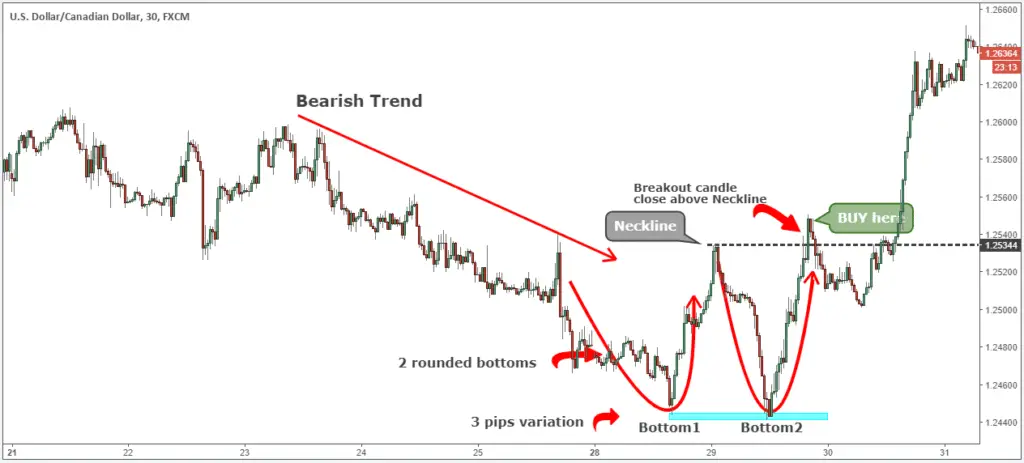
  • Investor who predicted the start of the 2009 bull market: Beware of a double bottom
    Am I the only one who finds this headline funny with an amusing double entendre? I guess the fall right after the first recovery in the double bottom is where one suffers incontinence.
    image
  • Investor who predicted the start of the 2009 bull market: Beware of a double bottom
    Thanks for the post davfor. John is probably right that no one knows - after all, who sold in January when Wuhan was going into lockdown? That being said, you look for confirming opinions and he confirms mine. here’s his investment advice from the article (which I won’t be following):
    Keep some reserves
    That said, Mobius did concede the fact that the drawdown has brought on what he sees as attractive opportunities in some emerging markets like China, India and Brazil. For an investor looking to diversify, the noted emerging markets guru recommended a defensive strategy of allocating at least 10% of a portfolio to gold and 30% to 40% in emerging markets while saving a large cash cushion should the market take another leg lower.
    “The reason why I think it's a good idea to keep reserves in cash [is] because I don’t think it’s over,” he said. “If you've got millions of unemployment claims, that means a lot of people will not be returning to the same jobs that they were at before.”
  • Dodge and Cox
    Interestingly, the SPDR Tech ETF, XLK, leaves out Amazon because I imagine Standard & Poor's categorizes it, foolishly in my view, as a retail or consumer stock, yet the SPDR tech sector ETF still crushes the S&P 500 without it. One can imagine how much more the tech ETF would've crushed the S&P 500 if Amazon was also included. VOOG does have a big chunk of Amazon with a 5.8% weighting. My thoughts on Amazon as a $1 trillion company is, A, how much bigger can it get, i.e., when does the law of large numbers kick in, and, B, what happens to its supply chains due to covid as well as the trade war and C, is there some young upstart company that could threaten its business in some way? Retail probably not, but cloud computing--that seems a more competitive space. Finally, is it possible regulators may eventually attack it for the monopoly it really is? It is a $1 trillion company with a trailing p-e ratio of 89 and a forward one of 69 when the long-term avaerage p-e for stocks is about 15. The response of analysts who've all become converts to the stock is that it will "grow into" that p-e ratio. Will it?
  • Fed rolls out $2.3 trillion to backstop "Main Street," local governments during crisis
    Here is a little more detail on the types of high yield bonds and about other financial products the Fed will now be buying:
    In a move that surprised some investors, the central bank will also expand its bond-buying program to include debt that was investment-grade rated as of March 22 but was later downgraded to no lower than BB-, or three levels into high yield. It’ll also buy exchange-traded funds, the preponderance of which will track investment-grade debt along with some that track speculative-grade debt. Together, the programs will support as much as $850 billion in credit.
    .....as well as fund the purchases of some types of......collateralized loan obligations and commercial mortgage-backed securities.
    https://washingtonpost.com/business/on-small-business/fed-to-buy-junk-bonds-and-lend-to-states-in-fresh-virus-support/2020/04/09/1baf9420-7a60-11ea-a311-adb1344719a9_story.html
  • Dodge and Cox
    @davidrmoran Not only what VOOG excludes but includes. Without doing too deep a dive, VOOG has a 32% weighting in tech stocks. VOO has a 21% weighting. Although I don't think VOOG breaks out sectors like the S&P 500, the tech sector isolated by itself from the S&P 500 has dramatically outperformed it since 2009: https://morningstar.com/etfs/arcx/xlk/performance
    I would imagine this tech effect would be even greater in VOOG because it probably only owns the growthiest tech names, not the loser ones like Hewlett Packard all those years, the one tech company value managers found attractive. VOOG, for instance, has almost double the weighting of Amazon of VOO. RPV's tech weighting is a mere 2.3% and its financials is 34%. As I said above, the real story here isn't really just a growth versus value one. It's a tech sector versus financial sector one. To the extent that tech stocks are overvalued as some like Netflix I would argue are, the value managers will win. To the extent the financial services sector gets disintermediated by the tech sector--talk for instance of Amazon managing money soon or other tech companies doing banking--than the growth sector will win. The past ten years have been about Amazon, Google, Microsoft, Facebook and Netflix ostensibly taking over the world. If you believe that trend continues, you go growth. If you don't, you go value or cash.
  • Dodge and Cox
    +1
    yeah, to slam together wannabe-wise cliches, the market can continue to vote, not getting to weighing, longer than you can stay afloat
    'student of transcience' is good, esp now
  • Fed rolls out $2.3 trillion to backstop "Main Street," local governments during crisis
    Here's a little more detail about the high yield investments. It sounds like they may not be directly picking individual winners and losers for now:
    the Fed indicated that it would begin to dip its toes into the high yield bond market with SMCCF purchases of exchange-traded funds (ETFs) that have exposure to high yield corporate bonds.
    https://fxstreet.com/analysis/the-fed-goes-nuclear-part-ii-202004091700
  • Dodge and Cox
    @FD1000
    The price is always right
    I don't think the price was always right when the market bid up Pets.com, Adelphia Communications, Enron, Worldcom, Washington Mutual, Lehman Brothers, tulip bulbs, etc. throughout history in past manias. But there are those who believe what you are saying. They're called efficient market theorists and would recommend only buying a total market index fund. I don't really understand, though, if you believe that, why you're posting on this board, which is devoted primarily to actively managed funds with managers who don't believe the price is always right. Those two philosophies--the price is always right or the price is often wrong and there are ways to get an edge on the market through active management--are incompatible. So if you don't mind my asking, why are you here?