Howdy, Stranger!

It looks like you're new here. If you want to get involved, click one of these buttons!

Here's a statement of the obvious: The opinions expressed here are those of the participants, not those of the Mutual Fund Observer. We cannot vouch for the accuracy or appropriateness of any of it, though we do encourage civility and good humor.
  • GMO: five new ETFs in the pipeline
    QLTY is 8% MSFT 3-4% UNH META AMZN APPL
    PE close to SP500 P/B higher than SP500; does not seem a value fund.
    I think this position paper is laying the groundwork for their Value ETFs
  • Preparing your Portfolio for Rate Cuts

    A one year CHART for the major home builders of PULTE, D.R. HORTON, LENNAR, TOLL BROS. AND NVR; in this order in the chart.
    One year CHART of 3 widely traded home builders ETF's.
    In opinion: these stocks and sometimes the ETF's receive a fair amount of action from hedge funds and other volume traders. It appears that 'options trading' is also available for the ETF's.
    Remain curious,
    Catch
  • Preparing your Portfolio for Rate Cuts
    RE in general has had a good year.
    VNQ
    VGSIX
    Even FRIFX has moved up 10%ish
    The sector's raw performance is good. A rising tide lifted all boats. Relatively speaking, not so impressive.
    YTD, S&P 500 RE is the third worst (out of 11) performing sectors. The worst sector (Consumer Discretionary) is up over 6% YTD. We won't mention Energy - second worst YTD, and worst by a long shot over the past year, barely in positive territory.
    https://digital.fidelity.com/prgw/digital/research/sector
  • Preparing your Portfolio for Rate Cuts
    I don't pay too much attention to sectors, so take the following as questions and observations from someone who knows just enough to be dangerous:
    Do homebuilders like Pulte (a name I do recognize from having lived in suburbs) take out short term loans to purchase building materials? The reason for the question is that interest rates for mortgages don't move in tandem with short term rates. In this industry each rate can have an impact.
    In looking at companies like BLDR, are you thinking about remodeling or new home construction, or both? I believe that the stock of existing homes has been held down by high mortgage rates - people are reluctant to walk away from low rates they locked in years ago. So many have chosen to make improvements rather than move. When (if) mortgage rates drop significantly, this may change and affect who is buying building materials.
    It could also affect the market for new homes, since they'll now be competing with more existing homes than before (acknowledging that there is still an overall housing shortage).
    The construction industry seems (from my 30,000 foot vantage point where I rarely look out the window) to be bad at dealing with market cycles. In good times, they build on spec. Though often by the time the construction is put on the market, demand has cooled.
    I'm guessing that you're referring to this article:
    https://www.barrons.com/articles/buy-dr-horton-stock-price-pick-72f0f4e1
    (Thank you Google and public libraries; I got free access both ways)
    It presents a nice, level headed picture of a well run company. As to the industry prospects, it's looking more than two years out. "Fed governors see short-term rates falling by about roughly two percentage points over the coming couple of years". However, over the next year+, both Fannie Mae and the Mortgage Bankers Association are seeing rates drop by just over 1/2%, from 6.46% (8/22/24 actual) to 5.9% (Q4 2025).
    https://finance.yahoo.com/personal-finance/when-will-mortgage-rates-go-down-164144910.html
    Certainly the prospects for the industry look better now than they have been for awhile (perhaps excepting building materials - lumber prices soared during the pandemic as people spent money on home improvements). How much better, and how much is already priced in, I have no idea.
  • MDP Low Volatility Fund will be liquidated
    https://www.sec.gov/Archives/edgar/data/1437249/000158064224004810/mdp_497.htm
    497 1 mdp_497.htm 497
    MDP LOW VOLATILITY FUND
    Class A Shares - MDPMX
    Class I Shares – MDPLX
    Supplement dated August 26, 2024 to Prospectus and Statement of Additional Information dated May 31, 2024
    The Board of Trustees of Valued Advisers Trust (the “Board”) authorized an orderly liquidation of the MDP Low Volatility Fund (the “Fund”), a series of Valued Advisers Trust. The Board determined on August 23, 2024 that closing and liquidating the Fund was in the best interests of the Fund and the Fund’s shareholders.
    The Fund’s investment adviser informed the Board of its view that it no longer is economically feasible to continue managing the Fund because of the Fund’s small size and the difficulty encountered in attracting assets.
    The Fund is no longer accepting purchase orders for its shares, and it will close effective as of September 24, 2024 (“Closing Date”). Shareholders may redeem Fund shares at any time prior to this Closing Date. Procedures for redeeming your account, including reinvested distributions, are contained in the section “How to Redeem Shares” in the Fund’s Prospectus. Any shareholders that have not redeemed their shares of the Fund prior to the Closing Date will have their shares automatically redeemed as of that date, with proceeds being sent to the address of record. If your Fund shares were purchased through a broker-dealer or other financial intermediary and are held in a brokerage or other investment account, redemption proceeds may be forwarded by the Fund directly to the broker-dealer or other financial intermediary for deposit into your brokerage or other investment account.
    The Fund is no longer pursuing its investment objective. All holdings in the Fund’s portfolio are being liquidated, and the proceeds will be invested in money market instruments or held in cash. Shareholders may continue to reinvest dividends and distributions in the Fund or redeem their shares until the Closing Date. Any capital gains will be distributed as soon as practicable to shareholders and reinvested in additional Fund shares, unless you have requested payment in cash.
    IMPORTANT INFORMATION FOR RETIREMENT PLAN INVESTORS
    If you are a retirement plan investor, you should consult your tax adviser regarding the consequences of a redemption of Fund shares. If you receive a distribution from an Individual Retirement Account (IRA) or a Simplified Employee Pension (SEP) IRA, you must roll the proceeds into another IRA within 60 days of the date of the distribution to avoid having to include the distribution in your taxable income for the year. If you are the trustee of a qualified retirement plan or the custodian of a 403(b)(7) custodian account (tax-sheltered account) or a Keogh account, you may reinvest the proceeds in any way permitted by its governing instrument.
    For additional information regarding the liquidation, shareholders of the Fund may call (833) 914-3344.
    You should read this Supplement in conjunction with the Prospectus and Statement of Additional Information, each dated May 31, 2024, which provide information that you should know before investing in the Fund and should be retained for future reference. These documents are available upon request and without charge by calling the Fund at (833) 914-3344.
    PLEASE RETAIN THIS SUPPLEMENT FOR FUTURE REFERENCE

  • Latest Memo From Howard Marks
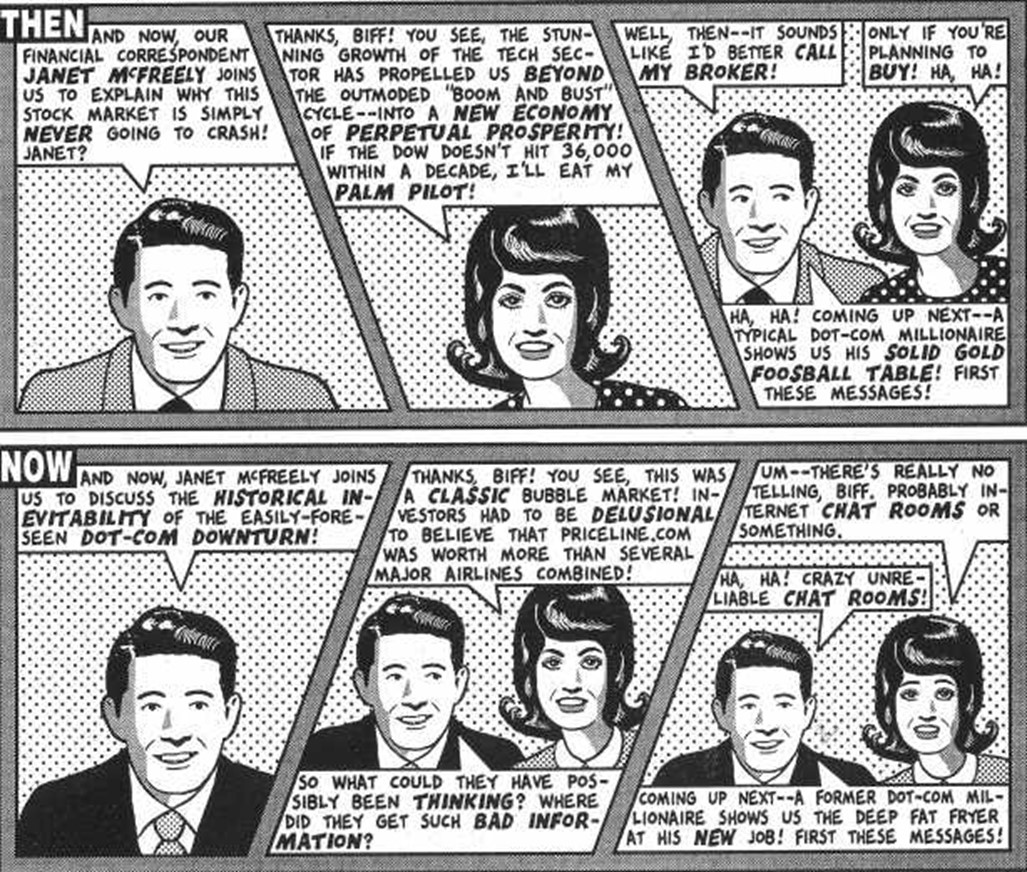
    Thanks @Mark. Howard is the only market pundit I pay attention too. Some, I’m afraid, are trying to generate clients, build name recognition or foster trading business for their firms. Others may be trying to boost prices of what they already own, perhaps with an eye to selling - although ”pump & dump” is (I believe) illegal. In the case of media, it’s all about keeping eyeballs glued to the screen by creating fear, euphoria or suspense. “Breaking News” is indeed broken. And then there’s the analysts, some of whom were still in HS when the 2007 bubble burst and in diapers back in ‘98-2000 at the height of the tech mania.
    I’ll go further. When I see someone drunk up in first class on my flight, creating a ruckus, abusing the cabin crew-member who refuses them another drink - and then a week later see them representing a big Wall Street investment firm on Bloomberg TV touting certain stocks or sectors … I’m cautioned to stay far away!
    I’ve borrowed a cartoon from @Mark’s linked article.
    image
  • Babe Ruth Jersey Sells For $24.12 Million
    "A New York Yankees jersey worn by Babe Ruth during perhaps the most storied moment
    of the baseball legend’s career has sold for $24.12 million,
    shattering the record for most expensive sports collectible sold at auction."

    "The gray road jersey, sold by Heritage Auctions on Sunday in Dallas, was said to be worn by Ruth
    when he 'called his shot' in Game 3 of the 1932 World Series against the Chicago Cubs."

    https://www.npr.org/2024/08/25/nx-s1-5089222/babe-ruth-jersey-called-shot-auction-record
    That's a lot of dough for a wool flannel jersey over 90 years old!
    Does anyone here invest in the following collectibles:
    antiques, art, automobiles, coins, comic books, sports memorabilia, stamps, or watches?
    If so, what has been your experience?
  • The Thrilling 36 Funds
    Hi @catch22 - Mostly I was referring to one of Russ Kennel’s criteria in selecting his Magnificent 36 funds. He excluded funds-of-funds from consideration. Maybe I missed his rationale?
    I do recall you demurring on the subject and I think your reasoning makes perfect sense. In my 10 portfolio positions I have only 1 fund of funds. No particular reason. Sometimes fees are more attractive, perhaps because the firm finds it more efficient to administer such a fund held by individuals in larger amounts rather than having you or I owning smaller quantities of half a dozen of their funds. But I don’t think you are an exception. Very little is said here, ISTM, about funds of funds. I take that to mean folks by and large agree with your rational

    At least this is our view for our portfolio; which is currently a 40/60 portfolio when all the pieces are counted.
    Currently I’m 45 / 45 / 10 (other)
  • The Thrilling 36 Funds
    Hi@hank
    I made a previous comment that I personally wouldn't use a 'fund of funds'; based upon forced choices of investment sectors that I wouldn't choose myself.
    No unlike the SP500 and its 11 sectors, there are many investors who choose equity sectors they favor, versus the 11 sectors of the SP500. The same can be noted for the bond sectors of the markets.
    One supposes that an individual investing in equity and/or bond sectors creates their own 'fund of funds' portfolio.
    At least this is our view for our portfolio; which is currently a 40/60 portfolio when all the pieces are counted.
    Remain curious,
    Catch
  • The Thrilling 36 Funds
    No worries.
    Although fees really do matter, I would not hesitate to own PRWCX if it was a good fit for my portfolio.
    Mentioned in the 2018 "28 Terrific Funds" article:
    "No funds of funds. The screens just won’t work as well with this type."
    The screens used in the 2018 exercise were the same except for two minor differences:
    Parent rating of Positive then vs. Parent Pillar better than average now
    Minimum investment $25K or less then vs. $50K or less now
  • Covered calls - less than meets the eye?
    Most growth stocks
    AMD
    SMCI
    NVDA
    AAPL
    TSLA
    ARM
    MSFT
    AVGO
    And retails stocks TGT WMT CAVA
    SPY IWM qqqq also
    Delta 7-10% wklies cover calls contracts are usually free $
    Prem usually [+ ~0.25% ]
    Aapl move extremely slow you can do maybe little higher deltas like 12 13%..most folks I know do delta 14 15% w
  • The Thrilling 36 Funds
    PRWCX didn't make the cut because its cost isn't much below average. But TRAIX's is, and it is available to individual Summit Preferred Services customers at T. Rowe Price with a $50K min. ("Must be a share class accessible to individual investors with a minimum investment of no greater than $50,000.")
    Mr. Kinnel made a point that he was screening share classes: "strict screens to narrow a universe of 15,000 fund share classes down to a short list ranging between 25 and 50. It’s purely a screen; I don’t make any additions or subtractions. "
    Why was VPMAX subtracted out?
    Ignoring these minor glitches, the real problem is with the requirement that the funds must be 100% covered by analysts. IOW, only the usual suspects.
  • The Thrilling 36 Funds
    The PRWCX expense ratio is 0.71% which lies in the Moderate Allocation category's average fee quintile.
    The fund's expense ratio would need to be below 0.50% (cheapest fee quintile) to be eligible for inclusion.
    Mentioned in the 2020 "Thrilling 36" exercise:
    "T. Rowe Price Capital Appreciation PRWCX actually wasn't on the list
    last time, either, but because I always get a lot of questions about it:
    The fund missed the expense ratio screen by 4 basis points.
    Don't worry, we still rate it Gold."
  • The Thrilling 36 Funds
    Russel Kinnel from M* applies strict screens to narrow down the mutual fund universe to 25 - 50 funds.
    Mr. Kinnel's screens are:
    • Expense ratio in the Morningstar Category’s cheapest quintile
    • Manager investment of more than $1 million in the fund
    • Morningstar Risk rating lower than High
    • Morningstar Medalist Rating of Bronze or higher
    • Parent Pillar rating better than Average
    • Returns greater than the fund’s category benchmark over the manager’s tenure for a minimum of five years
    • Must be accessible to individual investors with a minimum investment no greater than $50,000
    • No funds of funds
    • Funds must be rated by Morningstar analysts
    Six funds were added this year while two funds were removed.
    Vanguard [8], American Funds [7], Fidelity [6], Dodge & Cox [5], and Baird [5] dominate the list.
    https://www.morningstar.com/funds/thrilling-36-2
  • Covered calls - less than meets the eye?
    Covered calls are something that intuitively sound good. Also, they're one of the few things about options that my father taught me, and parents always know best (unless you're a teenager :-)).
    But they may not work well as long term investments. If you write covered calls that never get exercised, they boost returns (let's say, 1%/year) while not reducing volatility. That's because if you shift your entire performance line up by 1% it's still got the same jiggles, just 1% higher.
    Actual volatility is reduced by lopping off peaks when the market jumps and the calls are exercised. That's the exact opposite of the way you want to reduce volatility. Think Sortino ratio, that measures downside volatility only.
    And those lost returns from lopping off peaks? They cost a lot more than the relatively small income stream one gets from writing the calls. Here's a graph from Finominal showing how this strategy loses in a rising market. And markets tend to rise over the long term.
    image
    Writing calls does generate a certain income stream, which many investors look for. Though as the writer of the article accompanying the graph says:
    Any investor can create income by simply selling a small stake of their portfolio, which is also favorable from a taxation perspective as capital gains tend to have lower tax rates than income.
    https://caia.org/blog/2024/02/24/covered-call-strategies-uncovered
    That's a sentiment I agree with and why I focus more on total return than divs with bond funds. YMMV.
  • Preparing your Portfolio for Rate Cuts
    Nothing fancy here. We have been increasing total bond index fund since spring. Now shifting some floating rate bonds and high yield to BND and other investment grade intermediate term bonds. It is time to dial down the risk in case things get ugly, i.e. more geopolitical risk.
    I haven't paid attention recently to my primary bond fund - DOXIX.
    I was pleasantly surprised by the fund's trailing 12 month return.
    01 mo. - +3.35%
    03 mo. - +5.91%
    YTD__ - +4.90%
    12 mo. - +10.66%
  • Preparing your Portfolio for Rate Cuts
    yes sirs. options tradings are extremely bipolar. You can get severely high returns w market tops [up to 50% - 70% even 100% returns in on 6 12 months], but when it crashes your porfolio dig deeper dives for sure. I limit option trading now, limit option spreads these critters definitely can kill your porfolio, lucky got out few wks back near all time high all portfolios. prob do what I did best past 15 yrs - dca buy index /target date funds and more corp bonds. Only sell cash secure puts /cover calls w vehicles I am willing to own long term or happy w/ strike prices to be carried away.
    for portfolio definitely add more corp bonds.
    Next 3- 7 months: Not sure if SPY to 570 comes first or Spy 550 levels [lol].
  • Vanguard to Bolster Active Fixed Income Lineup with Two Active Municipal ETFs
    Vanguard mutual funds cost $75 to purchase at Fidelity.
    If 'twere only so.
    Effective June 3, 2024, the transaction fee for Vanguard and Dodge & Cox mutual funds will increase from $75 to $100 per purchase.
    https://www.mutualfundobserver.com/discuss/discussion/62254/fidelity-raising-fees-on-vanguard-and-dodge-cox-several-etfs-on-06-03-24
    But be of good cheer. They're still only $74.95 at Schwab.
    https://soundmindinvesting.com/articles/schwab-increases-transaction-fees-for-vanguard-and-fidelity-funds
  • BONDS The week that was.... December 31, 2024..... Bond NAV's...Most positive. FINAL REPORT 2024
    @Crash @MikeM et al
    BAGIX vs IGIB chart from January, 2007 to date (total returns)
    IGIB is a corp. bond etf, with 99% exposure; whereas BAGIX has a 36% exposure to corp. bonds. BAGIX is mostly gov't and gov't related issues;; with the 63% shown as a percent of all holdings in the fund that are AAA, with the next 5 numbers representing the credit quality areas and 100% of the totals. IGIB doesn't have gov't. bond exposure. Below %'s are rounded.
    IGIB     AAA     AA     A     BBB     GOV'T
    0% 5% 43% 52% 0%
    BAGIX 63% 3% 12% 22% 27% CORP = 36%
  • Vanguard to Bolster Active Fixed Income Lineup with Two Active Municipal ETFs
    My guess is to attract new asset with ETF wrappers since they can be traded in many brokerages outside of Vanguard. Vanguard mutual funds cost $75 to purchase at Fidelity. These new Vanguard ETFs are not clones of their equivalent OEFs. Thanks @msf.