
Howdy, Stranger!

It looks like you're new here. If you want to get involved, click one of these buttons!
Here's a statement of the obvious: The opinions expressed here are those of the participants, not those of the Mutual Fund Observer. We cannot vouch for the accuracy or appropriateness of any of it, though we do encourage civility and good humor.
  • Mutual Fund Plunges 11% Last Week As Hurricane Hits Florida
    @msf,
    Yes, a real problem with such terms. If the value of diamonds always fell w/ rising stocks and bonds and land, it too would be correlated. But in journalistic (and financial adviser) idiom, rightly or wrongly, an uncorrelated asset is one that does the opposite of, or at least is reliably different from, the rest. In my experience.
    Can you think of something zero-correlated in the actual investing world?
    I like the phrase 'usually uncorrelated'.
    Somewhere (I can't find it) Freud said 'It takes a high degree of sophistication to believe in coincidence.'
  • Global X Debuts Low Cost Pref ETF

    73% in financial stocks, most of which are non-cumulative distributions. No thank you .... I'm not giving Wall Street banks a loan for them to reneg on 'interest' payments to me WHEN (not if) they get into deep trouble again.
  • Financial Services Companies Going Gangbusters Today
    Bonds appeared to hiccup Monday, after hitting absurdly, rediculously and insanely low yields last week. That had weakened financials. So a rebound was coming in financial companies like banks, which benefit from higher yields. Among my income-focused (bond heavy) funds, the following fell Monday: DODIX, RPSIX, OUSGX, PRFHX, DODLX. On the other hand, DODBX, holding many of the same bonds as sister-fund DODIX, had a decent day (+.41%) because its equities are heavily weighted towards the financial sector. Gold also reversed course on the higher rates, falling about $15. The 10-year is off slightly again this morning, it's yield inching up to 2.15%.
    Bonds at these low rates may resemble Irma's approach. Sunshine and warm sea breezes right up until all hell breaks loose. Than, run for cover.
  • Jonathan Clements: Unheard Of
    TALKING TO A BROKER or insurance salesman? Here are 10 things you’ll likely never hear:
    1. 'Wow, your 401(k) has great low-cost institutional funds. There’s no way you should roll that money into an IRA."
    I had to double check that the date of this column really was after Jun 9, 2017. 'Cause that's when the DOL fiduciary rule kicked in for IRA rollovers.
    Maybe you won't hear a broker saying that you should keep your money in a 401(k), but you won't be hearing brokers recommending IRA rollovers if they can't demonstrate that a rollover would be in the best interest of the customer.
    From American Funds:
    https://www.americanfunds.com/advisor/tools/policy-spotlight/dol-best-interest-contract-article.html
    Under the DOL fiduciary rule, which took effect June 9, financial advisors who recommend that a client roll over a 401(k) into an individual retirement account (IRA) are considered fiduciaries. [Brokers who offer advice on rollovers are considered advisors here, and are thus held to the fiduciary standard.]
    Fiduciary Requirements for Advisors Recommending 401(k) Rollovers
    Under the fiduciary rule, which took effect on June 9, advisors must recommend a rollover only if it is in the client’s best interest. As part of this responsibility, advisors will need to consider:
    • Fees and expenses associated with both the plan and the IRA
    • Available investments under both
    • Whether the employer pays some or all plan expenses
    Here's one projection of the impact on rollovers, from Investment News Sept. 8, 2016:
    "DOL fiduciary rule could cause half of potential IRA rollover assets to stay put: Report"
  • Active Managers Are Getting To Work
    "Vanguard economist Joe Davis kicked off the conference with his view of the future of work. In the next five to 10 years, studies suggest, 50% of jobs in the U.S. are projected to be lost to automation. India could lose 69% of its jobs, and more than 75% of China’s jobs could be wiped out. But Davis is optimistic: “We need to change our mind-set about technological change. Jobs do not get automated away, tasks do.”
    Based on Vanguard’s analysis, tasks have changed for every occupation since 2000. Chefs, astronomers, and photographers saw the most change. (Economists the least, Davis joked.) He sees this as a positive, because automation means that workers can farm out repetitive tasks and devote more time to uniquely human ones, such as information analysis, communication, relationship management, and creative thinking.
    Active shops have responded to this technological threat by putting those “uniquely human” tasks into an automated form—strategic-beta ETFs "

    He sees this as positive because workers can farm out repetitive tasks. That's assuming the worker owns the technology and has a choice which tasks are farmed out. It is the business and technology's owners that make that decision and they will choose to fire many workers and replace them with tech. In the money management industry that means only those workers with skills that are uniquely human, that are so specialized that a computer algorithm which picks stocks can't replace them will survive. The terrible irony is many financial analysts and money managers who boast of "capitalist creative destruction" are about to see their jobs creatively destroyed by the technology they once invested in and celebrated. The question for every worker becomes what can you do a computer program, algorithm or robot can't?
  • Driehaus Micro Cap Growth Fund to close to new investors
    https://www.sec.gov/Archives/edgar/data/1016073/000119312517278810/d456584d497.htm
    497 1 d456584d497.htm 497
    Driehaus Mutual Funds
    Driehaus Micro Cap Growth Fund *DMCRX
    (the “Fund”)
    Supplement dated September 7, 2017 to
    Prospectus for the Fund dated April 30, 2017 and
    Summary Prospectus for the Fund dated April 30, 2017
    The Board of Trustees of the Driehaus Mutual Funds has approved the closure of the Driehaus Micro Cap Growth Fund (the “Fund”) to new investors, except as described below. The closure will be effective immediately after 4:00 pm Eastern Time on September 29, 2017.
    You may purchase Fund shares and reinvest dividends and capital gains you receive on your holdings of Fund shares in additional shares of the Fund if you are:
    • A current Fund shareholder;
    • A participant in a qualified retirement plan that offers the Fund as an investment option or that has the same or a related plan sponsor as another qualified retirement plan that offers the Fund as an investment option; or
    • A financial advisor or registered investment adviser whose clients have Fund accounts.
    You may open a new account in the Fund if you:
    • Are an employee of Driehaus Capital Management LLC (the “Adviser”) or its affiliates or a Trustee of Driehaus Mutual Funds;
    • Hold shares of the Fund in another account, provided your new account and your existing account are registered under the same address of record, the same primary Social Security Number or Taxpayer Identification Number, the same name(s), and the same beneficial owner(s); or
    • Are a financial advisor or registered investment adviser whose clients have Fund accounts.
    These restrictions apply to investments made directly through Driehaus Securities LLC, the Fund’s distributor, as well as investments made through intermediaries. Intermediaries that maintain omnibus accounts are not allowed to open new sub-accounts for new investors, unless the investor meets the criteria listed above. Once an account is closed, additional investments will not be accepted unless you meet the criteria listed above. Investors may be required to demonstrate eligibility to purchase shares of the Fund before an investment is accepted. The Fund reserves the right to (i) eliminate any of the exceptions listed above and impose additional restrictions on purchases of Fund shares; and (ii) make additional exceptions that, in the Adviser’s judgment, do not adversely affect its ability to manage the Fund.
    PLEASE RETAIN THIS SUPPLEMENT FOR FUTURE REFERENCE
    For more information, please call Driehaus Mutual Funds at (800) 560-6111.
  • Josh Brown: When The Hedge Is Worse Than The Thing Being Hedged; Black Swans & John Hussman
    I think LB makes a good case for holding cash or high quality bonds along with equities.
    But, holding short equity positions is inherently hazardous. (Theoretically, a stock can continue to rise forever.) It boils down to the skill of the manager to effectively implement a short selling strategy - and avoid losing his shirt in the process. Not to say using short positions to hedge equity risk is a bad approach - just that John Hussman hasn't demonstrated the capacity to execute the approach effectively. And, while he somewhat vehemently denies shorting equities, Hussman's HSGFX often behaves as if (effectively) short the market.
    Alternatives like gold, foreign currencies, commodities, real estate, etc. constitute another form of hedging. Personally, I like to keep a small hold in funds which include those types of assets. I fully recognize that that dilutes my returns as compared to being invested only in equities. Much disagreement exists on the board re the subject - and I've no desire to become a spokesman for PRPFX or any other fund investing in such alternatives.
    BTW: The brains at TRP have held for several years now that we're in the midst of a cyclical bear market in commodities. They would probably say that we're in the 5th or 6th inning. While I've disagreed a bit with that bearish outlook, I suspect they're mostly correct in the call. It's relevant here only in that commodities are often viewed as an alternative investment to equities.
    Yes. Agree with LB that equity markets don't always rise. They can (and do) experience significant multi-year periods of negative performance. And I fear very much that our instant-touch media (24-hour financial reporting and internet access) have magnified the always present human herd instinct. If correct, that implies both stronger bull markets and worse bear markets ahead than have occurred historically.
  • Fidelity Announcement On Transaction Time Reduction
    This is regulatory and "should" apply to everyone at every broker. I thought mutual funds already settled faster so this wouldn't affect them, but the email I received mentions them so maybe something is changing. I don't buy without cash on hand so I don't think it matters for me but could for some people. The email I received from E*TRADE said basically the same thing as the one we both received from Fidelity:
    We're writing to make sure you know about an important upcoming change in U.S. securities markets.
    What’s changing
    The Securities and Exchange Commission (SEC), in cooperation with the financial services industry, is shortening the trade settlement period for many types of securities from three business days to two. This new rule is designed to increase efficiency and reduce risk. Products affected by the change include stocks, corporate bonds, municipal bonds, ETFs, and mutual funds, among others.
    NO ACTION IS REQUIRED FROM YOU. The shortened settlement period will take effect automatically on Tuesday, September 5, 2017.
    What this means to you
    If you sell a security, you’ll receive cash one day sooner
    If you buy a security, it will be delivered one day sooner
    If you are using margin, purchases will create a settled debit balance one day sooner and selling will decrease your settled debit balance one day sooner
    You will have one less day to execute a tax-lot swap
  • This Fund Invests Only In Companies That Contribute To Trump And Republicans (MAGA)
    @MSF I think members of the House and Senate would have more of an impact on the local and state level and how federal contract dollars might be directed towards campaign contributors because of their sway. Regarding the McDonnell case, the defense made specific reference to Citizens United as a rationalization for McDonnell's behavior:
    Insisting that the product would have generated jobs in Virginia, Mr. McDonnell testified that he was merely extending himself as he would have on behalf of any other constituent and that he never agreed to “put a thumb on the scales of any government decision.” His lawyers invoked the Supreme Court’s holding in the Citizens United campaign finance case that “ingratiation and access” do not constitute corruption.
    But I agree with you that the corporate influence problem precedes Citizens United, although the ruling greatly exacerbated that influence. Good link/article by the way.
    @Maurice More George Soros as the world's boogeyman? It's a tiresome trope. Yes, Soros gives to elections, but nowhere near what the conservative Koch brothers do:
    fortune.com/2017/01/29/koch-political-network-spending/
    But besides that, what makes you think I believe any major financial gifts to any politicians are acceptable? I don't. But here is a fund expressly designed to reward those companies seeking to buy influence with Republican politicians with investor dollars. There is no equivalent on the Democratic side.
  • Don't Be Dazzled By Gold
    Yeah - Barron's really "got it right" in October 1998. With gold at $303, their "Wrong About Gold" article scorned investors who were (correctly) becoming bullish on the metal. So I won't put much faith in their analysis today.
    Excerpt: Wrong About Gold
    Oct. 5, 1998 - Key Commodity Indexes
    "The world's gold bugs seem to be exulting at news of the global financial crisis. And it's easy to see why. With stocks falling sharply in value, investors have started to show renewed interest in gold, that ageold hedge against hard times. But their knee-jerk reaction ignores the fact that we seem to be looking at an outbreak of deflation, not inflation. That's not to say that gold prices couldn't rise further over the next few months. Uncertainty always seems to stoke enthusiasm for the yellow metal. But the fact is that fundamental demand for gold is not increasing significantly and supplies remain plentiful."
    http://www.barrons.com/articles/SB907371410794467500
    -
    Just my personal perspective ... buying gold, or the miners, is about the closest you can come to gambling within the confines of your IRA. (Only @rono knows where it's going.) I have a meager 1-2% hold in OPGSX which has done well since buying in May. Some of my diversified funds, notably PRPFX and PRAFX, have decent exposure. At some point I'll sell the p/m fund, take the money and run. Not yet --- too much uncertainty out there in the geopolitical. Last week gold was hot, picking up $30-$40 and rising to over $1320. With the turmoil in Asia, it gained another 10 bucks Monday to around $1330.
    ---
    If trouble with above link, try this Google search. Select top story "Wrong About Gold" https://www.google.com/search?ei=UK-sWevdLOSXjwSH0pawAg&q=cheryl+strauss+einhorn+commosities+corner+1998+article+on+gold+price+in+Barrons+Oftober+5+1998&oq=cheryl+strauss+einhorn+commosities+corner+1998+article+on+gold+price+in+Barrons+Oftober+5+1998&gs_l=mobile-gws-serp.12..30i10k1.30394.37695.0.38648.15.15.0.0.0.0.387.4260.0j1j7j7.15.0....0...1.1.64.mobile-gws-serp..0.15.4258.Uq4g1FlZnVE
  • Technical Analysis Tip of the Month for September, 2017
    Technical Analysis doesn't have to be complicated.
    One technique is to buy when a moving average (MA) of price crosses below the price line, and sell when the MA crosses above it. This is the technique described by Mebane Faber in his paper, "A Quantitative Approach to Tactical Asset Allocation," with the buy and sell rules on page 21: https://papers.ssrn.com/sol3/papers.cfm?abstract_id=962461
    Another technique (with similar results) is to buy when the slope of your MA turns up, and sell when it turns down. This was described by James Rohrbach in his 2008 article, "Buy and Hold is Dead": http://www.marketwatch.com/story/the-trend-really-your-friend/print
    A technique to find a security in an uptrend is to be able to draw a straight line upward through at least 3 of its price lows, preferably using a semi-log chart. For details on drawing trend lines, see http://stockcharts.com/school/doku.php?id=chart_school:chart_analysis:trend_lines
    "The basic trendline is one of the simplest of the technical tools employed by the chartist, but is also one of the most valuable." and "Very often, the breaking of the trendline is one of the best early warnings of a change in trend." are quotations from the book, "Technical Analysis of the Financial Markets," by John J. Murphy. If you were going to read just one book on technical analysis, that would be the one I'd recommend.
  • Edward Yardeni: S&P 500 Panic Attacks: 2009-2017
    Hi Guys,
    Dr. Ed Yardeni and his staff always do an excellent and very comprehensive job when preparing their endless array of charts. These charts always inform and help in reducing uncertainties when making a financial decision.
    I trust the charts, but I am relentlessly cautious when reviewing Yardeni's interpretation of his own research. I'll never forget Yardeni and his projections as the year 2000 was approaching. He is infamous for the overblown Yardeni Y2K negative hyperbole. Here is a Link that reviews his less than optimistic positioning on that upcoming event:
    https://www.cnet.com/news/y2k-expert-yardeni-prepared-to-admit-he-was-wrong/
    He couldn't have been more wrong, but he survived and continues to persist in his forecasting. When forecasting everyone has a mixed record, and Yardeni is certainly no exception. So as always, buyer beware!
    Best Wshes
  • What Device Do You Use To Buy Or Sell Funds, ETF's, Stocks, Bonds, etc.?
    @MJG said: ,"While what device is used to complete a trade is the specific topic under discussion, that's a detail that doesn't inspire me too much. A far more meaningful discussion would center on how a decision to trade is made and what tools are used to help make that decision. I'll focus my reply on that issue."
    @Maurice said: "For those of you who are not interested in the "how", meaning secure or unsecure access to financial services companies, may I suggest that you start and continue your "why' comments on another thread. For example, I don't know a lot about using the phone as a hotspot for security, and I find this to be informative. Others like me, may also be interested. Thank you."
    Agree. I don't understand why some try to torpedo threads that have been proceeding along nicely. If you don't like the topic under discussion stay out. As Maurice advises, start your own thread on the topic you'd like discussed.
  • What Device Do You Use To Buy Or Sell Funds, ETF's, Stocks, Bonds, etc.?
    Not sure about what's being asked here.
    These days, all devices are computers, it's just the form factor and the OS that varies. If you're not an Apple lover and are worried about Android, you can use a Windows-based cell phone. (If you don't trust Windows/Microsoft, then you won't use a Windows-based PC either.)
    Certainly there are exceptions (e.g. Amazon just stopped selling BLU phones due to continuing security concerns), but for the most part, I consider the particular OS/device immaterial with respect to security.
    I'm more concerned about back end breaches. For example, this recent exposure by Scottrade of 20K customer's info.
    Networking is a different question. I rarely do anything with financial sites while away from home - whether that is on a PC, tablet, or smart phone. When I do, I try to limit the use and select theoretically less risky networks (e.g. B&B vs. 300 room hotels). I don't even have cellphone data service. The $20 smart phone I carry has no service at all, but is good to use in Starbucks (with that $2 iced tea and free refills) to read headlines using wi-fi.
    Form factor - any "real" work is done on large-ish screens (1920x1200) with many windows open (spreadsheets, notes, brokerage pages, etc.) My laptop is semi-permanently attached to an external screen/keyboard/mouse. (Only detached for travel.)
    The one financial application for which I'll use a cellphone (networked via wi-fi) is depositing checks. The apps generally don't run on laptops, and it's easier to take a picture of a check with a cellphone than with a tablet. Though it's still easier to deposit checks in person if I happen to be passing by my broker.
    Regarding Lombard brokerage ad - Lombard was bought in 1996 by Dean Witter Discover, which branded its online brokerage Discover Brokerage Direct. In 1999 Discover ran this commercial:
  • substantiation for ongoing bull market
    I hope no one noticed that I had stated Blackstone instead of Bridgewater for Dalio's hedge fund. Have now corrected that. Sorry for the goof.
    Old Joe made an excellent point yesterday which did not escape me. And he generously repeats it here. That being that no one has exclusivity over particular topics. I'll go farther and state that when someone who seldom links stories or does so only a half-dozen times a week puts a story up on the board, I'm much more inclined to perceive their link as worthy of my time and thereby click on it. Human nature I guess. Ol Tom Paine said it well a couple hundred years a go: "It is dearness only that gives every thing its value."
    None of this is meant to take away from anyone's contributions. Just that linking interesting stories found while reading has become more of a hassle nowadays than I recall in the past.
    ---
    PS: @Ted, Ol'Joe is the best of the best here IMHO. No reason to insult him or anyone. Drive everybody away through this nonsense and what have you got left? The purpose of new posts should be to initiate/stimulate discussion. Otherwise, Google, Yahoo, Bing can churn out hundreds of financial stories daily.
    I've said my piece. I'll shut up now.
  • Once Shunned, Money Market Funds Are Proving To Be An Unlikely Haven
    Muddled writing in the article, but an interesting graphic. Short term Treasury bill debt that matures at the end of Sept. (when the debt ceiling is projected to be hit) has fallen sharply in price (yield is spiking). People are pricing in the risk of late repayment of principal.
    image
    While I'm not suggesting a total financial collapse, it wouldn't hurt to check your bank's rating (FDIC could theoretically get stressed and have no Treasury backstop). It's also interesting to ponder the possibility that prime MMFs might be safer than the government MMFs that people were funneled into for safety.
    That mattress is beginning to look better and better :-)
    FWIW, ratings of some of the better known online banks (see depositaccounts.com)
    Ally Bank: A+, 1.15% savings
    Amex Bank: A, 1.15% HY savings
    Barclays: A, 1.15% savings
    Discover Bank: A, 1.15% savings
    Goldman Sachs: A+, 1.20% savings
    Synchrony Bank: A, 1.20% HY savings
  • substantiation for ongoing bull market
    Thanks.
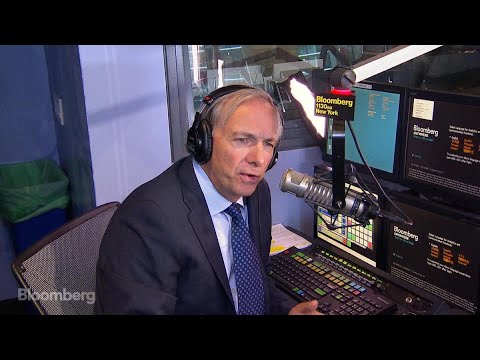
    I came across a few good articles re: Ray Dalio's recent cautionary remarks to investors while reading last evening. He's the head of Bridgewater, a large hedge fund. Dalio feels we're probably in a 1937 type political environment (sharply divided) and sees substantial risks to markets.
    As a result, Bridgewater has pulled back on risk. Not all would agree. However, Dalio does make an interesting case that financial markets cannot be completely isolated from political/social factors. The two to him are intertwined - especially today.
    End point - I didn't post any of the stories for fear Ted had already linked them somewhere else. For the most part, I prefer to read newspapers directly rather than to sort through 100+ posts
  • Better Than Expected, Barely Good Enough: Profits And Stocks

    "The seasonal trend is for stocks to go soft during the summer ... especially, August."
    Just off-the-cuff (without further research) I'd tend to agree. Some of the worst stock market sell-offs seem to have occurred in late summer or early fall. The '29 crash, the '07-'09 debacle, and a one-day drop of more than 20% in '87. However, unlike some, I would never risk being substantially underweight equities or largely absent from the markets out of some kind of observance of this historical pattern. To me there's just too big a risk of making an incorrect call and missing out on big gains.
    Isn't investing interesting?
    I'd agree Ol'Skeet. I consider that's a good reason to follow the postings at MFO and indulge in other
    financial print/electronic media. As you well know, however, there are some (well ... 1 in particular here) who profess to find the ebb and flow of markets of little no interest and who are content to "peek" at their investments only once or twice a year. Different strokes for different folks.