
Howdy, Stranger!

It looks like you're new here. If you want to get involved, click one of these buttons!

Here's a statement of the obvious: The opinions expressed here are those of the participants, not those of the Mutual Fund Observer. We cannot vouch for the accuracy or appropriateness of any of it, though we do encourage civility and good humor.
  • Trump cuts threaten a measurement lab critical for advanced chips and medical devices
    Following are excerpts from a current NPR report:
    The Trump administration is planning to close a small, obscure laboratory whose work undergirds everything from microchip manufacturing to nuclear fusion.
    The Atomic Spectroscopy Group at the National Institute of Standards and Technology (NIST) provides the definitive measurements of atomic spectra. Spectra are specific sets of colors emitted by different atomic elements. Those sets of colors act as atomic fingerprints that are used to characterize a wide variety of things — from the gases in far-off stars, to the blood in a person's finger.
    The laboratory has been in continuous operation for more than 120 years, but in mid-April it will be forced to close, according to a letter sent by the lab's head, Yuri Ralchenko, to dozens of colleagues around the world.
    "We were recently informed that unless there is a major change in the Federal Government reorganization plans, the whole Atomic Spectroscopy Group will be laid off in a few weeks," Ralchenko wrote in the letter, which was emailed on March 18 and seen by NPR. The letter was first reported by Wired. Ralchenko says in the letter that he was told "our work is not considered to be statutorily essential for the NIST mission."
    But thousands of scientists and engineers disagree. A petition is now circulating to reverse the closure, and it had received close to 3,000 signatures as of Wednesday. Among the signatories is Nobel Prize-winning physicist Sheldon Glashow.
    "I cannot believe that the government would be stupid enough" to slash this kind of work, Glashow said in a video statement. The overwhelming support exists because the group's spectral measurements get used in almost every field imaginable, according to Elizabeth Goldschmidt, a physicist at the University of Illinois, Urbana-Champaign. "You look at the very specific color of a star, it can tell you the makeup of the star. You look at the blood in someone's finger ... and that can tell you how much oxygen is in the blood," she says.
    But to measure colors accurately, devices like telescopes and pulse oximeters must be correctly calibrated, and that's where the Atomic Spectroscopy Group comes in. The laboratory maintains a database of atomic spectra that are the standard reference used to ensure devices are functioning correctly. Every month, the database receives around 70,000 queries from around the world, according to a recent post about it on NIST's website — and it's cited in two research papers per day, according to a recent presentation by Ralchenko.
    Among the researchers querying the database is Brett Morris, an astronomer at the Space Telescope Science Institute in Baltimore, Md. who works on NASA's James Webb Space Telescope. Morris is studying planets around distant stars. Sometimes he says, the light coming from those stars looks surprising. "The first thing you have to do is to figure out who's to blame — was it oxygen? Was it carbon? Was it neon?" he says. "And the resource for doing that is the database produced by the Atomic Spectroscopy Group."
    In addition, the laboratory conducts precise measurements of ultraviolet atomic spectra that are critical to developing advanced microchips. Ultraviolet light is used to etch tiny circuits, and advances in the field require detailed knowledge of the atomic spectra of elements in the extreme ultraviolet. There are a handful of facilities that research ultraviolet spectra, and this group is one of them, Goldschmidt says. It also studies plasmas, which are ionized gases that enshroud nuclear fusion reactions. Researchers around the world are pursuing fusion as a clean and virtually limitless form of energy, and detailed knowledge of plasmas is essential to that development.
    Neither NIST nor its parent agency, the Department of Commerce, responded to NPR's inquiries about the closure, but the savings from closing the lab would be minimal. NIST's annual budget is just $1.5 billion, less than 0.02% of the government's $7 trillion annual budget.
    image
    A silicon wafer with microchips etched into it. Microchips are etched using specific wavelengths of light. Better measurements of the wavelengths in ultraviolet light are required to advance chip manufacturing.
    Within NIST, the atomic spectroscopy group is made up of seven full-time federal employees. The group's employees even pay out of pocket for coffee and sugar used in its coffee breaks and have been doing so since 1973, according to a video celebrating its anniversary last year. By contrast, if the spectroscopy group closes, the costs will be enormous, scientists say. Researchers around the world will waste hours on the internet hunting around for the best spectral measurements, says Evgeny Stambulchik, a physicist at the Weizmann Institute of Science in Israel.
    What currently takes a couple of minutes might soon take "many hours, maybe many days," Stambulchik says. "Multiply that several hours by several thousands of scientists and you understand the waste of work time there would be without such a centralized database," he says.
    But Goldschmidt says the real blow would be to industry. Having centralized and agreed-upon calibration and measurement standards "is what allows industries to innovate and make new products," she says. "Everyone wins when this happens at NIST because everyone can rely on what NIST does, and they don't have to invest their time and money in doing it themselves."
    Comment: Stupid, STUPID, STUPID !!!
  • Buy Sell Why: ad infinitum.
    Thanks OJ! I've been in brk.b for 9 years and it's been a good diversifier in my portfolio. I'm in it for the NAV increase and it's been performing relatively well since Cheeto showed up again.
  • Buy Sell Why: ad infinitum.
    @PopTart- We held a fair amount of Brk.b for some years, but got tired of no dividend, so the only potential gain was an increase in NAV. However for a younger person just playing the long-term market that may be perfectly OK.
  • Tesla’s Europe sales drop nearly 45% amid row over Musk’s Trump links
    @gman57
    Your post belongs in Off Topic. I don’t think political action planning belongs in the investing section. Of course you are free to travel to whatever events you want and to voice those opinions.
    @Old_Joe’s linked article and comments relate to TSLA from a financial standpoint. It’s been an incredibly strong performer for many years. As I noted above, if you own any growth funds or the S&P 500 you almost certainly own TSLA stock yourself.
    Not trying to be the “cop on the beat”. Just trying to make the board a place where persons of all political persuasions feel comfortable sharing and benefitting from investment insights. Why would we discourage 50% of all investors from feeling welcome and participating here? Let’s keep financial content over here and political rants in OT. Thank you.
  • Tesla’s Europe sales drop nearly 45% amid row over Musk’s Trump links
    TSLA closed @ $287.99 today up 66.83% over the past year. Over 5 years it is up 740%.
    I guess the folks that have held it a while can afford to lose a bit shorter term. I’m not aware of anyone who posts on this board owning it currently. But 5 or 10 years ago there was a member who was loading up on the stock. Imagine he made out pretty well.
    It’s likely nearly all of us own a bit indirectly through our funds, however.
    Top 623 mutual funds with TSLA stock
    Should I be happy when one of my funds has a very bad day because it holds TSLA stock? Interesting conundrum …
    (I’ll note that CPLSX, which I own, has been shorting TSLA according to the above linked source. CPLSX is up about 3.5% YTD.)
    Not familiar with European car buying habits, The Bloomberg video posted by @BaluBalu mentions heightened Chinese competition as one problem for Tesla. That’s what I’ve been hearing too. In the U.S. prices (of gas) at the pump have been stable lately, possibly taking away some of the perceived benefits of electric cars. Also, it seems as if Americans are waking up to the benefits of hybrids, which combine some of the fuel savings of all electric vehicles along with the convenience and reliability offered by petroleum fueled vehicles. I think a doubling of gas prices over a short period of time would greatly motivate buyers to buy Teslas and other all electric vehicles - whether here or in other countries.
  • Tesla’s Europe sales drop nearly 45% amid row over Musk’s Trump links
    Following are excerpts from a current report in The Guardian:
    US carmaker’s European market share falls as Chinese rival BYD overtakes it on global revenue, topping $100bn
    Sales of new Tesla cars slumped in Europe last month in the latest indication of a potential buyer backlash over Elon Musk’s high profile and controversial behaviour since becoming a leading figure in Donald Trump’s administration. The Texas-based electric carmaker sold less than 16,000 vehicles across Europe last month, down 44% on average across 25 countries in the EU, the UK, Norway and Switzerland, and Tesla’s market share fell to 9.6% last month, the lowest it has registered in February for five years. In January, its sales across Europe fell 45%, from 18,161 in 2024 to 9,945.
    However, in the UK the Society of Motor Manufacturers and Traders reported an almost 21% rise in the number of new Tesla cars registered in February, with the Model 3 and Model Y proving the second and third most popular after the Mini Cooper.
    Analysts have said that the volatile sales are also likely to have been affected by Tesla’s overhaul of the Model Y. A global analyst at Jato Dynamics, said: “Tesla is experiencing a period of immense change. In addition to Elon Musk’s increasingly active role in politics and the increased competition it is facing within the EV market, the brand is phasing out the existing version of the Model Y – its bestselling vehicle – before it rolls out the update. “Brands like Tesla, which have a relatively limited model lineup, are particularly vulnerable to registration declines when undertaking a model changeover.”
  • EXTREMELY late TRP tax documents just arrived, 21st March.
    I left TRP for the reason cited earlier by @BaluBalu. I’’d shut down a P.O. box used over the years for secure mailings and had switched my settings at TRP to “paperless.” But for months they continued to mail out account statements and other documents addressed to my home - all the while assuring me they weren’t doing it. Our carrier sometimes drops off mail in the wrong party’s box. Most of my neighbors are decent (and would have forwarded the envelopes to me), but one isn’t. I really don’t care to have my investments open to unknown others or the public.
    So after months of calling and berating TRP to no avail (and goosing my BP), I moved it all to Fidelity. Couldn’t be happier. Unexpectedly, I’m dollars ahead for the move as well - now that I have so many new investment options beyond TRP’s OEFs at the time. The final insult arrived when the first paper check TRP mailed out to Fido on my behalf “bounced”. Funny today - but caused a lot of aggravation at the time! Landed me a 90-day trading suspension!
    Fidelity is top-notch. None better to deal with IMHO.
  • EXTREMELY late TRP tax documents just arrived, 21st March.
    I've had to mail a bunch of 'sensitive' documents around the country recently. I setup an account with pirateship.com and am using UPS envelopes to send them. For $10 I can overnight to NYC. For $20 I can 2-day something to the west coast. (It'd be $50 going to their store or Staples)
    Based on their own track record of deteriorating service in recent years, I don't trust USPS anymore for anything important.
  • EXTREMELY late TRP tax documents just arrived, 21st March.
    TRP’s retail client interface has been a wreck for many years now. Guess I’m fortunate in that Fidelity had everything I needed ready to download sometime in January.
  • Bonds Holding Up, But Playbook Is Changing
    @Observant1, the recent Barron’s article on Ivascyn and Murata’s PIMIX also describes their move to higher quality debts (he likes agency and mortgage-backed bonds) and reduced junk bonds. Additionally, moving from 0.8 to 4.7 years in duration is due ti the flattening yield curve. Here is an excerpt from yogibb,
    FUNDS. Ivascyn (and Murata) of multisector giant PONAX / PIMIX are loading up on agency MBS and TIPS but reducing exposure to corporates, nonagency MBS (a Pimco specialty) and HY. Credit spreads are tight, stocks are (still) expensive, so it's focusing on credit quality. The yield-curve is almost flat. He doesn’t expect high inflation or recession and has increased Fund duration a bit. Fund is well positioned for 5-yr timeframe and has a generous distribution. It’s unclear how (or, if) the Administration will calibrate policies with economic data and market signals. (etf cousin is PYLD, riskier CEF cousins are indefinite-term PDI and limited-term PDO, PAXS.) (By @LewisBraham at MFO).
    https://www.barrons.com/articles/top-bond-fund-manager-buying-now-2168a117?refsec=funds&mod=topics_funds
    The article showed the sector changes over 4 years.
  • Lipper Names CrossingBridge "Best Fixed Income Small Fund Family Group"
    I took a quick peek at BIEAX.
    There have been three years since 2015 where the fund's corresponding category and index had losses.
    BIEAX outperformed both on all three occasions.
    However, the fund did suffer a 2.05% loss in 2020 while the calendar/index gained less than 1%.
    Three of the portfolio managers have over 15 years tenure on the strategy (BIEAX inception date: 01/31/2011).
    The fund generated top decile returns for the trailing 3 year, 5 year, and 10 year periods according to M*.
    https://www.morningstar.com/funds/xnas/bieax/performance
    Edit/Add: I almost forgot that Brandes International Equity was featured in a recent Barron's article.
    https://www.msn.com/en-us/money/top-stocks/international-stocks-are-beating-the-u-s-how-one-fund-is-playing-it/ar-AA1Bdcw6
  • Trump awards Boeing contract to build next-generation US fighter jet

    just read a compelling analysis stating this was to preserve both a 2nd source for fighters, and to preserve a big group of critical skills/workers in a sector needed in-nation.
    i.e., had lockheed been a long-failing company due to its own actions, they would have gotten the rescue. trump probably lost interest after the f47 naming.
    in the long run, this will not boost boeing without displaying years of improved execution. lots of analogies to intel.
  • Munis’ Tax-Exempt Status Could Be at Risk

    yep, posted in 2024, been adding to since then, hoping it remains under the radar :
    https://www.mutualfundobserver.com/discuss/discussion/63101/tax-free-u-s-bond-market-and-gop-control-for-2-4-years#latest
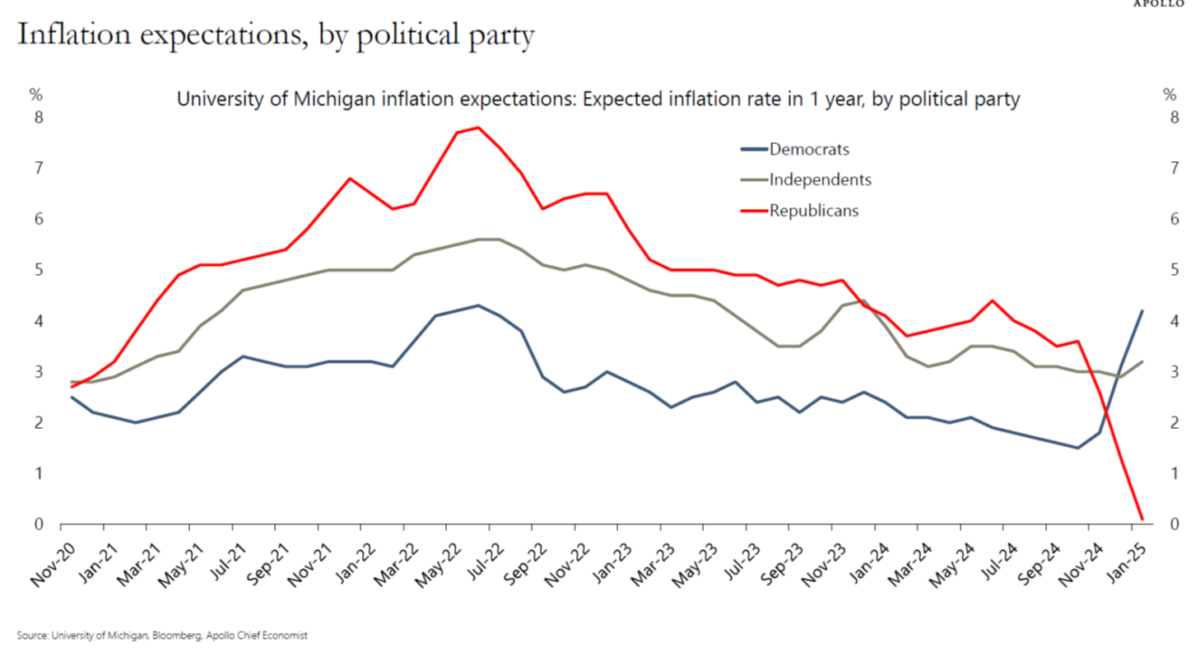
    could be a bad idea anyway w/inflation...which a very large group of dolts expect as 0% !
    nothing outside long global recession could be farther from reality.
    image
  • CDs and Money Markets
    Just bought a new replacement window with solid wood frame identical to one purchased from same dealer in February 2018 - just over 7 years ago.
    Price in February 2018 with 3-day promised delivery $400
    Price today with 6-week estimated delivery $675
    Increase $275
    Percent of increase about 65%
    Divided by 7 (years) = about 9.25% per year
    Bottom line - 4.5% on mm accounts probably isn’t going to protect your savings against inflation - at least in the housing / construction / materials sectors.
    Not trying to steal your thread @dtconroe. But I think any discussion of “return” needs to consider the impact of inflation.
    Thanks for the ”cheery” commentary @msf / One wonders what current or former Fox News host may end up running the FDIC and “protecting” our savings - - Bartiromo?
  • ECB’s Lane Backs Digital Euro to Avoid Rising Stablecoin Risks
    Hi Rick,
    IMO, people's assessment of cause and effect are backwards in this case.
    Trump agenda (succeed or fail) points to a weaker dollar. I expect USD to be lower three years from now. For a society addicted to catchy phrases (so they do not have to process), "strong dollar" has become a slogan leaders pitch and people eat up but really what the administration would shoot for is a stable dollar and not a strong dollar.
    ***********
    As to realignment, we have elections every two years. You will need a few successive elections to go in a specific policy direction for a re(or mis)alignment to take hold. Somethings that have been evolving for the last 8-10 years are somewhat irreversible. But then there are other things that are ideas and have not yet taken root in the society. Whether these ideas take root or not depends on who is providing leadership and not just leaders.
    If there is a Democratic party equivalent of Project 2025, please share the link. I want to read.
    As you know, if the general public knows about something happening for the last 8-10 years means the DC apparatus (does not matter the party affiliation) has been at it for much longer. As an example, I helped my ex-employer in 2018 to exit China by divesting their Chinese business to a global Chinese company.
    We have 800 military bases (of all sizes and kinds) in 80 different countries. Has there been a significant reduction of those (not counting Afghanistan) in the last 8-10 years or is there a firm expectation of significant reduction in them? Watch this metric. Closing USAID is not it. Reciprocal Tariffs is not it. We have to separate / distinguish evolutionary from revolutionary changes.
    I am just concerned that we in this forum consume way too much of what the media and whoever (e.g., Think Tanks) wants us to consume. (I am aware that this forum, more than any other investing forum I had ever visited, has a large group that does not rely on stock investments to meet their retirement (sustenance or charitable) goals and they can afford pursuits other than investing.)
    Good weekend.
  • ECB’s Lane Backs Digital Euro to Avoid Rising Stablecoin Risks
    @rforno asked- "Are we heading toward some kind of inflection point and global realignment in the coming years?"
    I've been telling my wife: history shows infrequent but sometimes seismic shifts in the general order of the world every so often. I think that we are on the cusp of such an event.
  • ECB’s Lane Backs Digital Euro to Avoid Rising Stablecoin Risks
    Rick,
    You are close to the subject matter expert we have here and so help us understand.
    How would having a separate CBDC (Central Bank Digital Currency) help in getting away from USD?
    Both EURO and USD are already mostly 0s and 1s. China said they will develop a CBDC during Trump 1.0 and I have not seen anything yet from them.
    The US FED spent a lot of time thinking about developing a separate CBDC and nothing came of it. I think it was a pet project of Lael Brainard and as far as I know the Republican Congress wants it killed and Powell is eager to oblige. With the crypto President in charge for the next four years, the US project will be on ice if not killed permanently.
    I still do not understand why a CBDC is necessary.
  • Lipper Names CrossingBridge "Best Fixed Income Small Fund Family Group"
    Artisan is usually conscientious regarding mutual fund capacity management.
    ARTKX closed to most new investors in 2007, reopened in 2009, and then closed again in 2011.
    The fund briefly reopened in March 2020 but was subsequently soft-closed in June 2021.
    M* places ARTKX in the Foreign Large Blend category.
    The fund has generated top decile returns for the trailing 3 year, 5 year, 10 year, and 15 year periods.
    https://www.morningstar.com/funds/xnas/artkx/performance
    Edit/Add¹:
    "The strategy's asset base of USD 46.6 billion as of September 2024 was sizable,
    but its long-term orientation, large-cap emphasis, and quality focus help alleviate concerns.
    In recent years, the team has suppressed some holdings information to protect liquidity
    when it's entering and exiting positions.
    And finally, the fact that this group no longer supports the USD 29.4 billion Artisan Global Value
    strategy gives the team more leeway than it had before the 2018 team split."

    ¹ M* take on ARTKX asset base size
  • Trump awards Boeing contract to build next-generation US fighter jet
    Following are excerpts from a current report in The Guardian:
    New aircraft, to be called F-47, is intended to operate alongside drones
    Donald Trump on Friday awarded Boeing the contract to build the US air force’s most sophisticated fighter jet, handing the company a much-needed win.
    The Next Generation Air Dominance (NGAD) program will replace Lockheed Martin’s F-22 Raptor with a crewed aircraft built to enter combat alongside drones. The plane’s design remains a closely held secret, but would probably include stealth, advanced sensors and cutting-edge engines.
    The Seattle-based company beat out Lockheed Martin for the deal. Shares of Boeing were up 5% after the news. Lockheed’s shares fell nearly 6%. Reuters reported Boeing’s victory before the official announcement.
    For Boeing, the win marks a reversal of fortune for a company that has struggled on both the commercial and defense sides of its business. It is a major boost for its St Louis, Missouri, fighter jet production business. The engineering and manufacturing development contract is worth more than $20bn. The winner will eventually receive hundreds of billions of dollars in orders over the contract’s multi-decade lifetime.
    NGAD was conceived as a “family of systems” centered around a sixth-generation fighter to counter adversaries such as China and Russia.
    Boeing’s commercial operations have struggled as it attempts to get its bestselling 737 Max jet production back up to full speed, while its defense operation has been weighed down by underperforming contracts for mid-air refueling tankers, drones and training jets. Cost overruns at the KC-46 mid-air refueling tanker program have surpassed $7bn in recent years, while another fixed-price contract to upgrade two Air Force One planes has created a $2bn loss for the top-five US defense contractor.
    Lockheed, which was recently eliminated from the competition to build the navy’s next-generation carrier-based stealth fighter, faces an uncertain future in the high-end fighter market after the loss.
    The billionaire and presidential adviser Elon Musk has voiced skepticism about the effectiveness of crewed high-end fighters, saying cheaper drones were a better option.
    While Lockheed could still protest against the award to Boeing, the fact Trump announced the deal in a high-profile Oval Office press conference could reduce the possibility of a public airing of arguments against the agreement from the defense firm based in Bethesda, Maryland.
    Comment: There is speculation that the aircraft was named the F47 because a $47 Billion dollar contract overrun is expected.
  • ECB’s Lane Backs Digital Euro to Avoid Rising Stablecoin Risks
    A growing part of me is witnessing not just day-to-day drama, but sensing potential seismic shifts in the Western World order on things like defense and finance. Moving away from a USD-oriented global payment system may become a thing at some point, maybe? I certainly appreciate the EU's concerns here -- and as I recall, China, India, et.al. were exploring/developing a regional currency to diversify some away from the USD several years ago. (We're already seeing the EU ramp up its defense expenditures, and Canada leapfrogging the US in obtaining bleeding edge systems.)
    Are we heading toward some kind of inflection point and global realignment in the coming years?
    Per BBG....
    Europe needs a digital currency to safeguard against threats from new forms of money like stablecoins, and reduce reliance on US payments firms amid heightened political tensions, European Central Bank Chief Economist Philip Lane said.
    A digital euro would “limit the likelihood of foreign-currency stablecoins gaining a foothold as a medium of exchange in the euro area,” Lane told a conference in Cork, Ireland. “The digital euro is not just about making sure our monetary system adapts to the digital age. It is about ensuring that Europe controls its monetary and financial destiny, against a backdrop of increasing geopolitical fragmentation.”
    European interest in the stablecoin market, which is overwhelmingly tied to the dollar, is “increasing rapidly,” Lane said Thursday. He also highlighted the current dependence on US payment-card providers Visa and Mastercard, as well as technology companies including PayPal, Apple and Google.
    < - >
    Earlier on Thursday, President Christine Lagarde told lawmakers in Brussels that the continent must accelerate progress on a retail and a wholesale digital euro, which would bolster sovereignty and lower vulnerabilities.
    President Donald Trump is alarming European politicians not only with his tariff threats and efforts to strike a peace deal over Ukraine but also by promoting dollar-backed stablecoins worldwide as part of a broader crypto strategy.