
Howdy, Stranger!

It looks like you're new here. If you want to get involved, click one of these buttons!

Here's a statement of the obvious: The opinions expressed here are those of the participants, not those of the Mutual Fund Observer. We cannot vouch for the accuracy or appropriateness of any of it, though we do encourage civility and good humor.
  • Bulls Only: Every Wall Street Analyst Now Predicts a Stock Rally
    Take it as you will, but imo it probably at least warrants some caution. Per BBG:
    At the big banks and the boutique investment shops, an optimistic consensus has taken hold: the US stock market will rally in 2026 for a fourth straight year, marking the longest winning streak in nearly two decades.
    < - >
    But after three years when the equity market’s rip-roaring run made a mockery of any bearish calls, sell-side strategists are marching in lockstep optimism, with the average year-end S&P 500 forecast implying another 9% gain next year. Not a single one of the 21 prognosticators surveyed by Bloomberg News is predicting a decline.
    < - >
    “The pessimists have just been wrong for so long that people are kind of tired of that schtick,” said veteran market strategist and longtime bull Ed Yardeni. He expects the S&P to finish next year at 7,700 — up 11% from Friday’s close — yet even he finds the lack of dissent a little concerning.
    “That’s where my counter instincts come out: Things have been going my way for so long that it is kind of worrying that everyone else seems to have become optimistic,” he said. “Pessimism is on the out right now.”
    < - >
    Full article @ https://archive.ph/7it02
  • Why The Roaring 2020's Will Continue To Roar- Ed Yardeni Interview
    Just watched full video.
    - Ed's been in the investment business 40 years. (I've been investing for longer - over 55 years - but won't hold that against him.)
    - Ed draws many parallels between today's markets and the 1920s.
    - Importantly, many have predicted a recession during this decade but none has occurred, nor does he see one coming.
    - In the 1920s there were no recessions until the end of decade.
    - His biggest regret is not having poured 100% of his money into the NASDAQ and shut his eyes decades ago.
    - He sees the prolonged rapid rise in the equity markets as similar to the 1920s and highly stimulative. Should that upward momentum go into reverse, he concedes it could trigger a recession.
    - He notes friends and relatives are taking expensive cruises and inviting him along. He declines because he gets seasick easily. However, these friends' stock portfolios are growing faster than they can spend them down.
    - He sees even 4% on money market funds as stimulative. Savers are being rewarded much more now than 5-10 years ago when rates were near zero and then spend the extra money.
    - He makes brief reference to the resumption of QE (bond buying) by the Fed, characterizing it as creating "instant money" out of thin air.
    - He focuses on dramatic increases in productivity. In tech he remembers having to load data into computers by manually punching holes in cards.
    - He sees the Fed as having the back of investors. They learned their lesson in '07-'09 and now know how to prevent such disasters.
    - He mentions Trump's talk about sending out tariff rebate checks and appears to think such talk alone is stimulative; it's also emblematic of the degree to which the Administration will go to spur growth.
    - Overall, Ed sounds like a raging bull. He "can see" the S&P 500 at 10,000 by decade end.
    - However, his crystal ball appears clear at best only out to about a year. He often hedges by saying, "I'm assuming" ... I'm assuming ..."
    Thanks for linking these interviews @bee / Mack attracts some excellent guests. (It should go without saying that I don't necessarily agree with Ed Yardeni.)
  • Why The Roaring 2020's Will Continue To Roar- Ed Yardeni Interview
    Yardeni is similar to Prof Sigel
    Siegel basically has 2 long term opinions
    1) Mr. Siegel is stocks perma bull. He has 2 main predictions annually: stocks will make money next year.
    2) Stocks will make more than bonds.
    The above is not a brain surgery, just common sense BUT NOTHING MUCH because
    1) The SP500 was up over 80% in the last 40 years. He has no clue what % the SP500 will go up or what years will go down. Generic 10% range predictions don't mean much
    2) Of course, stocks will make more than bonds, they have that for decades, especially when the 10 year treasury went to 0.5% in 2020...duh.
    Stocks:
    As expected, Siegel was wrong every down year
    1) 03/2001 (link): about stocks "they are probably a better bet now than they were a year ago. You can buy them at cheaper prices.” FD: from 03/2001 to 09/2002, which is about 1.5 years, the SP500 lost over 22%, see (link)
    2) 2008 (link) "I think the stock market will have another winning year in 2008." FD: The SP500 fell more than 50% and finish 2008 at -37%.
    3) 2018 (link): U.S. equities will end the year with gains of as much as 10%. FD: the SP500 was negative at -4.5%.
    4) 2019(link) "Jeremy Siegel says stocks could rally between 5 and 15 percent in the new year." FD: the SP500 made 31.5% more than double of what Siegel predicted.
  • Why The Roaring 2020's Will Continue To Roar- Ed Yardeni Interview
    I promise to view the video later. However, suspense is intense! The market will continue to roar until when? Forever and ever? Or maybe until after the mid-term elections? Or what?
    Add: Yardeni is cited in this week's Barron's as making that "roaring market" call with specificity only through 2026. With only a 1 year window I don't think I'll mortgage my home and throw it all into stocks.
    My take on all of this - "Newton's first law states that every object will remain at rest or in uniform motion in a straight line unless compelled to change its state ..."
    Often stated as ...
    "Don't buck the trend"
    "Go with the flow"
    "Don't fight the market"
    "Don't fight the Fed"
    "The trend is your friend"
    "Past is prologue"
    "Take the path of least resistance"
    "It's hard to stop a moving locomotive"

    "Up Up and Away (in my beautiful balloon)"
  • Why The Roaring 2020's Will Continue To Roar- Ed Yardeni Interview
    Yardeni has been a perennial bull. He stayed quiet during the Libration day period.
    Until the market broadens out to the other 493 stocks, what keeps the Mag 7 stocks going in 2026?
    Edit:. The circular investment among the AI companies is worrisome. Is Oracle’s earning report this week a sign of something big to come ? .
  • Why The Roaring 2020's Will Continue To Roar- Ed Yardeni Interview

    since yardeni never makes unambiguous prospective recession\depression calls, i have have a hard time attributing his 'buy major index' strategy to much other than using the trend factor.
  • Why The Roaring 2020's Will Continue To Roar- Ed Yardeni Interview
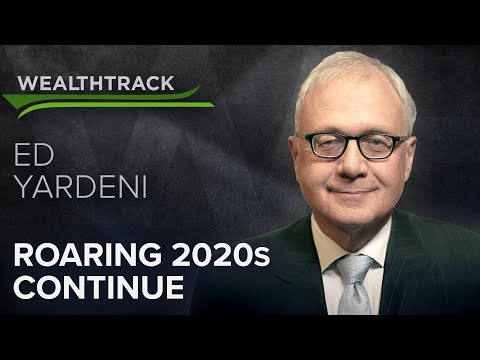
    Wealth Track Interview:
    In 2020, influential strategist Ed Yardeni predicted the economy & markets were entering a “Roaring 2020s” decade. So far, he’s proven the naysayers wrong. He explains why the economy should continue to expand and the markets to advance in 2026 and beyond.

  • Yardeni Explains Recent Behavior of Bonds
    Dr Ed Yardeni has a long article that attempts to explain the recent strange behavior of Treasuries (it should be open after closing the subscription screen). It has 4 sections:
    Bonds I: Kerfuffle
    Bonds II: The Yellen/Bessent Short-Term Solution to Debt
    Bonds III: Staying Vigilant
    Bonds IV: Supply & Demand
    https://www.linkedin.com/pulse/bonds-away-edward-yardeni-eabpe/?trackingId=IIHuxIVYTBSi2psiusvyjQ==
  • WealthTrack Show
    Part 2 with Ed Yardeni:
    Ed Yardeni reflects on the remarkable resilience of the US economy and markets over the years despite what happens in Washington and around the world.
    https://youtu.be/gYLoUWIjISM
  • WealthTrack Show

    yardeni bumped his recession educated GUESS from 20% to 35%.
    for some, that may be confirmation for reaching or staying at your lowest non-zero equity allocation, and he offers paid services for advice on shuffling specific portfolios whether timely or not.
    the forecasting trade has much uncertainty no matter how good the process.
    and for that reason only, dont go all-in or all-out.
  • WealthTrack Show
    March 22nd Episode:
    Trump tariffs are upending financial markets, causing influential economist and strategist Ed Yardeni to turn from bullish to cautious.
    https://youtu.be/9QLvhdYJ9-Y
  • BONDS The week that was.... December 31, 2024..... Bond NAV's...Most positive. FINAL REPORT 2024
    NOTE: This is the FINAL report for 'The week that was'. All numbers for the shortened week and final totals for the 2024 year ending data is accurate, to the best of my knowledge, from sources.
    FOR YOUR USE: Most of you are familiar with M* and the performance page. This LINK is set with FDGRX. Scroll down to the 'Trailing Returns' section for the most current data. BE SURE to verify the DATE of the data. Usually, the new data is available within 8 hours of the markets closing.
    ADD: This is directed towards possibilities into the new government period arriving January 20, and monetary/fiscal actions.
    --- Bond vigilantes are investors who sell government bonds or threaten to do so to force policy changes and discipline excessive government spending:
    --- Explanation
    Bond vigilantes use their market power to drive up borrowing costs for the government. This can happen when they protest against expansionary monetary or fiscal policy.
    --- Origin
    The term was coined by economist Ed Yardeni in the 1980s to describe traders who sold Treasury bonds to protest Federal Reserve policies that were considered too inflationary.
    --- Example
    In the "Great Bond Massacre" from 1993 to 1994, US 10-year yields increased from 5.2% to over 8% due to concerns about federal spending. The Clinton administration and Congress responded by reducing the deficit, and 10-year yields dropped to around 4% by 1998.
    NOTE:
    My intention, at this time; is to present the data for the selected bond sectors, as listed; through the end of the year (2024). This 'end date' will take us through the U.S. elections period, pending actions/legislation dependent upon the election results, pending Federal Reserve actions and market movers trying to 'guess' future directions of the U.S. economy. As important during this period, are any number of global circumstances that may take a path that is not expected; and/or 'new' circumstances.
    FIRST: NOTHING TO ADD/ALTER regarding 'Never-Never Land'. The pre-DC world shift of January, 2025 remains 'interesting' at this time! We're in a 'Never-Never Land' (events you never imagined) of potential large impacts upon various economic functions emanating from a central government in the coming months and years. What comes next for the investing world of bonds is not yet known or fully understood, except for those have a better guessing system than I. I can only watch and listen a little bit and let the numbers try to bring forth meaningful directions.
    W/E December 31 , 2024. Bond NAV's Most positive. FINAL REPORT
    --- 'Course, all the bond sectors in the list find their reasons for price movements, and we find most bond sectors HAD SMALL GAINS for this 2 day week's pricing to END the 2024 year. The majority of bond sectors were UP for the 2 days of the week. So, depending on where you're 'hanging' your bond market monies, the pricing this week, was mostly UP. The MINT etf, to the best of my recall, has maintained a positive price for the year, each and every week; and this remains for this week/year.
    A few numbers for your viewing pleasure.

    NEXT:
    *** UST yields chart, 6 month - 30 year. This chart is active and will display a 6 month time frame going forward to a future date. Place/hover the mouse pointer anywhere on a line to display the date and yield for that date. The percent to the right side is the percentage change in the yield from the chart beginning date for a particular item. You may also 'right click' on the 126 days at the chart bottom to change a 'time frame' from a drop down menu. Hopefully, the line graph also lets you view the 'yield curve' in a different fashion, for the longer duration issues, at this time. Save the page to your own device for future reference. NOTE: take a peek at the right side of this graph to find the yield swings of the past week, and for the current yields for the last business day.
    For the WEEK/YTD, NAV price changes, December 30 - December 31, 2024
    ***** This week (Wednesday), FZDXX, MM yield continues to move with Fed funds/repo/SOFR rates; and ended the week at 4.28% yield (+4 basis points for the week). Fidelity's MM's continue to maintain decent yields, as is presumed with other vendors similar MM's. SO, one is still obtaining a decent MM yield. MOST MM's found a positive .04 basis change in yield for the week.
    --- AGG = +.27% / +1.31% (I-Shares Core bond), a benchmark, (AAA-BBB holdings)
    --- MINT = +.08% / +5.94% (PIMCO Enhanced short maturity, AAA-BBB rated)
    --- SHY = +.21% / +3.92 % (UST 1-3 yr bills)
    --- IEI = +.39% / +1.81% (UST 3-7 yr notes/bonds)
    --- IEF = +.40% / -.64% (UST 7-10 yr bonds)
    --- TIP = +.17% / +1.65% (UST Tips, 3-10 yrs duration, some 20+ yr duration)
    --- VTIP = +.17% / +4.74% (Vanguard Short-Term Infl-Prot Secs ETF)
    --- STPZ = +.25% / +4.30% (UST, short duration TIPs bonds, PIMCO)
    --- LTPZ = +.15% / -4.80% (UST, long duration TIPs bonds, PIMCO)
    --- TLT = +.27% / -8.06% (I Shares 20+ Yr UST Bond
    --- EDV = +.67% / -12.74% (UST Vanguard extended duration bonds)
    --- ZROZ = +.37% / -16.13% (UST., AAA, long duration zero coupon bonds, PIMCO
    --- TBT = -.61% / +27.55% (ProShares UltraShort 20+ Year Treasury (about 23 holdings)
    --- TMF = +.65% / -35.93% (Direxion Daily 20+ Yr Trsy Bull 3X ETF (about a 2x version of EDV etf)
    *** Additional important bond sectors, for reference:
    --- BAGIX = +.31% / +1.85% Baird Aggregate Bond Fund (active managed, plain vanilla, high quality bond fund)
    --- USFR = +.06% / +5.46% (WisdomTree Floating Rate Treasury)
    --- LQD = +.18% / +.86% (I Shares IG, corp. bonds)
    --- MBB = +.26% / +1.31% (I-Shares Mortgage Backed Bonds)
    --- BKLN = +.10% / +8.20% (Invesco Senior Loan, Corp. rated BB & lower)
    --- HYG = +.13% / +7.97 % (I Shares High Yield bonds, proxy ETF)
    --- HYD = +.56%/+4.94% (VanEck HY Muni)
    --- MUB = +.26% /+1.31% (I Shares, National Muni Bond)
    --- EMB = +.28%/+5.54% (I Shares, USD, Emerging Markets Bond)
    --- CWB = -1.07% / +10.06% (SPDR Bloomberg Convertible Securities)
    --- PFF = +.67% / +7.24% (I Shares, Preferred & Income Securities)
    --- FZDXX = 4.28% yield (7 day), Fidelity Premium MM fund
    *** FZDXX yield was .11%, April,2022. (For reference to current date)
    Comments and corrections, please.
    Remain curious,
    Catch
  • BONDS The week that was.... December 31, 2024..... Bond NAV's...Most positive. FINAL REPORT 2024
    ADD #1: SOME BOND funds had distributions this week, which should be reflected in this weeks numbers, as provided by their sources.
    ADD #2: This is directed towards possibilities into the new government period arriving January 20, and monetary/fiscal actions.
    --- Bond vigilantes are investors who sell government bonds or threaten to do so to force policy changes and discipline excessive government spending:
    --- Explanation
    Bond vigilantes use their market power to drive up borrowing costs for the government. This can happen when they protest against expansionary monetary or fiscal policy.
    --- Origin
    The term was coined by economist Ed Yardeni in the 1980s to describe traders who sold Treasury bonds to protest Federal Reserve policies that were considered too inflationary.
    --- Example
    In the "Great Bond Massacre" from 1993 to 1994, US 10-year yields increased from 5.2% to over 8% due to concerns about federal spending. The Clinton administration and Congress responded by reducing the deficit, and 10-year yields dropped to around 4% by 1998.
    NOTE:
    My intention, at this time; is to present the data for the selected bond sectors, as listed; through the end of the year (2024). This 'end date' will take us through the U.S. elections period, pending actions/legislation dependent upon the election results, pending Federal Reserve actions and market movers trying to 'guess' future directions of the U.S. economy. As important during this period, are any number of global circumstances that may take a path that is not expected; and/or 'new' circumstances. In the 'cooking pot' we currently have the big ingredients of the middle east and also, how much damage Ukraine may inflict upon Russia and the response.
    FIRST: NOTHING TO ADD/ALTER regarding 'Never-Never Land'. The pre-DC world shift of January, 2025 remains 'interesting' at this time! We're in a 'Never-Never Land' (events you never imagined) of potential large impacts upon various economic functions emanating from a central government in the coming months and years. What comes next for the investing world of bonds is not yet known or fully understood, except for those have a better guessing system than I. I can only watch and listen a little bit and let the numbers try to bring forth meaningful directions.
    W/E December 27 , 2024. Bond NAV's Mixed/Down for most + distributions
    --- 'Course, all the bond sectors in the list find their reasons for price movements, and we find most bond sectors HAD ANOTHER 'SMALLER' HEAD SLAP for this week's pricing. The majority of bond sectors were down most days of the week. Short duration were the better performing for the week, with longer duration continuing to get 'thumped'. So, depending on where you're 'hanging' your bond market monies, the pricing this week, was mostly DOWN. The MINT etf, to the best of my recall, has maintained a positive price for the year, each and every week; and this remains for this week.
    A few numbers for your viewing pleasure.

    NEXT:
    *** UST yields chart, 6 month - 30 year. This chart is active and will display a 6 month time frame going forward to a future date. Place/hover the mouse pointer anywhere on a line to display the date and yield for that date. The percent to the right side is the percentage change in the yield from the chart beginning date for a particular item. You may also 'right click' on the 126 days at the chart bottom to change a 'time frame' from a drop down menu. Hopefully, the line graph also lets you view the 'yield curve' in a different fashion, for the longer duration issues, at this time. Save the page to your own device for future reference. NOTE: take a peek at the right side of this graph to find the yield swings of the past week, and for the current yields for the last business day.
    For the WEEK/YTD, NAV price changes, December 23 - December 27, 2024
    ***** This week (Friday), FZDXX, MM yield continues to move with Fed funds/repo/SOFR rates; and ended the week at 4.24% yield (-.13 basis points for the week). Fidelity's MM's continue to maintain decent yields, as is presumed with other vendors similar MM's. SO, one is still obtaining a decent MM yield. MOST MM's found a negative .10 - .13 basis change in yield for the week.
    --- AGG = -.33% / +1.04% (I-Shares Core bond), a benchmark, (AAA-BBB holdings)
    --- MINT = +.08% / +5.85% (PIMCO Enhanced short maturity, AAA-BBB rated)
    --- SHY = +.04% / +3.70 % (UST 1-3 yr bills)
    --- IEI = -.21% / +1.42% (UST 3-7 yr notes/bonds)
    --- IEF = -.57% / -1.03% (UST 7-10 yr bonds)
    --- TIP = -.16% / +1.48% (UST Tips, 3-10 yrs duration, some 20+ yr duration)
    --- VTIP = +.06% / +4.56% (Vanguard Short-Term Infl-Prot Secs ETF)
    --- STPZ = -.02% / +4.05% (UST, short duration TIPs bonds, PIMCO)
    --- LTPZ = -.67% / -4.95% (UST, long duration TIPs bonds, PIMCO)
    --- TLT = -1.37% / -8.30% (I Shares 20+ Yr UST Bond
    --- EDV = -2.02% / -13.32% (UST Vanguard extended duration bonds)
    --- ZROZ = -2.33% / -16.45% (UST., AAA, long duration zero coupon bonds, PIMCO
    --- TBT = +2.92% / +28.35% (ProShares UltraShort 20+ Year Treasury (about 23 holdings)
    --- TMF = -4.27% / -36.35% (Direxion Daily 20+ Yr Trsy Bull 3X ETF (about a 2x version of EDV etf)
    *** Additional important bond sectors, for reference:
    --- BAGIX = -.40% / +1.54% Baird Aggregate Bond Fund (active managed, plain vanilla, high quality bond fund)
    --- USFR = +.08% / +5.40% (WisdomTree Floating Rate Treasury)
    --- LQD = -.31% / +.68% (I Shares IG, corp. bonds)
    --- MBB = -.24% / +1.05% (I-Shares Mortgage Backed Bonds)
    --- BKLN = +.24% / +8.10% (Invesco Senior Loan, Corp. rated BB & lower)
    --- HYG = -.04% / +7.83 % (I Shares High Yield bonds, proxy ETF)
    --- HYD = +.83%/+4.36% (VanEck HY Muni)
    --- MUB = -.04% /+.89% (I Shares, National Muni Bond)
    --- EMB = -.29%/+5.55% (I Shares, USD, Emerging Markets Bond)
    --- CWB = -.30% / +11.25% (SPDR Bloomberg Convertible Securities)
    --- PFF = -1.33% / +6.52% (I Shares, Preferred & Income Securities)
    --- FZDXX = 4.24% yield (7 day), Fidelity Premium MM fund
    *** FZDXX yield was .11%, April,2022. (For reference to current date)
    Comments and corrections, please.
    Remain curious,
    Catch
  • BONDS The week that was.... December 31, 2024..... Bond NAV's...Most positive. FINAL REPORT 2024
    ADD: A reported gauge monitored by the FED, the PCE (Personal Consumption Expenditures) slowed somewhat, may have helped support positive pricing on Friday for bond NAVs, via lower yields.
    ADD #2: MANY BOND funds had distributions this week, which should be reflected in this weeks numbers, as provided by their sources.
    ADD #3: This is directed towards possibilities into the new government period arriving January 20, and monetary/fiscal actions.
    --- Bond vigilantes are investors who sell government bonds or threaten to do so to force policy changes and discipline excessive government spending:
    --- Explanation
    Bond vigilantes use their market power to drive up borrowing costs for the government. This can happen when they protest against expansionary monetary or fiscal policy.
    --- Origin
    The term was coined by economist Ed Yardeni in the 1980s to describe traders who sold Treasury bonds to protest Federal Reserve policies that were considered too inflationary.
    --- Example
    In the "Great Bond Massacre" from 1993 to 1994, US 10-year yields increased from 5.2% to over 8% due to concerns about federal spending. The Clinton administration and Congress responded by reducing the deficit, and 10-year yields dropped to around 4% by 1998.
    NOTE:
    My intention, at this time; is to present the data for the selected bond sectors, as listed; through the end of the year (2024). This 'end date' will take us through the U.S. elections period, pending actions/legislation dependent upon the election results, pending Federal Reserve actions and market movers trying to 'guess' future directions of the U.S. economy. As important during this period, are any number of global circumstances that may take a path that is not expected; and/or 'new' circumstances. In the 'cooking pot' we currently have the big ingredients of the middle east and also, how much damage Ukraine may inflict upon Russia and the response.
    FIRST: NOTHING TO ADD/ALTER regarding 'Never-Never Land'. The pre-DC world shift of January, 2025 remains 'interesting' at this time! We're in a 'Never-Never Land' (events you never imagined) of potential large impacts upon various economic functions emanating from a central government in the coming months and years. What comes next for the investing world of bonds is not yet known or fully understood, except for those have a better guessing system than I. I can only watch and listen a little bit and let the numbers try to bring forth meaningful directions.
    W/E December 20 , 2024. Bond NAV's Another HEAD SLAP for most + distributions
    --- 'Course, all the bond sectors in the list find their reasons for price movements, and we find most bond sectors HAD ANOTHER HEAD SLAP for this week's pricing. The majority of bond sectors were down all day, with FRIDAY being the exception day. All durations pricing were down every day of the week. So, depending on where you're 'hanging' your bond market monies, the pricing this week, was mostly DOWN. The MINT etf, to the best of my recall, has maintained a positive price for the year, each and every week; and this remains for this week.
    A few numbers for your viewing pleasure.

    NEXT:
    *** UST yields chart, 6 month - 30 year. This chart is active and will display a 6 month time frame going forward to a future date. Place/hover the mouse pointer anywhere on a line to display the date and yield for that date. The percent to the right side is the percentage change in the yield from the chart beginning date for a particular item. You may also 'right click' on the 126 days at the chart bottom to change a 'time frame' from a drop down menu. Hopefully, the line graph also lets you view the 'yield curve' in a different fashion, for the longer duration issues, at this time. Save the page to your own device for future reference. NOTE: take a peek at the right side of this graph to find the yield swings of the past week, and for the current yields for the last business day.
    For the WEEK/YTD, NAV price changes, December 16 - December 20, 2024
    ***** This week (Friday), FZDXX, MM yield continues to move with Fed funds/repo/SOFR rates; and ended the week at 4.37% yield (Unchanged for the week). Fidelity's MM's continue to maintain decent yields, as is presumed with other vendors similar MM's. Theoretically, a new yield bottom is in place, until the next FED action. SO, one is still obtaining a decent MM yield. MOST MM's found a negative .05 - .07% basis change in yield for the week.
    --- AGG = -.66% / +1.37% (I-Shares Core bond), a benchmark, (AAA-BBB holdings)
    --- MINT = +.08% / +5.77% (PIMCO Enhanced short maturity, AAA-BBB rated)
    --- SHY = -.04% / +3.66 % (UST 1-3 yr bills)
    --- IEI = -.45% / +1.63% (UST 3-7 yr notes/bonds)
    --- IEF = -.82% / -.46% (UST 7-10 yr bonds)
    --- TIP = -1.00% / +1.64% (UST Tips, 3-10 yrs duration, some 20+ yr duration)
    --- VTIP = -.37% / +4.50% (Vanguard Short-Term Infl-Prot Secs ETF)
    --- STPZ = -.45% / +4.07% (UST, short duration TIPs bonds, PIMCO)
    --- LTPZ = -2.24% / -4.31% (UST, long duration TIPs bonds, PIMCO)
    --- TLT = -1.66% / -7.03% (I Shares 20+ Yr UST Bond
    --- EDV = -2.31% / -11.54% (UST Vanguard extended duration bonds)
    --- ZROZ = -2.69% / -14.46% (UST., AAA, long duration zero coupon bonds, PIMCO
    --- TBT = +3.69% / +24.74% (ProShares UltraShort 20+ Year Treasury (about 23 holdings)
    --- TMF = -5.66% / -33.51% (Direxion Daily 20+ Yr Trsy Bull 3X ETF (about a 2x version of EDV etf)
    *** Additional important bond sectors, for reference:
    --- BAGIX = -.72% / +1.95% Baird Aggregate Bond Fund (active managed, plain vanilla, high quality bond fund)
    --- USFR = +.12% / +5.31% (WisdomTree Floating Rate Treasury)
    --- LQD = -1.25% / +.99% (I Shares IG, corp. bonds)
    --- MBB = -.59% / +1.29% (I-Shares Mortgage Backed Bonds)
    --- BKLN = -.24% / +7.84% (Invesco Senior Loan, Corp. rated BB & lower)
    --- HYG = -.53% / +7.87 % (I Shares High Yield bonds, proxy ETF)
    --- HYD = -1.40%/+3.49% (VanEck HY Muni)
    --- MUB = -.73% /+.93% (I Shares, National Muni Bond)
    --- EMB = -1.21%/+5.85% (I Shares, USD, Emerging Markets Bond)
    --- CWB = -2.16% / +11.59% (SPDR Bloomberg Convertible Securities)
    --- PFF = -.88% / +7.96% (I Shares, Preferred & Income Securities)
    --- FZDXX = 4.37% yield (7 day), Fidelity Premium MM fund
    *** FZDXX yield was .11%, April,2022. (For reference to current date)
    Comments and corrections, please.
    Remain curious,
    Catch
  • Official Wall Street 2025 Predictions (I mean Guesses) Thread
    https://markets.businessinsider.com/news/stocks/2025-stock-market-investment-outlooks-wall-street-prediction-roundup-sp500-2024-12
    Excerpt:
    S&P 500 price targets
    Projected level for end-of-year 2025
    Oppenheimer
    7,100
    Wells Fargo
    7,007
    Deutsche Bank
    7,000
    Yardeni Research
    7,000
    DataTrek Research
    6,840
    Societe Generale
    6,750
    BMO
    6,700
    Bank of America
    6,666
    Fundstrat
    6,600
    Barclays
    6,600
    RBC
    6,600
    Ned Davis Research
    6,600
    CFRA
    6,585
    Morgan Stanley
    6,500
    Goldman Sachs
    6,500
    JPMorgan
    6,500
    Citi
    6,500
    UBS
    6,400
    Stifel*
    5,500
    BCA Research
    4,450
    Note: Stifel gave a prediction in the "mid-5,000s"
    Chart: Andy Kiersz/Business InsiderSource: Bloomberg
  • YBB’s weekly Barron’s summaries
    Increasing my positions in QQMNX and GONIX. Capped out on CPIEX and QLEIX.
    Notwithstanding Yardeni bullishness, Berkshire cash position exceeding equity position is a huge warning sign plus reduced buybacks.
  • YBB’s weekly Barron’s summaries
    Berkshire off loading actions are the opposite of Yardeni who is super bullish. Is anybody hedging? What instruments are you utilizing? I'm leaning towards adding more to the LS/market neutral funds I have.
  • DJT in your portfolio - the first two funds reporting (edited)
    From Ed Yardeni today:
    "We're sticking with our investment recommendation to Stay Home rather than to Go Global. In other words, overweight the US in global stock portfolios.
    For now, we're also sticking with our subjective probabilities for the following three scenarios: Roaring 2020s (50%), 1990s-style stock market meltup (20%), and 1970s-style geopolitical crisis with a possible US debt crisis (30%). But we are considering raising the odds of the Roaring 2020s scenario as a looser regulatory environment and lower corporate and income taxes under Trump 2.0 should boost investment and propel productivity-led economic growth."
  • BONDS The week that was.... December 31, 2024..... Bond NAV's...Most positive. FINAL REPORT 2024
    Ed Yardeni suggested that the Bond vilgilantees are back. Think @WABAC posted that question earlier.
    It is nuts. The 10-year Treasury yield increases by 63 basis points to 4.25% since the FED announced a 50 basis point rate cut in September meeting.
    https://yardeniquicktakes.com/bond-vigilantes-started-voting-early/