
Howdy, Stranger!

It looks like you're new here. If you want to get involved, click one of these buttons!

Here's a statement of the obvious: The opinions expressed here are those of the participants, not those of the Mutual Fund Observer. We cannot vouch for the accuracy or appropriateness of any of it, though we do encourage civility and good humor.
  • Billionaire investor Ray Dalio on capitalism’s crisis: The world is going to change in shocking ways
    Ray Dalio certainly is no radical idealist, but in his frequent writings and media appearances the veteran investor consistently calls for Americans to rewrite their longstanding contract with capitalism so that it is fairer and more generous to more people.
    Otherwise, he predicts, life in the U.S. could become more difficult: mountainous debt that stunts economic growth; fewer opportunities for ordinary citizens to get ahead financially; and a worldwide lack of trust in the U.S. dollar that diminishes Americans’ purchasing power and could lower their standard of living.
    So exactly how is changing capitalism to be "fairer" going to control "mountainous debt that stunts economic growth? The government will always overspend. Think that can be wished away? It is always funny to see the rich, once they have made it, to get religion.
    But thank goodness that we have a President doing something about "our competitive advantage" Dalio is so worried about.
  • What are your 5 or 6 largest holdings? *Or where are the bulk of your holdings?*
    Only 7 holdings. Cut way down on stocks, in retirement. But gotta have enough in stocks to MATTER, and to keep up with inflation.
    >No RMDs yet. 6 years to go. But I've begun to tap my biggest holding on a schedule, just once per year--- providing Mr. Market is in a good mood. Otherwise, we can certainly live without it. And I only want to take an amount that I figure will GROW BACK, so it comes out "even-steven." And we're in the 10% bracket, so there's not much of a reason NOT to do it; plus, I have $5,000 in NON-DEDUCTIBLE IRA contributions. I'd like to get my hands on that money, on a schedule, as part of the once-yearly "raid" on the biggest of our holdings.
    In order, biggest to smallest:
    PRWCX .....30%
    RPSIX .....27%
    PRSNX ......22%
    PTIAX .........8% (non-retirement.)
    PRIDX ......6.60%
    BRUFX .......4% (wife's IRA, TRAD.)
    PRDSX ........2%
    57 bonds.
    35 stocks
    6 cash (among the funds)
    2 "other."
    The objective is to live comfortably, not exhorbitantly. Enjoy life here in the tropics. The damn Covid killed the opera season, and that sucks. I can't see traveling at all, wearing a f*****g mask. It (mask-wearing) must be done, but I'm not going to CREATE situations that will make me miserable, like a long flight back over to the Mainland. There's enough really stupid people, doing really stupid things, always in the seat right next to you, anyhow. Even in 1st Class. Like the moron next to me last time, who decided the entire cabin needed to be afflicted with the industrial-strength menthol aroma he was inhaling via his nostrils through some stupid contraption made for that purpose--- as if he were sitting alone and in his own living room.
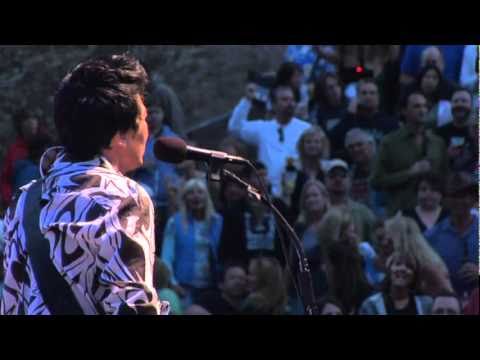
    Wifey and I have different tastes. "Opposites attract." The last event we went to TOGETHER was in Honolulu to see "Big Head Todd and the Monsters." It was just ok. A lot of the music was TOO loud and cranky. But THIS one is really good, I think:
  • Perpetual Buy/Sell/Why Thread
    @BenWP - First I bought/buy nearly all my CEF positions at large discounts to NAV usually after major market swoons. I don't tend to trade them and I'm primarily interested in the distributions they throw off. I hold only one healthcare equity position (ABBV) because I'm not smart enough to pick individual holdings across the sector.
    Why BME - strong parent company with a solid, steady performance history of roughly 12% - 9.5% - 15% (3 - 5 - 10 yr avg).
    Why THQ - while the major holdings are fairly similar to BME the fund can and does look worldwide. It also is selling at a large discount and when I can buy assets at 12% off I'll do it. Tekla handles healthcare quite well.
    Granted I might have done better buying something like FSMEX but tax handcuffs would pinch more than I care to deal with at the moment. I used to hold HQL but at the time many of their positions were similar to holdings in POAGX. I opted to keep the latter.
  • What are your 5 or 6 largest holdings? *Or where are the bulk of your holdings?*
    I have 14 accounts so it’s easy to end up with some funds that occupy only 1% of net worth but I have 6 funds that make up 85% of my portfolio. (Without explanation)
    20% 401-k Stable Value Fund
    20% VTI - Vanguard Total Market in taxable
    16% FADMX - Fidelity Strategic Income - I’ve held this fund for years, starting when it was FSICX, it stumbled a bit in March but holding for now.
    16% Cash - I know it pays me nothing but I think going forward it will prove to be a better investment than most bond funds.
    6% FPURX - Puritan
    6% VWELX - Wellington
  • Perpetual Buy/Sell/Why Thread
    @Mark: What do you like about THQ and BME? I held HQL, another Tekla fund, for quite some time, and BME in 2019. Right now I don’t own any healthcare funds but I am overweight in the sector as the result of getting a slug of BMY when CELG was acquired. I also got a big tax bill, but I’ve been told that it’s a high-class problem. I’ve been unimpressed with CEFs in healthcare in recent years although I do see the advantage of holding a fund with a good distribution policy in a tax-deferred account.
  • IAFMX Fund?
    IAFMX was formerly the Cognios Large Cap Growth Fund.
    Thanks. This confirms that the fund started 10/3/16, though it subsequently went through at least a name change.
    Note that there is enough predecessor history as reported in an early N1/A filing to get about eight years of combined history. Though the filing doesn't seem to provide the predecessor's performance data for 2016, i.e. from 1/1/2016 to 10/3/2016 when the new fund started. One could reasonably extrapolate to fill in this gap.
    The Predecessor Account was managed by the same portfolio managers at the Adviser of the Growth Fund since the inception of the Predecessor Account on June 1, 2012. ...
    The bar chart and table reflect the past performance of the Growth Fund and the Predecessor Account and provide some indication of the risks of investing in the Growth Fund by showing changes in the Predecessor Account’s performance from year to year over the periods indicated and by showing how the Predecessor Account’s average annual total returns for the periods indicated compared to a broad-based performance benchmark.
    https://www.sec.gov/Archives/edgar/data/1643838/000139834416018829/fp0021688_n1aa.htm
    FWIW, the predecessor account, over the period provided (6/1/12 to 12/31/15) had an annualized return of 21.92% (per filing). In comparison, QQQ returned 18.30%.
    I computed the latter figure by:
    - having M* give me QQQ's cumulative return from 6/1/12 to 12/31/15: 82.53%;
    - computing the number of years spanned with Excel:
      YEARFRAC(DATE(2012,6,1),DATE(2015,12,31),1): 3.5811 years.
    - annualizing: POWER(1 + 0.8253, 1/3.5811) = 1.182976. So QQQ's rate of return was 18.30%.
  • IAFMX Fund?
    @MSF, It was a mistake, I looked at several other funds and missed it.
    IAFMX inception was on 10/03/16.
  • IAFMX Fund?
    IAFMX was formerly the Cognios Large Cap Growth Fund.
    https://www.sec.gov/Archives/edgar/data/1643838/000138713120004152/fm-497_042220.htm
    Here is the Cognios Large Cap Growth Fund prospectus from 10/3/16:
    https://www.sec.gov/Archives/edgar/data/1643838/000139834416020683/fp0022458_497.htm
    Here is the initial registration filing for Cognios Large Cap Growth Fund:
    https://www.sec.gov/Archives/edgar/data/1643838/000139834416019245/fp0021866_n1aa.htm
  • BMO LGM Frontier Markets Equity Fund liquidation
    Follow-up
    https://www.sec.gov/Archives/edgar/data/1580733/000119312520250984/d42150d497.htm
    497 1 d42150d497.htm BMO LGM FRONTIER MARKETS EQUITY FUND
    Filed pursuant to Rule 497(e)
    Registration No. 333-193915
    BMO LGM Frontier Markets Equity Fund
    Supplement dated September 22, 2020 to the Prospectus
    dated December 27, 2019, as supplemented
    Fund Liquidation and Elimination of Quarterly Repurchase Policy
    Shareholders of the BMO LGM Frontier Markets Equity Fund (the “Fund”) have approved the proposal to liquidate and dissolve the Fund. On September 30, 2020 the Fund expects to make its first liquidating distribution to shareholders. The initial liquidating distribution is expected to comprise approximately 90% of the Fund’s assets. The Fund will continue to make liquidating distributions quarterly until all Fund assets are distributed to shareholders and all shares are redeemed. Shareholders (other than tax-qualified plans or tax-exempt accounts) will recognize gain or loss for tax purposes on the redemption of their Fund shares in the liquidation.
    As a result of actions by the Board of Trustees and shareholders, the Fund will no longer invest pursuant to its investment strategies or achieve its investment objective of capital appreciation.
    Shareholders also have approved the elimination of the Fund’s fundamental policy of making quarterly repurchase offers. Accordingly, the Fund is discontinuing that process.
    Important Information for Retirement Plan Investors
    If you are a retirement plan investor, you should consult your tax advisor regarding the consequences of a redemption of Fund shares or of any IRA or retirement plan distribution, the ability to roll over any distribution, and any tax-savings options you may have. If you receive a distribution from an Individual Retirement Account or a Simplified Employee Pension (SEP) IRA, you may be able to roll the proceeds into another Individual Retirement Account. If you are eligible to do so, the rollover must occur within sixty (60) days of the date of the distribution in order to avoid having to include the distribution in your taxable income. You can make only one tax-free rollover from an IRA to another IRA in any 12-month period (regardless of the number of IRAs you own). Any subsequent distribution of untaxed amounts from an IRA within the 12-month period would be included in your gross income, and may be subject to a 10% early withdrawal tax. The previously described limitation allowing only one tax-free rollover per 12-month period does not apply to (1) rollovers from traditional IRAs to Roth IRAs (conversions), (2) trustee-to-trustee transfers to another IRA, (3) eligible rollovers from an IRA to a retirement plan, (4) eligible rollovers from a retirement plan to an IRA, and (5) eligible rollovers from a retirement plan to a retirement plan.
    Please retain this Supplement with your Prospectus for future reference.
  • IAFMX Fund?

    Why not just use QQQ which beats it for 1-3-5 years.
    I didn't realize that IAFMX had been around that long. Shadow's prospectus gives the inception date as 10/03/16. What's its five year annualized performance? Do you have some incubator numbers that we could tack on?
  • IAFMX Fund?
    As FD1K noted, a cursory look suggests that there is nothing particularly special here, just a small, concentrated, expensive fund with several of the usual suspects.
    So what's unusual? High turnover. M* reports 139%. The prospectus Shadow provided says nearly twice as high, 230%! More remarkable is that only 15% of its holdings are companies it acquired in the past year. This suggests that all it is doing is rebalancing its portfolio every day of the week and twice on Sundays. It also suggests that the fund will not be tax efficient, and the numbers confirm that (2.26% tax cost ratio).
    Aside from funds with frenetic managers like Dick Strong, high turnover funds are often quant funds. Sure enough, the prospectus reads: "The Adviser uses quantitative screens ... The Adviser then uses a quantitative process ... The periodic reconstitution and rebalancing of the portfolio according to the Fund’s quantitative investment strategy may result in significant portfolio turnover."
    Here's a M* column on quant funds:
    https://www.morningstar.com/articles/947272/what-is-a-quantitative-fund
  • IAFMX Fund?
    According to M* IAFMX is a LC growth fund with small AUM=59 million and expensive ER=1.15%. It invests mostly in the tech category at 54%. Concentrated portfolio of about 30 stocks, top holdings MSFT,Apple,AMAZON,ADOBE
    Why not just use QQQ which beats it for 1-3-5 years.
    If you want to gamble on tech go for MPEGX/MACGX
  • Contrarian Fund Grandeur Peaks
    M* shows 41 distinct world small/mid funds. Their returns Monday, grouped by current portfolio style:
    SCG (5): GPRIX -1.68%, GPGCX -2.09%, GPMCX -2.17%, EKGAX -2.67%, -SGSCX -3.1%
    SCBl(3):  IZSYX -2.69%, DGLIX -2.92%, EVGIX -3.01%
    MCG (17): WAGOX -1.04%, OBEGX -1.26%, WWWEX -1.24%, GGSYX -1.63%, GLNIX -1.65%,
                      GPGIX -1.63%, OWSMX -1.65%, SMCWX -1.69%, HGXVX -1.74%, DGSCX -2.06%,
                      AGCTX -2.08%, OPGIX -2.11%, GEOSX -2.37%, FHSIX -2.41%, ESVAX -2.42%,
                      TSYIX -2.43%, GNXIX -2.85%
    MCBl(6):    NALFX -1.61%, FHESX -2.35%, LPEIX -2.36%,
                      CAEIX -2.49%, TEMGX -2.49%, CSMOX -2.64%
    SCV (2): YASLX -2.43%, GGMMX -2.76%
    LCG (1): FEUIX -1.21%
    MCV (4): RAILX -1.35%, GCCHX -2.54%, GCHPX -2.56%, MOWIX -4.20%
    LCBl(3): VMNVX -0.91%, HEOYX -1.92%, DGBEX -2.14%
    The six italicized funds are ones that seem to be environmentally focused (e.g. "climate", or "environmental" or energy in an SRI sense). There are also ESG funds, DGBEX, FHESX, and HGXVX, but an ESG focus may not fundamentally alter the pool of companies they are fishing in. (One can debate whether sustainable development goals funds should be grouped with environmental funds.)
    This exercise helps to illustrate a few things. Peers matter, how one groups funds matter. 15% of these funds are environmental. That means they aren't looking at the same companies, any more than, say, a financial sector fund is looking at the same companies as a value fund.
    Styles matter, but grouping by style here leaves one with too few funds for meaningful comparisons. If you like the investing approach of a fund, and it is executing that approach well, it doesn't matter how its figures look relative to other funds with different approaches.
    Time frames matter. These one day returns, even grouped by style, are all over the map. I suspect one would find at best only modest correlation between star ratings and these one day performance figures. Too much noise in a day to be meaningful.
    Worth a mention is VMNVX. On a one day basis, it certainly looks like it is meeting its goal of lower volatility. But what I want to highlight is its overall performance. Out of the gate, it was the darling of many investors. The fund is now about 6½ years old. For its first couple of years its performance was great relative to its peers (for whatever that's worth). However, over the past five years, it has turned in a 69th percentile performance. Time frames matter.
    Also worth a mention is NALFX. Possibly the granddaddy of clean energy funds (nearly 40 years old), it did miserably for many years (1 or 2 stars). IMHO waaay ahead of its time. Look at it now. Top 3% over the past five years. Being in the right place at the right time matters. With a fund that's only been around for a year, one can't tell whether that's luck or skill. But with this fund, after decades one has a pretty good idea of where it is heading.
  • Contrarian Fund Grandeur Peaks
    Different doesn't mean better, though it can provide diversification. On the day, GPGCX underperformed every other Grandeur Peak fund, peer or not. Again, this is why one doesn't look at short term performance.
    [ Edit: my error, GPMCX did worse, -2.17% vs. -2.09% ]
    One of the fund's four stated strategies is indeed finding out of favor growth. Also from the man, the other three involve finding "broken growth, underappreciated growth and undiscovered growth."
    This is like reading an old description of Legg Mason Value Trust and suggesting that BIll Miller should have been benchmarked against a value index.
    The adviser follows a value discipline in selecting securities. ... Value stocks as a group may be out of favor ...
    2004 Prospectus
     
    The veteran value investor buys traditional "value" fare like financial stocks, but also "growth" stocks prone to nosebleed valuations and jarring volatility like Nextel Communications, Amazon.com Inc., IAC/InterActiveCorp, eBay Inc. and, most recently, Google Inc. These picks occasionally have drawn critics, but they were also key drivers of a more than 15% jump for the fund in the fourth quarter. ...
    Mr. Miller: ... Now people look at the market and are concerned about valuation, but we aren't.
    WSJ, Jan 6, 2005
    Watch what I do, not what I say.
    To find SCG funds that purport to be value funds (i.e. ones saying that they buy out of favor stocks), look for boutique growth families marketing value funds, or conversely, boutique value families with a fund classified as SCG.
    For example, and hardly coincidentally, WAMVX. Its principal strategies include "us[ing] a 'bottom-up' process of fundamental analysis to look for individual companies [it] believe[s] are temporarily undervalued." Sounds like "out of favor" to me. Summary Prospectus.
  • Contrarian Fund Grandeur Peaks
    From the man: One of the Global Contrarian Fund’s investment strategies is to go to the most out‐of‐favor places in the market and find the best companies there.
    Are a lot of (SCG) using this strategy ?
    Derf
    -2.09 is better than -2.67 & -3.28
    + Aum (app. 11 million )
  • Contrarian Fund Grandeur Peaks
    Looks to have limited downside protection. -2.09 today
    Right in line with MSCI AC Small Cap Growth, down 2.10% today.
    https://www.msci.com/end-of-day-data-search
    (Market is all country, size is small cap, and style is none, growth, or value)
    AC Small Cap was down 2.67%, and Small Cap Value was down 3.28%.
  • Contrarian Fund Grandeur Peaks
    You needed to have a stout stomach to earn your 10% in GPGCX as it experienced a precipitous fall when COVID spooked the markets.
    That's what I thought when I got the Grandeur Peak email today.
  • Contrarian Fund Grandeur Peaks
    You needed to have a stout stomach to earn your 10% in GPGCX as it experienced a precipitous fall when COVID spooked the markets.