
Howdy, Stranger!

It looks like you're new here. If you want to get involved, click one of these buttons!

Here's a statement of the obvious: The opinions expressed here are those of the participants, not those of the Mutual Fund Observer. We cannot vouch for the accuracy or appropriateness of any of it, though we do encourage civility and good humor.
  • Just noticing such tremendous VOLATILITY in the Markets, "that is all."
    Most people agree that the worst negative impact is to have to sell equities at the bottom because you need the money to live on. So you should not have money in the market that you will need to live on for the foreseeable future.
    The question is always "how long is the foreseeable future". A very long time it turns out.
    I looked at DJA and SP500 worse case losses over last 100 years and how long it took to get back to peak and stay there.
    Pundits usually say five years of expenses is enough to keep you from selling at the bottom, but this ignores the two "double bottoms " ie in the 1930s and 1970s when stocks crashed again and the "lost decade" of the 2000s
    It took 10 years for DJA to get past it's peak in 1973. It took 13 years for SP500 to get past 2000 peak.
    Our good buddy John Hussman believes we could be in for a 60% decline from here.
    https://www.hussmanfunds.com/comment/mc230319/
    So I try to ensure I have enough cash and bonds ( after accounting for Social Security and dividends etc ) to live on for at least ten years. I am retired without a pension, so what I got is all I am going to get!
  • 401-K: To Rollover Or Not To Rollover
    Introductory question: if it were economically better to roll half the 401(k) into an IRA, wouldn't the benefit be even greater if you rolled the whole 401(k) into an IRA?
    It's pretty clear that if your tax rates (or those of your beneficiaries) are lower in retirement, you're better off keeping the money in your 401(k). That's assuming you would use the same investment, the only difference being an extra 5 basis points in expenses.
    Say you continue employment for another decade. (After retirement, you'd have RMDs in the 401(k) so there would be little reason to keep the money in that higher cost vehicle as opposed to a lower cost IRA).
    So your investment cost for not moving the money would be about 10 x 5 basis point = 1/2%. (This ignores the minuscule compounding effect of 5 basis points.) That is petty in comparison with the reduction in taxes (if any) post-retirement.
    OTOH, even if there is no reduction in taxes, by moving $500K to the IRA, you'd lose the (investment) use of the taxes owed on $20K/year. That is, you lose the tax deferral value of keeping the RMD amount tax-sheltered.
    At 40% (your current tax rate), that's $8K in taxes paid early that you won't have to invest. And you lose the use of an additional $8K each year for however long you still work and could defer RMDs with your 401(k).
    Let's say that you get 5% return on your S&P 500 investment. If you leave the $500K in the 401(k), then each year, for so long as you work, you'll have an additional $8K earning 5% ($400) that you wouldn't have had by using the IRA. That's $400 extra the first year, $800 extra the second year, etc. The cost to you for those earnings is 5 basis points on $500K/year or $250/year.
    Of course you'll owe taxes on those extra earnings once you withdraw them from your retirement plan. So the gain isn't quite this large, but it's still clearly positive. Even if your taxes don't go down in retirement.
    The choice seems obvious. Saving 5 basis points is not worth the loss of use of tax money, let alone potential lower tax rates if distributions are deferred until (actual) retirement.
    It might be worth the additional flexibility, but that's a whole 'nother story.
  • News: UBS to buy CS.
    An interesting thread, Twitter LINK.
    European AT1/CoCo market has sold off and may have been compromised despite supportive statements from the ECB, EBA (European Banking Authority), SRB (Single Resolution Board) that what happened to (Swiss) Credit Suisse AT1/CoCo bonds CANNOT HAPPEN IN THE EU.
  • Clough Global Long/Short Fund to liquidate
    https://www.sec.gov/Archives/edgar/data/1638872/000139834423006380/fp0082174-7_497.htm
    497 1 fp0082174-7_497.htm
    CLOUGH FUNDS TRUST
    Supplement dated March 20, 2023
    to the Summary Prospectus, Prospectus and Statement of Additional Information, each dated
    February 28, 2023
    On March 16, 2023, the Board of Trustees (the “Board”) of the Clough Funds Trust (the “Trust”), based upon the recommendation of Clough Capital Partners L.P. (the “Adviser”), the investment adviser to the Clough Global Long/Short Fund (the “Fund”), a series of the Trust, approved a Plan of Liquidation for the Fund (the “Plan”). Effective as of the close of business on March 20, 2023, the Fund will cease selling shares and the Adviser will begin the process of liquidating the Fund’s investments under the terms of the Plan. The Adviser anticipates that the assets of the Fund will be fully liquidated and all outstanding shares redeemed on or about April 24, 2023 (the “Liquidation Date”).
    Pursuant to the Plan, the Fund will liquidate its investments and thereafter redeem all of its outstanding shares by distribution of its assets to shareholders in amounts equal to the net asset value of each shareholder’s Fund investment after the Fund has paid or provided for all of its charges, taxes, expenses and liabilities. Although the Fund will be closed to new purchases, you may continue to redeem your shares, including reinvested distributions, as provided in the section of the Prospectus entitled “Buying and Redeeming Shares.” The Liquidation date may be changed without notice to shareholders, as the liquidation of the Fund’s assets or winding up of the Fund’s affairs may take longer than expected. Any shareholders who have not redeemed their shares of the Fund prior to the Liquidation Date will have their shares redeemed automatically as of the close of business on the Liquidation Date.
    As a result of the anticipated liquidation of the Fund, the Fund is expected to deviate from its stated investment strategies and policies and will no longer pursue its stated investment objective. The Fund will begin liquidating its portfolio and will hold cash and cash equivalents, such as money market funds, until all investments have been converted to cash and all shares have been redeemed. During this period, your investment in the Fund may not experience the gains (or losses) that would be typical if the Fund were still pursuing its investment objective.
    As is the case with any redemption of fund shares, these liquidation proceeds will generally be subject to federal and, as applicable, state and local income taxes if the redeemed shares are held in a taxable account and the liquidation proceeds exceed your adjusted basis in the shares redeemed. If the redeemed shares are held in a qualified retirement account such as an IRA, the liquidation proceeds may not be subject to current income taxation under certain conditions. You should consult with your tax adviser for further information regarding the federal, state and/or local income tax consequences of this liquidation that are relevant to your specific situation.
    All expenses incurred in connection with the transactions contemplated by the Plan, other than the brokerage commissions associated with the sale of portfolio securities, will be paid by the Adviser.
    Please retain this supplement with your Summary Prospectus, Prospectus and
    Statement of Additional Information.
  • ETNs in 2023
    Surprisingly, there hasn’t been much discussion or analysis of ETNs (Exchange Traded Notes) in the aftermath of Credit Suisse disaster.
    The ETNs are DEBT obligations of the ISSUER/sponsor. So, the health of the issuer is critical for the ETN holders. Yet, in all of the discussions of Credit Suisse issues, its ETN exposure wasn’t even mentioned. This even as in the UBS takeover/rescue of Credit Suisse, almost $17 billion of AT1/CoCo debt was extinguished by government order (a credit-event was declared) when that was ahead of the common stock (that finally had some residual value). But because it wasn’t an outright bankruptcy, the Credit Suisse ETNs should be OK for now as the debt obligation of Credit Suisse will become the debt obligations of UBS.
    https://www.mutualfundobserver.com/discuss/discussion/comment/161485/#Comment_161485
    Another risk of ETNs is that their CREATION/REDEMPTION mechanisms may be disrupted by the issuer, or the ETN may be discontinued/liquidated in what may be very UNTIMELY for the ETN holders. Some ETNs are +/- 2x or even +/- 3x that further magnify risks (they escaped the recent ETF reforms to limit LEVERAGE).
    Credit Suisse US ETNs include those for gold, silver, oil, MLP with AUM of under $500 million (tickers for Credit Suisse related stuff are avoided here as those may change). UBS also has ETNs related to equity and HY bonds with AUM under $200 million. It is unclear if UBS will maintain Credit Suisse ETNs.
    No news is good news?
    https://ybbpersonalfinance.proboards.com/post/985/thread
  • 401-K: To Rollover Or Not To Rollover
    Thanks for the reply. My 401-K plan does allow rollovers while still employed, but I'm still questioning whether there's any advantage to doing it.
  • 401-K: To Rollover Or Not To Rollover
    I have a $1M 401-K with a company which invests it in a Vanguard 500 Index Fund (and charges me $9K annually (0.09%) to manage it). I'm still working (and plan to continue), I max out my contribution, my firm makes a modest match, hence no RMD yet.
    I have a $750K Traditional IRA, also in the Vanguard 500 Index Fund, which Vanguard charges 0.04% to manage. I must take a $30K annual RMD. I'm in the Federal 35% tax bracket.
    I calculate that if I rollover half my 401-K into a traditional Vanguard 500 Index Fund IRA, my 401-K fee would be cut in half, but the RMD would increase to $50K. The additional $20K would be reduced to $12K by federal and state taxes.
    I don't need the extra income. I already make use of QCD's for part of the current RMD.
    The way I see it, a rollover would give me greater flexibility, but not much tax advantage.
    Anyone have suggestion?
  • US Senator Warren criticizes Fed, calls for probe into SVB failure
    Thanks for the article. These days it is all about the rating just as Fox News. Talking about journalism malpractice.
    Senators Warren is spot on and she and a number of Democrats voted against passing the 2018 deregulation on part of regulatory ruling of the Dobb-Frank Act. Had that been in place, this banking failure may have been prevent.
    https://vox.com/business-and-finance/2023/3/13/23638655/silicon-valley-bank-trump-fdic-banking-law
  • News: UBS to buy CS.
    From John Authers' Points of Return newsletter today:
    “'Additional Tier 1' capital was a category introduced under the Basel III banking accords that followed the GFC, with the intention of providing banks with more security.
    Holders of the bonds were to be behind other creditors in the event of problems.
    In the first big test of just how far behind they are, we now know that AT1 bondholders
    come behind even shareholders."

    "Credit Suisse’s roughly 16 billion Swiss francs ($17.3 billion) worth of risky notes are now worthless.
    The deal will trigger a complete writedown of these bonds to increase the new bank’s core capital — meaning that these creditors have had a worse deal than shareholders, who at least now have some stock in UBS."

    "This follows the logic of the post-crisis approach, and it limits moral hazard.
    The question is whether anyone will want to hold AT1 bonds after this.
    The market response will be fascinating, and it remains possible that the regulators
    have avoided repeating one mistake only to make a new one."
  • Warren Buffett talking to Biden administration on banking crisis
    Morningstar’s take on Buffet potential help with the regional banks.
    Any Berkshire Action Would Like Be Capital Injection, Not Acquisition
    With all of that in mind, we would expect any action on the part of Berkshire-Buffett in the near term, with regards to the U.S. regional banks, to involve the same kind of capital injection (and Buffett seal of approval). This would be in exchange for high-coupon preferred stock (which is more tax efficient for an insurer) and warrants to buy common stock if anything happens at all. As such, that lifeline will not come cheap for those interested in going that route.
    What we do not expect to see is Berkshire stepping in and buying a bank. The firm has shown no interest in holding more than a 10%-15% stake in a U.S. bank primarily because ownership above that threshold comes with reporting requirements and oversight from the regulators that Berkshire is not all that interested in adhering to.
    https://morningstar.com/articles/1144873/another-banking-crisis-another-call-to-buffett
  • How much fear is in the air about SVB and the greater implications?
    @rforno
    Yup. We recall the all-nighter programs during 2008 for CNBC and Bloomberg.....no info-mercials, eh?
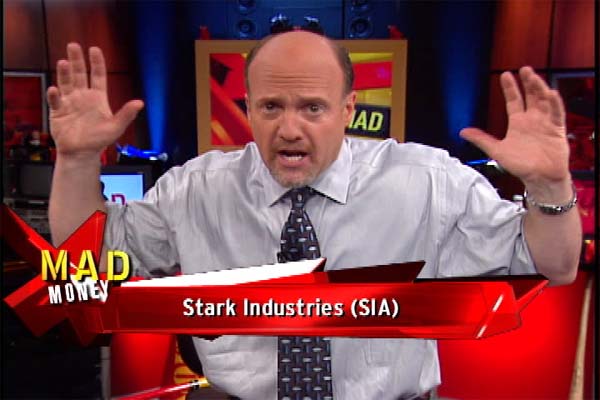
    At one time CNBC aired a variant called “CNBC-West” in the evening. It was excellent and quite humorous at times. I’d gladly pay up to view it, but haven’t been able to track it down. You are correct that Bloomberg has too many infomercials evenings. That’s one sleazy fella pushing off those coins on unsuspecting buyers. No way you can tell the quality / monetary value of an investment grade Morgan from a TV camera shot.
    Bloomberg daytime seems to go for the ratings with a lot of glib conversation. Every 10 points up or down in the Dow merits some explanation. :) Most are good at TV but not particularly well versed in finance. And one would guess a lot of what they say is read from teleprompter and written off-screen by their team of writers. I do find the evening shows more substantive and less showbiz-like. Maybe they feel only die-hard market watchers will tune in during prime evening viewing hours anyway. And, there’s no U.S. markets to grab attention, although the futures, Asian markets and FX are always of interest to me.
  • How much fear is in the air about SVB and the greater implications?
    "constantly beeping/buzzing/blinking with something to give viewers another dopamine hit"
    That’s a reference to Cramer? Right?
    image
  • Warren Buffett talking to Biden administration on banking crisis
    I am sure Powell is aware of something is broken within the banking system due to the unprecedented rate hike’s magnitude and pace. Clearly, something needs to be redone on the stress test that failed to catch these banks. Senator Elizabeth Warren blamed that on 2018 deregulation on part of Dobb-Frank Act and the Fed.
  • NYCB Buys Most of Signature Bank - FDIC
    https://www.fdic.gov/news/press-releases/2023/pr23021.html
    "....The 40 former branches of Signature Bank will operate under New York Community Bancorp's Flagstar Bank, N.A., on Monday, March 20, 2023. The branches will open during their normal business hours. Customers of Signature Bridge Bank, N.A., should continue to use their current branch until they receive notice from the assuming institution that full-service banking is available at branches of Flagstar Bank, N.A.....As of December 31, 2022, the former Signature Bank had total deposits of $88.6 billion and total assets of $110.4 billion. Today's transaction included the purchase of about $38.4 billion of Signature Bridge Bank, N.A.'s assets, including loans of $12.9 billion purchased at a discount of $2.7 billion. Approximately $60 billion in loans will remain in the receivership for later disposition by the FDIC. In addition, the FDIC received equity appreciation rights in New York Community Bancorp, Inc., common stock with a potential value of up to $300 million....."
  • News: UBS to buy CS.
    You may hear about the controversial wipeout of $17 billion CS AT1/CoCo bonds.
    These (AT1) bonds are contingent-convertible (CoCo) bonds common in Europe and Asia. In good times, these convert into equity. But in bad times, forced conversion can be done at loss, or the entire amount could be written down. So, they pay higher-yields. These count as Tier 1 capital.
    What confused the investors in Europe was that AT1/CoCo bonds are ABOVE the common stock in the capital structure. So, how can there be ANY equity left, but ZERO for AT1/CoCo bonds? That is where the Swiss Government stepped in - it said, "because it says so". Oops! There goes an entire bond structure (CoCo) down the tube! This category may be damaged.
    They aren't used in the US. But to count as Tier 1 in the US, a bank convertible in the US must be noncumulative.
    https://www.fidelity.com/news/article/top-news/202303191646RTRSNEWSCOMBINED_KBN2VL0GX-OUSBS_1
  • Warren Buffett talking to Biden administration on banking crisis
    All central banks (EU Australian Canadian Japan USA) open up piggies accts again... Just like that the last 16 months of inflation war cries ceasing... Large monies maybe free flowing soon again.... Get ready
    Uncle power likely halt or raise very small perhaps last time to 0.25% on TUES.
    Economy get slaughtered if rates remain above 5.25%for an extended period of time.
  • Could First Republic’s collapse trigger a recession?
    @ dtconroe and @DavidF, please see @bee’s posting on WealthTrack.
    https://mutualfundobserver.com/discuss/discussion/58534/wealthtrack-weekly-investment-show/p8
    Leading Wall Street economist Nancy Lazar discusses the resilience of the U.S. economy, despite several canaries in the coal mine examples of financial strain. Lazar shares her insights on why the economy is holding up better than expected and what we can expect moving forward, including the impact of the Federal Reserve’s efforts to slow down the recovery.
    Nancy thinks we are entering a recession in the next 12 months, even with conflicting data on strong employment numbers, high wages, decent earning reporting and an inverted curve.
    I too think a 25 bps rate hike is likely this week.
  • Right Now: Treasuries vs CDs
    "I limit the amount of my CDs to $50k to 100k."
    $25 to 50k here. But maturities from 4/23 out to 11/25.
  • Warren Buffett talking to Biden administration on banking crisis
    Twitter has been speculating big news ahead of US futures opening this evening - in about 10 min.
    So, we got BIG news from Europe on UBS taking over CS.
    NO big news in the US except rumors (including Buffett). We only have 2 releases TODAY by the Fed, one stating that US financial system is strong (after the UBS + CS news), another providing more dollar swap lines to other central banks.
    https://www.federalreserve.gov/newsevents/pressreleases/other20230319a.htm
    https://www.federalreserve.gov/newsevents/pressreleases/monetary20230319a.htm