Howdy, Stranger!

It looks like you're new here. If you want to get involved, click one of these buttons!

Here's a statement of the obvious: The opinions expressed here are those of the participants, not those of the Mutual Fund Observer. We cannot vouch for the accuracy or appropriateness of any of it, though we do encourage civility and good humor.
  • Government Statistics: Trump fires labor statistics chief after weaker than expected jobs report
    It's all Biden's fault.
    Yeah. I thought about pointing out that Biden never had a month where the number of jobs dropped. But it wouldn't be fair to mention that without giving Trump some credit.
    Trump handed Biden an economy with so few people working (Trump being first president since Hoover to lose jobs on his watch) that Biden's employment numbers had nowhere to go but up.
    (Actually job growth merely caught up with its pre-Covid trajectory that started with Obama.)
    image
  • US Appeals Court says tariffs are illegal.

                              And @FD1000 IS PROUD TO BE AN AMERICAN !!!
    image image
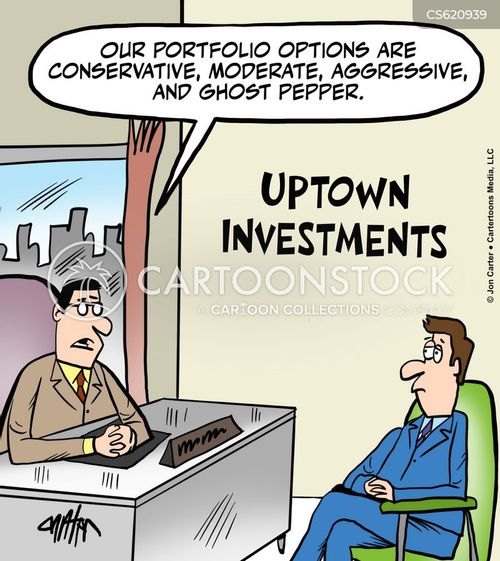
  • Portfolio Allocation Ideas & Strategies
    If you go to Fidelity’s generic page and search first for an OEF, it will then allow you to run comparisons with both OEFs and ETFs. (See “compare” in the upper left page corner). You don’t need to be logged in. Nice, since I prefer to login only when transacting business. But you need to enter the OEF first. You can compare the performance of up to 5 funds over periods ranging from YTD out to 10 years. I use it a lot to compare how different funds held up during the late March / early April market upheaval.
    (What you see is a linear graph showing how a hypothetical $10,000 investment fared over the time period chosen.)
  • Government Statistics: Trump fires labor statistics chief after weaker than expected jobs report
    President Donald J. Trump’s firing of the commissioner of labor statistics ... for announcing that job growth has slowed dramatically
    It turns out that he was right. After the firing Trump got what he wanted - another June job growth revision. The number of jobs did not grow slowly in June after all.
    For the first time since, well, since the last full month Trump 45 was in the Oval Office (December 2020), the number of jobs shrank.
  • Portfolio Allocation Ideas & Strategies
    "I think Fidelity has the worst mutual fund screener of all the major brokerages."
    Vanguard doesn't appear to have a "traditional" fund screening tool.
    They do have a fund comparison tool which can be used to compare up to 5 mutual funds or ETFs.
    https://investor.vanguard.com/tools-calculators/etf-fund-comparison-tool
    One can also select a fund family and sort by average annual returns (1-yr, 5-yr, 10-yr) or SEC yield.
    T. Rowe Price was selected as the fund family in the link below.
    https://investor.vanguard.com/investment-products/list/non-vanguard-mutual-funds?filters=open&FundFamilyId=6107
  • Buy Sell Why: ad infinitum.
    Sold GDL today. I’m concerned that in the stampede to own gold, some investors have been inadvertently buying / bidding-up this previously tame CEF. GDL is an M&A arbitrage fund designed to outperform cash by a percent or two over longer periods. Over 10 years it’s produced 3% annually - similar to the return on cash over that time. Suddenly it’s up more than 12% over the past year and near 10% YTD. Makes no sense. The symbol for a gold miners fund is GDX. The symbol for a gold bullion fund is GLD
    Folks … please double-check your ticker symbol before hitting “BUY”.
    Study: The study found that even sophisticated investors can get confused. Mutual funds and hedge funds were found to also make mistaken investments based on similar company names.”
    Massively Confused Investors: ” …in modern behavioral finance, it is believed that irrational behaviors of investors cause the comovements of related stocks. For example, Rashes found a highly abnormal positive correlation between two companies with similar names but nothing else in common, caused by the irrational feelings of investors”
    We conduct a search for pairs of companies with similar names/ticker symbols.: “ Between 12% and 25% of such pairs exhibit co-movements in trading turnover, which we attribute to investor confusion ”
    Costly Mistakes
    Clarification note: GDL had been a major portfolio component this year until 8/7 when I sold all. Purchased a lesser amount and added it to my ”hedge basket” shortly after that.
  • Portfolio Allocation Ideas & Strategies
    If you have access to fidelity.com, here is an interesting suggestion by a Fidelity poster on how to use one of their applications to screen mutual funds (OEFs):
    "I found my funds by the following - Under Fidelities' "News & Research" click on Mutual Funds. Then select Morningstar 5 star rated funds. From this list sort by 3 year sharp ratio."
    Good luck.
    blech. morningstar has an article where it talked about its star rating and said that that 5 star funds are the quickest to change from a 5 star. and there is only 1 direction for them to go. 4 stars came in 2nd and usually it was to the downside.
    that said, i used to be a pretty staunch follower of a few Dave Ramsey FB groups and that was largely the strategy employed.
    I think Fidelity has the worst mutual fund screener of all the major brokerages.
  • Portfolio Allocation Ideas & Strategies
    The screener includes filters on (3 year) standard deviation and 3 year Sharpe ratio so that you can prune high volatility funds before you even start reviewing and sorting the search results.
    The filters allow you to set any min and max you want but also include checkbox ranges. For each of those ranges it tells you how many funds pass the filter. It tells me that there are 943 funds with std dev's between 0 and 5.
    Then checking off the 5* box reduces the number of results passing both filters to 96.
    I suggest checking off two other attributes in the filter: "Include ETFs" and "Include closed funds" (because they may be open outside of Fidelity). There's also an "include leveraged/inverse funds" if you're so inclined.
    Finally, keep in mind that this screener excludes funds you cannot buy at Fidelity. It also excludes D&C funds. You won't find PIMIX here. You'll only see retail shares, I-2, shares, and I-3 shares. No lower ER class I shares - Fidelity doesn't sell them.
    Here's the search on PIMCO multisector bond funds to illustrate that.
    Fidelity Pimco search.
  • Portfolio Allocation Ideas & Strategies
    If you have access to fidelity.com, here is an interesting suggestion by a Fidelity poster on how to use one of their applications to screen mutual funds (OEFs):
    "I found my funds by the following - Under Fidelities' "News & Research" click on Mutual Funds. Then select Morningstar 5 star rated funds. From this list sort by 3 year sharp ratio."
    Good luck.
    Given your interest in conservative funds, you might consider sorting on standard deviation or beta from lowest to highest. The nice thing about the Fidelity tool is that the sort will hold when you go to look at returns.
    I tend to look at the last three and five-year periods when it comes to the stars. I think we're in a different investing world since the end of low rates, and maybe since COVID.
    One thing to consider, you might be missing out on some good funds that don't accurately fit in an M* style box, so may not be accurately starred.
  • Portfolio Allocation Ideas & Strategies
    I wish Fidelity's mutual fund screener included Sharpe/Sortino ratios for 5 and 10 years.
    Agreed. But thankfully we have sites like Portfolio Visualizer.
  • Portfolio Allocation Ideas & Strategies
    I wish Fidelity's mutual fund screener included Sharpe/Sortino ratios for 5 and 10 years.
  • Portfolio Allocation Ideas & Strategies
    If you have access to fidelity.com, here is an interesting suggestion by a Fidelity poster on how to use one of their applications to screen mutual funds (OEFs):
    "I found my funds by the following - Under Fidelities' "News & Research" click on Mutual Funds. Then select Morningstar 5 star rated funds. From this list sort by 3 year sharp ratio."
    Good luck.
  • FPACX or FPAG + FPAS?
    @Level5. A great question. The stuff I have been going over and over and over again lately. I assume you know that the great Romick is no longer on the management team of FPAG. You might want to run the numbers for the one fund vs 2 ETFs at Portfolio Visualizer and play with various allocations. Also check out a deep look at FPAG on Seeking Alpha. I am doing Wellington Global, VGWLX plus MM.
  • Wellington is coming out of the shadows
    There are now brand new Vanguard/Wellington ETFs (active): VDIG (ER 40 bps), VUSG (35 bps), VUSV (30 bps).
    Subscription link https://www.barrons.com/articles/vanguard-active-funds-38f74fcb
  • FPACX or FPAG + FPAS?
    I’m hoping you will help me think this through…
    I have a small position in FPACX/FPCSX. I like that it includes a global cast as well as a hefty pool of dry powder for potential opportunities. I also like the lower sd of 10.65 (3yr) and 12.08 (5yr). I’m not in love with the er (.99 / 1.01).
    The global equity allocation for FPAG is quite similar, with the exception of higher percentages in each stock. It holds much less dry powder (2.79 vs 36.71%), so can’t be as nimble as FPACX/FPCSX ( I already hold 20% in mmkt for safety and potential reinvestment at market drops). The er is quite different (.49 vs .99 / 1.01).
    I’m wondering if combining FPAG (60%) with FPAS and/or FPNIX (40%) would be a reasonable substitute at a lower er, and ability to rebalance come RMD time.
    Your thoughts are most welcome.
  • Wellington is coming out of the shadows
    Per BBG:

    Wellington Management Co. is a rarity in the investment world: a fund manager with more than $1 trillion of assets and almost zero brand recognition.
    Not for long.
    The staid, nearly century-old firm that mostly serves vanilla equity and bond strategies to buttoned-up institutions like pensions and endowments is now moving aggressively into private markets and hedge funds. Wellington is spending big to hire from bulge-bracket banks and alternative investment firms, adding dozens of private markets professionals to build a unit of about 40 people.
    It’s also hustling to build a brand with retail investors, many of whom have never heard of the $1.3 trillion firm. It’s a big change for a money manager that for decades didn’t care about what the world thought, as long as its big institutional clients were happy.
    Among its recent hires, Wellington recruited a head of private investments capital formation from Goldman Sachs Group Inc., poached a team from Pacific Investment Management Co. to expand in private credit and hired Christina Kopec Rooney from Goldman’s asset management arm to head its nascent push into the US wealth market. It even partnered with private equity giant Blackstone Inc. and Vanguard Group to launch hybrid funds for retail investors.
    In perhaps its most radical shift, Wellington – housed across 19 floors in Boston’s Atlantic Wharf – has done the previously unthinkable: It hired a public relations team.

    < - >
    https://www.bloomberg.com/news/articles/2025-09-05/wellington-management-seeks-the-spotlight-after-100-years-of-shunning-it?srnd=homepage-americas
    ... take that as you will. For me, I prefer investment managers that tend to stay in the background. My go-to is Capital Group (where I'm deeply invested across accounts) but in terms of quiet, steady-eddie operations Wellington, D&C, etc are right up there as well.
  • Hrmm. Goldman takes small stake in T.Rowe in exchange for customer access
    For QUOTES for less traded or illiquid securities, funds can use matrix pricing (i.e. use something similar that traded recently) or 3rd party quote services. So, for better or worse, traded/listed funds will have daily NAV. As such, illiquid securities are unsuitable for listed wrappers (listed OEFs, ETFs) and SEC has restricted them to 15% of AUM.
    NONTRADED funds are growing as a category. These aren't required to mark-to-market or publish daily NAV. Redemptions may be infrequent, but you can buy them through advisors anytime (there may be accredited/qualified-investor requirements). Among these, INTERVAL-FUNDS are growing the fastest. They started only in 2010s (ETFs had head start in 1990s). Here is some data from ICI Fact Book, Ch 5: BTW, MFO Premium (MFOP) includes many interval-funds (Morningstar also has the data but that's very expensive).
    https://www.icifactbook.org/pdf/2025-factbook-ch5.pdf
    image
  • US Appeals Court says tariffs are illegal.
    Where are you with illegal redistricting?
    Any specific illegal redistricting you have in mind here?
    Generally speaking, mid-decade redistricting is not illegal. League of United Latin American Citizens v. Perry, 548 U.S. 399 (2006). Redistricting for political reasons is not per se illegal (Rucho v. Common Cause, 588 U.S. 684 (2019)), ostensibly so long as it does not discriminate on the basis of race.
    However, even that restriction has been lessened. If gerrymandering is done for political reasons purportedly in good faith, then the fact that the redistricting correlates closely with race doesn't make it illegal. Alexander v. South Carolina State Conference of the NAACP, 602 U.S. 1 (2024).
    I'm just describing the law as it exists. I don't see Gavin's redistricting proposal as being somehow less "illegal" than any other you may have in mind.
    If you're asking where I stand on what ought to be illegal, I'm with the Governator in principle. He pushed for commission redistricting in California in 2010. That's not to say that this has worked as intended. It needs to be adequately funded.
    https://www.propublica.org/article/how-democrats-fooled-californias-redistricting-commission
    IMHO nonpartisan commissions ought to be used nationwide for redistricting.
    However ...
  • Portfolio Allocation Ideas & Strategies
    Good discussion.
    7 equally weighted positions here (14.25% portfolio weight each). Other than a long-short fund (CPLSX) and a real assets fund (RAPAX), there isn’t much risk on the table. Third riskiest part is the equally weighted CEF basket. It’s tilted towards income producing assets & hedged equity.
    I’ve always looked at a portfolio as consisting of big “pieces” rather than focusing on stocks, bonds, cash, etc. Case in point: BAMBX is a pretty unique animal. It doesn’t fit neatly into any of the mentioned asset classes. As an investor you can occasionally change-out segments to maintain a risk profile appropriate for your age & circumstances. Sometimes I’ll sell something that’s had a strong run and replace it with something I think represents better value at the time.
    image
  • Portfolio Allocation Ideas & Strategies

    As a retired investor, "I dislike volatility!", to quote keppelbay. Especially in the current uncertain market and political environment, preserving capital is more important to me than chasing returns on capital. I prefer to err on the side of caution since I don't need a lot more money, and all my expenses are covered by generous pensions and Social Security.
    Currently, my conservative portfolio allocation is as follows:
    - 45% Bond OEFs (APDPX, DHEAX, PYLD and RCTIX)
    - 30% CDs
    - 25% Alternative OEFs (QDSNX and QLENX)
    ...
    P.S. Based on Portfolio Visualizer, and back testing with a start date of July 2023 (inception date of PYLD), my current portfolio would have had an annualized return (CAGR) of 10.5% with a standard deviation of 2%, and a 0.47% correlation to the S&P 500.
    July 2023 through Aug 2025 was a calm period. If numbers from that period look too good, they are.
    I ran PV with your portfolio, dividing the bond funds equally (11.25% each) and the alts equally (12.5% each). I also prepared a second portfolio, substituting PIMIX for PYLD to get a modestly longer time frame.
    From this PV analysis (July 2023 - Aug 2025) you can see that this was a reasonable substitution. Same annual returns, same std deviation, same 0% max drawdown.
    When one drops the original portfolio from the input, then PV calculates over the period April 2022 - Aug 2025. This adds a downdraft (April - June 2022) that the shorter period doesn't have. The annualized return drops from 10.9% to 8.8%, while std dev increases from 2.0 to 2.9.
    You might consider substituting similar funds with longer lifetimes to get estimated performances over even longer time periods.
    Maximizing Sharpe ratio for the original funds (substituting ICSH for CDs) PV says:to use:
    APDPX 20.71%
    DHEAX 72.72%
    QLENX 6.57%
    The annualized return is a little less (10.45% vs. 10.96%), but the std dev is cut nearly in half (1.10 vs. 2.01). However, this too is calculated over a very short time period.