Howdy, Stranger!

It looks like you're new here. If you want to get involved, click one of these buttons!

Here's a statement of the obvious: The opinions expressed here are those of the participants, not those of the Mutual Fund Observer. We cannot vouch for the accuracy or appropriateness of any of it, though we do encourage civility and good humor.
  • T. Rowe Price Small-Cap Stock Fund reopening to new investors
    https://www.sec.gov/Archives/edgar/data/75170/000199937125011635/trowe-497_081925.htm
    497 1 trowe-497_081925.htm DEFINITIVE MATERIALS UNDER RULE 497
    T. Rowe Price Institutional Small-Cap Stock Fund
    T. Rowe Price Small-Cap Stock Fund
    Supplement to Prospectuses and Summary Prospectuses dated March 1, 2025
    Effective September 30, 2025, the funds will resume accepting new accounts and purchases from most investors who invest directly with T. Rowe Price.
    Accordingly, effective September 30, 2025, the first sentence under “Purchase and Sale of Fund Shares” in each summary prospectus and Section 1 of each prospectus is deleted in its entirety. In addition, the section entitled “Closed to New Investors” in Section 2 of each prospectus is deleted in its entirety.
    The date of this supplement is August 19, 2025.
    G68-041 8/19/25
  • tax-free u.s. bond market and GOP control for 2-4 years

    investors were given a temp reprieve by the gop being too unmotivated to find a grift-worthy angle against munis and the like.
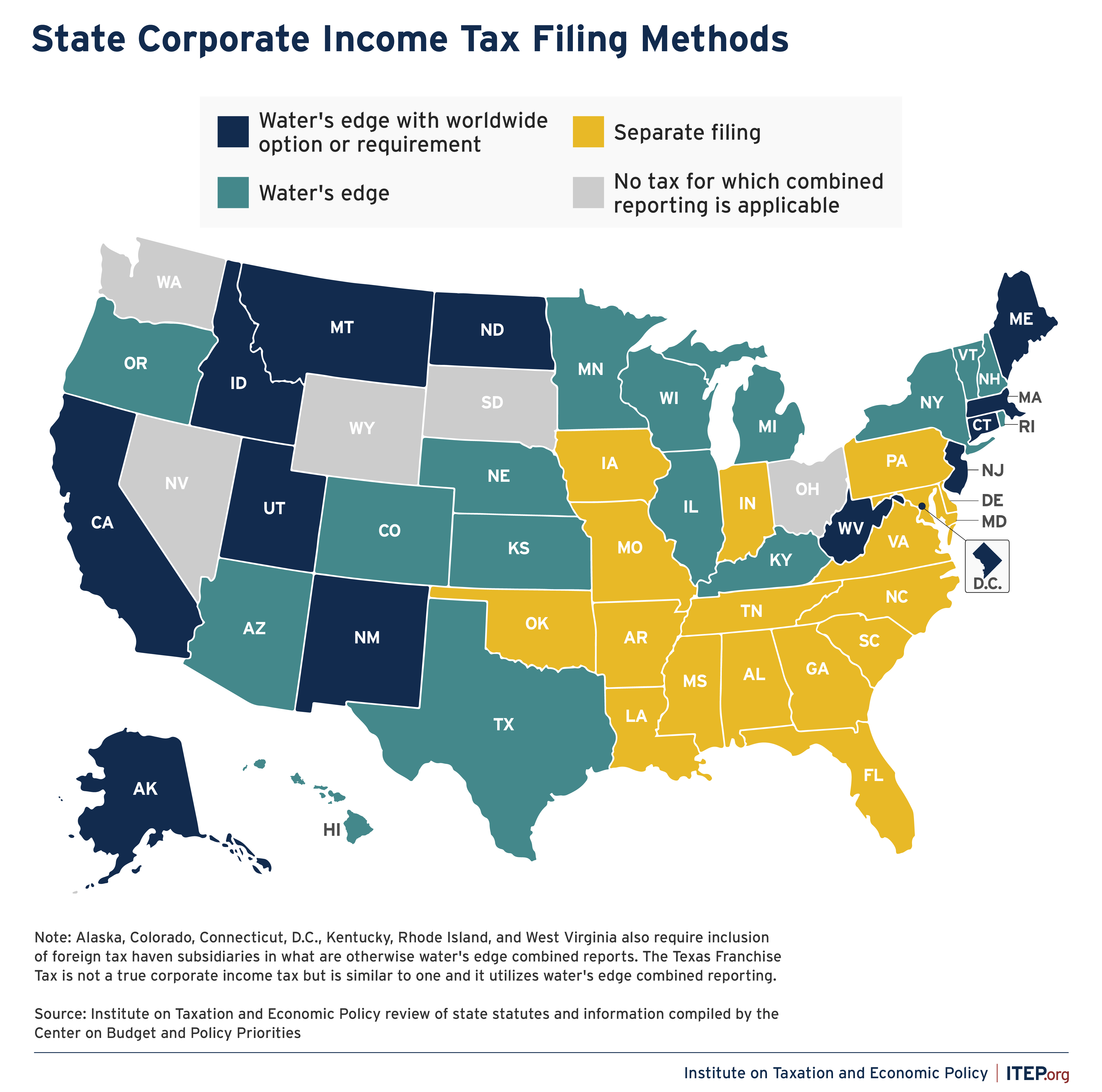
    the environment has gotten fierce for state gov environments, as corporates look to evade taxes that help fund regional projects. notably, there seems to be a lot of evaders in the southeast, and thus red states. (dems, prepare for blame)
    not sure how this can be avoided w/out active fund management.
    image
    https://itep.org/states-with-waters-edge-or-worldwide-combined-reporting/
    of course, even w/out gop grifting, the downstream effects of gop governance is devastating, and cannot be avoided for any special interest w/out sufficient and continuous bribes and lobbying.
    https://inequality.org/article/nows-the-time-to-prepare-state-budgets/
  • Historical 60-40 (150+ Years)
    Historical 60-40 (150+ Years)
    A historical view is presented for allocation 60-40 over 150+ years (real returns; +5.56% for 60-40 vs +6.98% for 100-0; the cumulative return differences appear more dramatic) & 5 years (nominal returns?). The 2022-24 period (post-pandemic & Russia-Ukraine war) was among the worst periods for 60-40 & its drawdown was comparable to 100-0 (i.e. bonds offered no help) - it had never happened before.
    For drawdowns, both the max & recovery period are important. A "Lake Volume" measure is used that seems to be the area of the drawdown (precise methodology isn't provided, but it could just be proportional to the average decline for the drawdown). Then, there are 2 ways to look at this in a Table shown:
    (i) the worst 1929 era lake-vol was used as 100% (max "pain"), & then all others are shown as relative % or relative "pain" measure,
    (ii) in each drawdown, the difference in normalized lake-vol % for 60-40 & 100-0 as reduction in pain with 60-40.
    Of course, compared to the 1929 era, 2022-24 was a nonevent (but unique in its own way).
    image
    Morningstar Article https://www.morningstar.com/economy/6040-portfolio-150-year-markets-stress-test
  • Meme Stocks
    I'm done with all that nonsense. I bought a good chunk of GME at 60 bucks on a friday and then bought again that monday at 90. I'm not that guy but I was pretty convinced that thing had a firecracker lit underneath it and the sentiment around it online and in person was bananas. I sold 1 batch at 350ish and 1 at 275ish. not life changing money but was a nice vacation. I didnt' trade any other meme stocks and that has been it for me. if that money had gone to 0 it would of made little difference in my life but those 2 weeks were wild and too wild for this guy.
  • Intel stock spikes after report of possible u.s. government stake
    A brighter investment is from Japan’s Softbank, and they have deep pocket to get into semiconductor foundry business. If the investment stabilizes Intel, Softbank will continue to their investment. This is analogous to Warren Buffet’s investment in a troubled stock, United Healthcare.
    https://forbes.com/sites/ywang/2025/08/18/softbank-to-make-2-billion-investment-in-troubled-us-chipmaker-intel/
  • Where to Invest Right Now: How to Profit From a Weak US Dollar - Bloomberg
    Thanks @Old_Joe / Will run some tests on an unregistered device before sharing more. 5 monthly allowed. So only 1 remaining this month.
    Re the discussion - I’ve held a Real Assets fund (big holding) for several years. Mine is only 5% in gold bullion. They are all different in their allocations. Right now it holds 25% in real estate. Also, I opened small “token” positions in Swiss Franc / JP Yen last week as a counter to dollar assets. If they rise they will mitigate downside a small bit. Very low allocation to equities in general. As article may note, longer dated bonds / bond funds aren’t a good choice if higher inflation accompanies the weaker dollar (likely). 1-5 year part of the curve may be appealing.
    RAPAX is my real assets fund. Not as successful longer term as Price’s PRAFX. But it’s much less volatile than Price’s offering. I also have a lot of respect for this non-mainstream asset manager.
  • Where to Invest Right Now: How to Profit From a Weak US Dollar - Bloomberg
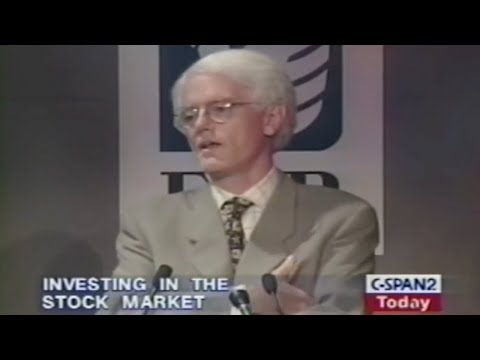
    Peter Lynch's take on where to invest:
    Lynch also revealed his approach of identifying excellent companies in struggling sectors. “I'm always on the lookout for great companies in lousy industries.A great industry that's growing too fast, such as computers or medical technology, attracts too much attention and too many competitors,” he said.
    His thoughts today, Aug 18, 2025 (still has his full head of silver hair):
    peter-lynch-stock-market-bestl
    His thoughts back in Back in 1997:

  • Where to Invest Right Now: How to Profit From a Weak US Dollar - Bloomberg
    I posted previously the falling dollar since late last year (see link) by the Dollar Index.. The dollar has fallen over 10% in value against major currencies.
    https://barchart.com/stocks/quotes/$DXY/interactive-chart
    Many factors contributed to the weaker dollar. One of them is the increasing US federal debt in trillions, and it is getting worse. Earlier this year the credit quality of US treasury was downgraded by Moody.
    Investor concerns had initially mounted after the rating agency Moody’s slashed the U.S.′ credit rating on Friday, bringing it down one notch from Aaa — the highest score — to Aa1. The agency attributed the downgrade to the increasing burden of financing the government’s budget deficit, as well as the high cost of rolling over existing debt amid high interest rates.
    “This one-notch downgrade on our 21-notch rating scale reflects the increase over more than a decade in government debt and interest payment ratios to levels that are significantly higher than similarly rated sovereigns,” the rating agency said in a statement.
    https://cnbc.com/2025/05/19/us-treasury-yields-moodys-downgrades-us-credit-rating.html
    Institutional money has been flowing toward other asset classes such as developed and emerging market in both stocks and bonds for better returns. The current politics do not helped either. YTD developed market index funds returned about 23% comparing to that of 10% of S&P 500; emerging market index returned 13%. For investors who tilted their oversea exposure early in the year have gained nicely over that of US market.
    Thanks to our monthly MFO Commentary, both David Snowball and Lynn Bolin have provided detailed assessment of the current investment and risk mitigation.
    @hank, i cannot get behind the paywall either. Tried in several browsers with pop-up blocker turned off. Can you provide a short summary? Thanks
  • Baron FinTech and Baron Technology Funds will be converted into ETFs
    https://www.sec.gov/Archives/edgar/data/1217673/000119312525182599/d947285d497.htm
    497 1 d947285d497.htm BARON SELECT FUNDS
    Filed by Baron ETF Trust
    pursuant to Rule 425 under the Securities Act of 1933
    Subject Company: Baron Select Funds
    SEC File No. 811-06312 and 333-103025
    Baron Select Funds®
    Baron FinTech Fund®
    Baron Technology Fund®
    Supplement to Current Summary Prospectuses and Prospectus
    For all existing and prospective shareholders of Baron FinTech Fund and Baron Technology Fund:
    •Baron FinTech Fund and Baron Technology Fund (each, an “Acquired Fund”) will each be converted from a mutual fund into an exchange-traded fund (“ETF”), which is expected to occur on or about December 12, 2025.
    •If you are an existing shareholder of an Acquired Fund, and your account can hold an ETF, your shares will be converted, and no action is needed by you.
    •If you hold shares of an Acquired Fund in an account that cannot hold an ETF (i.e., your account is not permitted to purchase securities traded in the stock market), there are certain actions you can take. See the “Questions and Answers” section below for further information.
    At a meeting held on August 5, 2025 (the “Meeting”), the Board of Trustees of Baron Select Funds (the “Acquired Fund Trust”) approved on behalf of the Acquired Funds and the Board of Trustees of Baron ETF Trust (the “Acquiring Fund Trust”) approved on behalf of Baron Financials ETF and Baron Technology ETF (each, an “Acquiring Fund” and together with the Acquired Funds, the “Funds”) (the Board of Trustees of Acquired Fund Trust and the Board of Trustees of Acquiring Fund Trust are referred to herein collectively as the “Board”) an Agreement and Plan of Reorganization pursuant to which an Acquired Fund, a series of the Acquired Fund Trust, will transfer its assets and liabilities to its corresponding Acquiring Fund, each a series of Acquiring Fund Trust, in exchange for shares of its corresponding Acquiring Fund in a tax-free reorganization (each, a “Reorganization”). Each Acquiring Fund is, and will be immediately prior to the date of the closing, a shell series, without assets or liabilities. The Board, including all of the
    Trustees who are not “interested persons” of the Funds (as defined in the Investment Company Act of 1940, as amended (the “1940 Act”)), determined that, for each Acquired Fund and Reorganization, participation in the Reorganization is in the best interests of the Acquired Fund and that the interests of existing shareholders of the Acquired Fund will not be diluted as a result of the Reorganization. Each Reorganization is expected to become effective on or about December 12, 2025 (the “Closing Date”).
    Each Acquiring Fund will have an identical investment objective and identical fundamental investment policies as its corresponding Acquired Fund, as well as substantially similar investment strategies. Baron FinTech Fund and Baron Financials ETF are diversified, while Baron Technology Fund and Baron Technology ETF are non-diversified. BAMCO, Inc. (“BAMCO” or the “Adviser”), the Acquired Funds’ current investment adviser, will serve as the investment adviser of the Acquiring Funds. The portfolio management team of each Acquiring Fund is the same as that of its corresponding Acquired Fund.
    The Board believes each Reorganization will permit shareholders of the Acquired Portfolio to pursue the same investment objective in an ETF structure, which provides multiple benefits for shareholders, including lower costs, the potential for increased tax efficiency, intraday trading and full daily holdings transparency.
    Each Reorganization is structured to be a tax-free reorganization under the United States Internal Revenue Code of 1986, as amended. As a result, Acquired Fund shareholders generally will not recognize a taxable gain (or loss) for U.S. tax purposes as a result of the Reorganizations (although cash received as part of a Reorganization may be taxable, as noted below).
    In connection with the Reorganizations, shareholders of the Acquired Funds will generally receive ETF shares of the Acquiring Funds equal in aggregate net asset value to the number of shares of the Acquired Funds they own. For the avoidance of doubt, the Acquiring Funds shall not issue fractional shares, and cash shall be distributed to Acquired Fund Shareholders in connection with the Reorganizations in lieu of fractional Acquiring Fund shares.
    Shareholders who do not want or cannot hold Acquiring Fund shares may redeem out of the Acquired Funds or exchange their Acquired Fund shares for shares of another fund. A redemption or exchange of shares would generally be a taxable event for shareholders holding shares in taxable accounts.
    2
    If you hold your Acquired Fund shares in an account with a financial intermediary that is not able to hold shares of an ETF such as the Acquiring Funds, like many individual retirement accounts or group retirement plans, as of the Closing date, you will not receive Acquiring Fund shares as part of the conversion. Instead, your Acquired Fund shares will be liquidated, and you may receive cash equal in value to the net asset value of your Acquired Fund shares.
    Completion of the Reorganizations is subject to making various filings with the U.S. Securities and Exchange Commissions (the “SEC”) and a number of conditions under the Plans. The Reorganizations do not require shareholder approval. Acquired Fund shareholders will receive an information statement/prospectus describing in detail both the Reorganizations and the Acquiring Funds, and a summary of the Board’s considerations in approving the Reorganizations.
    In anticipation of the Reorganizations:
    •on or about October 31, 2025, all Rule 12b-1 fees on Retail Shares of the Acquired Funds will be waived;
    •on or about October 31, 2025, all issued and outstanding shares of the Acquired Funds will be closed to new shareholders and subsequent purchases through the time of the Reorganizations.
    These dates may be subject to change.
    An Information Statement/Prospectus with respect to the Reorganizations is expected to be mailed to Acquired Fund shareholders in October 2025. The Information Statement/Prospectus will describe the Acquiring Funds and other matters. Investors may obtain a free copy of the Prospectus of the Acquiring Funds once the registration statement of the Acquiring Funds becomes effective or by calling (800) 823-6300.
    Please retain this supplement for future reference...

  • Where to Invest Right Now: How to Profit From a Weak US Dollar - Bloomberg
    @yugo.
    BLX and FBP.
    I was not necessarily looking for LatAm banks, but these two looked good when I was shopping and investigating. I insist on getting a dividend of at least 3% due to the higher risk in single stocks as opposed to mutual funds. My third stock is a L.P., Energy Transfer. Midstream oil-gas and LNG. Ticker is ET. (K-1 tax form.)
    BLX is already quite a bit above its consensus price target; those predictions are always looking 12 months further out. But for a long-term holding, I'm satisfied with it. I could see it in my portfolio indefinitely. What I see tells me it is thriving. Div yield right now is 5.6%.
    FBP is offering a 3.4% div yield. Out of San Juan. Still -17% below consensus target price. Beta is just a tiny bit higher than the Market, at 1.03. And P/E is just 11.3. (BLX P/E = 7.5.)
    ET as a company knows not what any sort of limit is. Always looking to add and bolt-on to its existing pipeline system. They have lately agreed to supply electricity-generating natgas to an outfit building an A/I data center in San Marcos, TX. The div has been growing by a quarter of a penny every time. Div yield is currently 7.53%.
    :)
  • Why would a health care ETF invest in Phillip Morris?
    PINK (Simplify Health Care ETF)
    Phillip Morris International = 3.62% of portfolio
    Purchased Mar 31, 2025
    Would this amount to ”shorting” health care as a hedging strategy?
    (Data from Morningstar)
  • JPMorgan Climate Change Solutions ETF will be liquidated
    https://www.sec.gov/Archives/edgar/data/1485894/000119312525182663/d50317d497.htm
    497 1 d50317d497.htm J.P. MORGAN EXCHANGE-TRADED FUND TRUST
    J.P. MORGAN EXCHANGE-TRADED FUNDS
    JPMorgan Climate Change Solutions ETF
    (the “Fund”)
    (a series of J.P. Morgan Exchange-Traded Fund Trust)
    Supplement dated August 18, 2025
    to the current Summary Prospectus, Prospectus and Statement of Additional Information, as supplemented
    NOTICE OF LIQUIDATION OF THE JPMORGAN CLIMATE CHANGE SOLUTIONS ETF. The Board of Trustees (the “Board”) of the Fund has approved the liquidation and dissolution of the Fund on or about October 10, 2025 (the “Liquidation Date”). Effective immediately, in connection with the liquidation and dissolution, the Fund may depart from its stated investment objective and strategies as it increases its cash holdings in preparation for its liquidation. On the Liquidation Date (for settlement, the date after the Liquidation Date), the Fund shall distribute pro rata to its shareholders of record all of the assets of the Fund in complete cancellation and redemption of all of the outstanding shares of beneficial interest, except for cash, bank deposits or cash equivalents in an estimated amount necessary to (i) discharge any unpaid liabilities and obligations of the Fund on the Fund’s books on the Liquidation Date, including, but not limited to, income dividends and capital gains distributions, if any, payable through the Liquidation Date, and (ii) pay such contingent liabilities as the officers of the Fund deem appropriate subject to ratification by the Board. Income dividends and capital gain distributions, if any, may be paid on or prior to the Liquidation Date.
    After the close of business on Friday, October 3, 2025, the Fund will no longer accept creation orders. This is also expected to be the last day of trading of shares of the Fund on the NYSE Arca, Inc. (“NYSE”). Shareholders should be aware that after the close of business on Friday, October 3, 2025, the Fund will no longer engage in any business activities except for the purposes of selling and converting into cash all of the assets of the Fund, paying its liabilities, and distributing its remaining proceeds or assets to shareholders (the “Liquidating Distribution”). Furthermore, during the time between market close on Friday, October 3, 2025 and the Liquidation Date, shareholders will be unable to dispose of their shares on NYSE.
    Shareholders may sell their holdings of the Fund, incurring typical transaction fees from their broker-dealer, on NYSE until market close on Friday, October 3, 2025, at which point the Fund’s shares will no longer trade on NYSE and the shares will be subsequently delisted. Shareholders who continue to hold shares of the Fund on the Liquidation Date will receive a Liquidating Distribution (if any) with a value equal to their proportionate ownership interest in the Fund on that date. Such Liquidating Distribution received by a shareholder, if any, may be in an amount that is greater or less than the amount a shareholder might receive if they dispose of their shares on NYSE prior to market close on Friday, October 3, 2025. The Fund’s liquidation and payment of the Liquidating Distribution may occur prior to or later than the dates listed above.
    Shareholders who receive a Liquidating Distribution generally will recognize a capital gain or loss equal to the amount received for their shares over their adjusted basis in such shares. Please consult your personal tax advisor about the potential tax consequences.
    INVESTORS SHOULD RETAIN THIS SUPPLEMENT
    WITH THE SUMMARY PROSPECTUS, PROSPECTUS AND STATEMENT OF ADDITIONAL
    INFORMATION FOR FUTURE REFERENCE
    SUP-TEMP-825
  • J.P. Morgan Must Face Claims Over Son’s Fleecing of Elderly Mom
    Gets into other cognitive / investment related issues facing elders as well and to what extent a financial institution is responsible for monitoring accounts. Gifted link to Bloomberg
  • Yieldstreet - Risks of Private Alternatives (Now Willow Wealth)
    Yieldstreet (2015- ) is an online platform that allows retail investors to participate in private market alternative deals (equity, debt) - real estate (26% of AUM), art, legal finance, startups, ship scraping/recycling, etc. The ER may be up to 2%. It promotes these as "Invest like the 1%" or as democratizing private equity/credit. Promised regular income was another lure - some projects haven't paid out a penny. Some private projects have high profile names of celebrities associated with them but that's just PR. Its reports to investors only are often marked confidential and aren't filed or posted anywhere. When these reports were delayed or stopped, or indicated additional risks, or there were notices for additional rescue funding (a clever name for rights-offering in the listed securities world), the concerned investors had to turn to social-media for any related information. All they had in hand were flashy promos/brochures that got them into the projects. In some cases, the indicated collaterals weren't found or were inadequate.
    But the convenience of online transactions or App (Apple Store or Google Play) doesn't replace risks of these illiquid, poorly understood/disclosed investments. There have been significant defaults and some projects have totally collapsed (i.e. became worthless). Yieldstreet blames bad real estate market and higher interest rates for private investments started in 2021-22.
    A new approach by Yieldstreet is to expand as broker-dealer and to offer funds (non-listed or listed) from established firms for platform fees. A new CEO started in 05/2025. So, a company can just change direction, replace the CEO, but if you lost money, you are out of luck.
    Lesson - look deeply BEFORE investing, not AFTER.
    CNBC News https://www.cnbc.com/2025/08/18/yieldstreet-real-estate-bets-customer-losses.html
    Wiki https://en.wikipedia.org/wiki/Yieldstreet
    Website https://www.yieldstreet.com/
  • Starting a new thread: Bloomberg Real Yield. (Begin, 08/08/25) Hiatus starts 21 Nov. '25
    @hank,
    You're right—the probabilty for rate cuts was higher several weeks ago.
    The probability of a 50 bps cut was also calculated but this went to zero
    after the latest CPI data release.
    Powell will not announce his resignation nor should he.