Howdy, Stranger!

It looks like you're new here. If you want to get involved, click one of these buttons!

Here's a statement of the obvious: The opinions expressed here are those of the participants, not those of the Mutual Fund Observer. We cannot vouch for the accuracy or appropriateness of any of it, though we do encourage civility and good humor.
  • Sequoia is now a three-star fund
    In my inbox today
    11/04/2015
    MFLDX: MainStay Marketfield I
    The Morningstar Star Rating for this fund has changed from 3 stars to 2 stars. For details, click here
    RPHYX: RiverPark Short Term High Yield Retail
    The Morningstar Star Rating for this fund has changed from 2 stars to 1 star. For details, click here
    HHCAX: Highland Long/Short Healthcare A
    The Morningstar Star Rating for this fund has changed from 4 stars to 3 stars. For details, click here
    NEFZX: Loomis Sayles Strategic Income A
    The Morningstar Star Rating for this fund has changed from 3 stars to 4 stars. For details, click here
    MINDX: Matthews India Investor
    The Morningstar Star Rating for this fund has changed from 3 stars to 4 stars. For details, click here
    WSCVX: Walthausen Small Cap Value
    The Morningstar Star Rating for this fund has changed from 4 stars to 3 stars. For details, click here
    BRTNX: Bretton Fund
    The Morningstar Star Rating for this fund has changed from 3 stars to 2 stars. For details, click here
  • Sequoia is now a three-star fund
    @David... The fund was 5 stars through yesterday. Current Morning* status states "under review'.
  • Sequoia is now a three-star fund
    Seriously, wasn't it five stars last month? I don't have evidence of it, but that's my recollection. If so, that's a mighty fast fall from grace.
    In related news, Valeant is down another 14% for the day (Thursday, 11/5).
    And, in a freakish development, the fund with the second-largest stake in Valeant is up 16.5% YTD. That's Tanaka Growth (TGFRX), with an 11% Valeant position.
    David
  • Warren Buffett’s Way To Invest For Retirement: 90/10 Allocation
    With the amount of money to invest, Buffet's family can live off of interest without drawing down on equity positions. I was thinking about Buffett's method when I bought an entry position in VFIAX on 9/10/15. It is now almost 8% higher.
  • Champlain's Emerging Markets Fund
    Never heard of New Sheridan. Down about 25% in the past year.
  • Few Funds Are Ready for this $100 Trillion Risk - The fossil-fuel free future of mutual funds
    Nova aired Part 1 of the "Making of North America". Let's keep in mind the natural forces at work when we discuss climate change. The discovery of Fossilized Palm fronds and coral found along the coast of Alaska are discussed in this episode.
    Article and Part 1 Episode:
    gpb.org/blogs/family/2015/11/04/nova-making-of-north-america
  • Few Funds Are Ready for this $100 Trillion Risk - The fossil-fuel free future of mutual funds
    Interesting to think that Oil companies started preparing for this 40 years ago.
    Exxon Predicted the Present Cheap Solar Boom Back in the 1980s
    "The oil giant's 25-year-old research into the economics of solar was spot-on."
    I recall years ago Exxon Mobil buying the patent rights to integrated solar roof shingle technology (not panels that are mounted on the roof, but are integrated into the shingle).
    bloomberg.com/news/articles/2015-11-04/exxon-predicted-today-s-cheap-solar-boom-back-in-the-1980s
    Article on Integrated Photovoltaics:
    nytimes.com/2009/09/27/business/27novel.html?_r=0
  • Lewis Braham: Mutual Fund Fees: How Low Is “Low”?
    @VintageFreak I see you're interested in the Grandeur Peak Global Micro Cap Fund from your other posts. It has a 2.00% expense ratio. But it is that kind of fund which has a high expense ratio but a small asset base that I am talking about. Is it fair to say that another of their funds--Grandeur Peak International Opps Inv GPIOX--has an "average" expense ratio of 1.35% when it is hard closed to all investors at $765 million while Acorn International Z ACINX with $7.3 billion and a 0.93% expense ratio has a "low" one?
    morningstar.com/funds/xnas/acinx/quote.html
    morningstar.com/funds/XNAS/GPIOX/quote.html
    That "low" expense ratio rating factors into Morningstar's "silver" rating of Acorn. But is it really low if Acorn is collecting many more millions in fees than Grandeur? Is it really low if Acorn now has to navigate illiquid foreign small caps as a result with a large $7.3 billion portfolio? It's market impact costs will be higher and its flexibility to invest in the smallest companies less than Grandeur. Only by looking at total dollars in fees would someone recognize that Acorn isn't necessarily a low fee fund and Grandeur isn't necessarily a more expensive one.
  • Grandeur Peak Global Micro Cap Fund subscription offering info
    As Bogle suggested recently, look at the dollars they're taking in, not just the percentage. 2% of $25 million means they're getting paid about $500,000 a year to run a global microcap fund, covering tiny obscure faraway companies. Sounds like a bargain to me. Plenty of people here think it's a bargain to pay 0.5% to invest in a domestic large cap fund with $10 billion, which means those managers are getting paid $50 million a year to cover highly liquid big companies where research is easily accessible.
  • S&P 500 Closing In On All-Time Highs
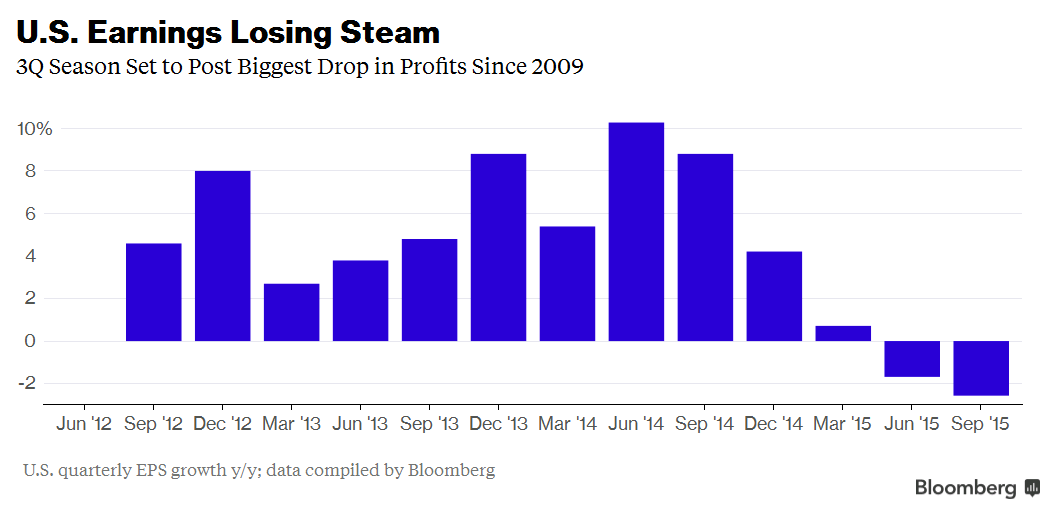
    image
    "So far, about three-quarters of the S&P 500 have reported results, with profits down 3.1 percent on a share-weighted basis, data compiled by Bloomberg shows. This would be the biggest quarterly drop in earnings since the third quarter 2009, and the second straight quarter of profit declines. Earnings growth turned negative for the first time in six years in the second quarter this year."
    The trend is your friend? Ummm, which one would that be? Eni Meeni Miney Mo.
  • I lost 2 funds - STHBX and STHYX (Wells Fargo Advantage)
    Many other posts have compared ZEOIX to RPHYX. Now, comparing SSTHX and RPHYX for the past three years, we have the typical $10000 at $10,733 for RHYPX, and $10,663 for SSTHX, pretty much a dead heat. In this year's difficult market though, it's 0.76% return for RPHYX, and -1.30% for SSTHX, about a 2% difference in favor of RPHYX. While I'm certainly less than thrilled at the deterioration in the RPHYX NAV, it would still seem to be a better place than SSHTX at least for now.
    Looking at ZEOIX, it's doing quite well this year, at a 2.58% return, and with $10,966 for three years. Unfortunately, it's not available NTF at Schwab, as Press notes. Guess I'll have to stick with RPHYX for a while.
  • Champlain's Emerging Markets Fund
    Flying under the radar here. It is an acquisition. Wonder what their plans are for it. Keep it or use it to seed something else.
    http://www.cipvt.com/pdf/New-Sheridan-Prospectus-June-30-2015.pdf
  • Lewis Braham: Mutual Fund Fees: How Low Is “Low”?
    I want to decide where I am going to expend my energy
    Fund A
    Assets: $100B
    ER reported: 0.5%
    Avg Annual Return: 10%
    Fund B
    Assets: $1B
    ER reported: 1.5%
    Avg Annual Return: 10%
    Returns are always after expenses. I care about who makes how much money why now? I make 10% in each fund. If either fund is misrepresenting expenses and investors would have ended up with higher return, then all crusaders can go complain to justice department.
    25 years back, when information was not forthcoming may be this makes some sense. In today's time with the internet, every fund investor knows all things remaining the same, go with the lower ER fund. If you are going with higher ER fund, do it for a reason - lower asset base, better fiduciary management, etc. etc. "Investors need to know how fund expenses are being paid and who they are being paid to". No, they don't. Why? Because they cannot do diddly squat about it.
    I would like Jack Bogle to give interview to someone else besides M*. Or I would like him to ask Christine Benz WTF one ANALyst or another at M* marries American Funds every other week. All well wishers of fund investors, please stop telling investors what they should do and go tell/appeal to those who make money off those investors.
  • Lewis Braham: Mutual Fund Fees: How Low Is “Low”?
    Hi Guys,
    MFOer Bee ended his/her submittal with the following aside: “It would be interesting to look more closely where these fund manager invest their profits since most fund managers commonly don't invest in the own mutual funds.”
    This closure is definitely more than an aside. It is an important indicator when selecting a mutual fund. It might not rank as highly as a low expense ratio criterion, but it is a significant signal. Having significant skin in the game addresses commitment.
    Bee is correct when he/she observes that most fund managers do not have that commitment. Although the percentages are not compelling, a surprising large number of fund managers do taste their own cooking. According to a Morningstar study, that number is in the vicinity of about One thousand loyal partakers of their own cooking. Good for them, not so good for those who abstain.
    Here is a Link to a recent WSJ article by Liz Moyer that summarized some findings from the Morningstar study that was completed by Rus Kinnel:
    http://www.wsj.com/articles/find-mutual-fund-managers-who-eat-their-own-cooking-1433518014
    One shocking statistic that was uncovered by Kinnel’s research is the following: “Balanced funds, which own both stocks and bonds, exhibited the starkest difference in performance in the Morningstar study. The success rate for balanced-fund managers with no money invested was 32%, compared with 85% for managers betting more than $1 million.” That’s quite a jump in performance success when contrasted against a respectable benchmark.
    Indeed, skin in the game is a primary motivator and a measure of a fund manager’s commitment to the investment policies that is practiced.
    Best Wishes.
  • Few Funds Are Ready for this $100 Trillion Risk - The fossil-fuel free future of mutual funds
    Here's my prediction: Fossil fuel companies will continue to deny climate change is real and of human origin until alternative energy becomes competitively priced and a true threat to their business at every level sans government subsidies. Then fossil fuel companies are going to go on a buying binge, acquiring all of the major alternative energy companies. Once they have complete control of the alternative energy industry, they will acknowledge that climate change is real and of human origin. It's sort of like tobacco companies buying companies with products to help you quit smoking now that the cat is officially out of the bag about smoking: abcnews.go.com/Business/buying-cigarettes-quit-smoking-aids-company/story?id=9057261 Win-win for them. They get to continue to sell fossil fuels and get to look like the good guys for offering alternatives to fossil fuels. Where would that leave socially-responsible funds? Unfortunately, it's problematic.
  • Warren Buffett’s Way To Invest For Retirement: 90/10 Allocation
    If the last thirty years are any indicator of future trends in Healthcare, maybe a 90/10 portfolio of VGHCX / VFISX vs Warren's VFINX / VFISX: (click on each image for better clarity)
    image
    image
  • Lewis Braham: Mutual Fund Fees: How Low Is “Low”?
    Something never mentioned about these shareholder costs is that these are risk free returns for the Fund company.
    Regardless of the gyrations of the market, asset under management never return a negative profits for fund managers. A fund that charges an ER of 1% on $1,000 invested will earn $10 return/year. If the market correct 50% and that $1,000 investment falls to $500 the fund company still earns a positive 1% or $5.
    To me, this is the reason why there is such a motivation for the fund company to add assets under management (AUM). Profits for fund companies are often less about growing the mutual fund share price (fund performance) and more about growing the assets under management.
    To me, the dirty secret is that fund management fees are always positive and are only more or less positive as it related to assets under management at any one time. Investors who pay these fees are additionally exposed directly to losses due to market risks. Fund managers deal with market risk by growing assets under management, not necessarily by focusing on the performance of the fund.
    - The mutual fund shareholder, not the fund manager, assume market risk. If an equity fund experiences a 50% market correction the equity investor must absorb a 50% loss.
    - Fund companies are profitable regardless of market performance. The fund manager continues to make a profit, sometimes a smaller profit, but still a profit.
    - Fund managers deal with "lower profitability" from market risk by increasing their assets under management.
    As an aside:
    It would be interesting to look more closely where these fund manager invest their profits since most fund managers commonly don't invest in the own mutual funds.
  • Few Funds Are Ready for this $100 Trillion Risk - The fossil-fuel free future of mutual funds
    PARNX is also fossil free as of Feb. 18, 2015.
    I actually assumed all Parnassus was "fossil free".
    PS Someone needs to file a pattent on Fossil Free Mutual Fund quickly. In fact, I'm expecting FOSFX launch soon now. Fossil Free Large Cap. Wisdom Tree Small Cap. Tree of Wisdom. Free off Fossill.
  • Lewis Braham: Mutual Fund Fees: How Low Is “Low”?
    I understand what you are trying to get at. I do. Matter of fact on M* Bogle also made point as much as half of "fees" go to parties outside the fund manager.
    http://www.morningstar.com/cover/videocenter.aspx?id=685180
    There are fixed costs incurred by a fund. So many funds with low asset bases close because those assets cannot fund - no pun intended - the beast, where now fund company ends up operating fund at a loss.
    The SAI of a fund does indicate where the expenses charged by the fund is going. Would we benefit from more disclosure? Sure. I'm saying there is enough information already. If expenses are the end all and be all, then we are all crazy to invest in actively managed funds.
    I'm not saying your article is not relevant. I'm saying this problem if we accept it exists, is unsolvable unless we start capping fees for management as well as fixed costs, with trading costs being the only variable to account for the rest of the fees - more assets can possibly cause more commissions when fund has to buy larger quantities of shares of stocks it owns. The devil is in the details and the devil is here already. My point, investors have to share equal blame for investing in funds that are charging them too much.
    As an investor, to me the ER is amount of $ I spend for every $1000 invested. My perspective is different from someone else's who's sitting on the side with an excel spreadsheet. JOHCM is collecting less fees, because it is managing fewer assets. The difference in assets between that fund and the American fund is so large, the ER becomes irrelevant since the percentage works off a much large asset base at the former. JOHCM is being fiscally responsible and investors should stay with that fund because they should believe JOHCM has investors best interest in mind and will be able to overcome any impediment of the ER over the long haul as opposed to the American fund.
    I am not seeing the point saying American as a company is raking in more dollars but their fund has smaller ER. As an investor and IF I didn't pay the load, I would indeed pay less per $1000 would I not with the American fund? If both funds returned the same return, and everything else regarding taxes remaining the same, will I not keep more of the returns with the American fund? If not, American should be hauled into court because they are hiding stuff in their SAI.