
It looks like you're new here. If you want to get involved, click one of these buttons!
Depending on the parameters of the market or the whimsy of the analyst, they expect robotaxis to bring in anywhere from tens of billions to trillions in annual revenue by the end of the decade. Yes, this decade.
To put that in perspective, Uber’s revenue since 2016, in total, is about $179 billion.
The promises are huge: autonomous taxis will be so much safer than human drivers that traffic deaths will plummet. Robotaxis will make transportation so cheap, it could upend everything from car ownership to the land on which we formerly parked our cars. Rather than depreciating money pits, cars with robot drivers would become income-generating assets for their owners.
© 2015 Mutual Fund Observer. All rights reserved.
© 2015 Mutual Fund Observer. All rights reserved. Powered by Vanilla
Comments
Tesla relies on visual/optical technology only. As a result, it may fail where visuals may fail - bad weather (rain, snow, fog), poor or too-bright lighting (driving against the Sun, etc). Tesla claims that it can overcome issues with AI, but even AI cannot fix poor data.
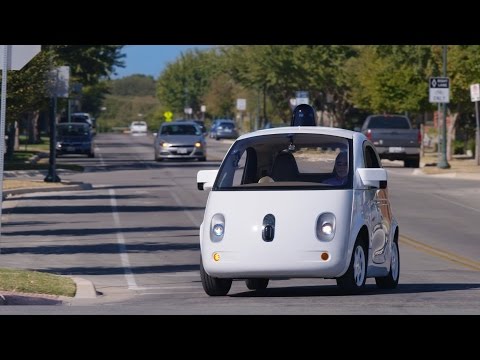
Waymo and others rely on multiple technologies for more robust operations - visual/optical, laser, radar.
I hope that this just doesn't become a business or political decision.
I have to tell you that I've been very impressed- these things react quickly, are very aware of what's going on around them, and are very good at signalling their intentions for lane changes. I've seen them evaluating a lane change, signalling for that, and then quickly changing their "minds" if the traffic in the intended lane tightened up and made the change "iffy".
In an earlier life in SF I drove a Yellow cab for a couple of years while I was taking flying lessons, so I tend to base driving evaluation on that experience plus traffic "separation" instincts from my years as an air traffic controller. Waymos do just fine, at least so far.
Based on news reports I have no such an opinion with respect to Tesla. My own primary basic driving rule is "if you can't see, don't do it." This allows, I'll admit, for occasional maneuvers that might not meet the DMV rules.
Waymo is widely used in major cities in southern California. Toyota is partnering with Waymo to expand their self driving cars, and that is a significant commitment.
Taking on the cost of vehicles and insurance would be a big change for Uber and Lyft. Would that be cheaper than humans? I dunno. But I don't know where the demand is coming from to pay for the new stuff.