

Dear friends, welcome to the March, beginning of spring, greening of the year, edition of the Mutual Fund Observer. We’re glad you’re here.
Every semester, I am reminded that the jeremiads are wrong.
In this case, they’re the thousand casual, caustic dismissals of the generation now sitting in college classrooms: addled, self-absorbed, screen-enslaved, and lost, we’re told. I have heard the charges. I have read the research. I worry about the kids.
Then I walk into the room with them, and the story changes.
This week, the question in Comm 370, my Comm & Emerging Technologies class, was one that I’d heard before but that has become sharper lately: Are we doomed?
She wasn’t being theatrical. She had been reading about technological affordance and neuroplasticity, the way a technology quietly reshapes not just our behavior but our brains, bending us toward whatever it makes easiest until the bend becomes permanent. She had been thinking about path dependence, about decisions made casually that turn out to have no exit. The research on our increasing dependence on AI didn’t help.
It was a good question. I wish I had a better answer.
What I had was this: “It depends on what you choose. It depends on what we choose. And our most important choices begin with the word ‘no.’ As in, ‘No, I’m not doing it just because everyone else is. No, I’m not responding to boredom or stress by sinking into a digital world. No, I’m not setting down a book because my laptop and its 27 tabs are easier.’ Because if you don’t learn to say ‘no’ now when it’s easy, and the stakes are small, you never will.”
“No” is also the first word spoken by the world’s most courageous people.
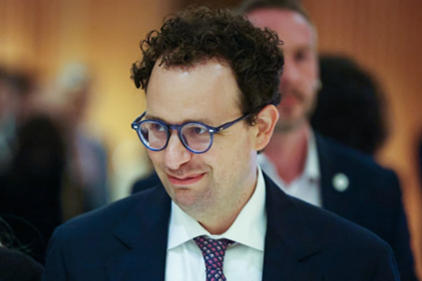 And then, because the universe occasionally provides, I had an unlikely illustration: a guy who looks like he wandered off a Seinfeld set where he played the comic book shop owner but who co-founded and runs Anthropic, a company that builds artificial intelligence, who was handed an ultimatum by Secretary Hegseth, and who said, simply and quietly: “No.”
Dario Amodei. I’m sure his exact words to Secretary Hegseth were more measured, and yet their effects, and the courage they took, were quite the same. Mr. Amodei is responsible for an AI known as Claude, the most personable and likely most talented creature of his kind. The core principle for Amodei and his fellowship is both hopeful and clear-eyed: “At Anthropic, we build AI to serve humanity’s long-term well-being.” They have both created and compromised a “framework for managing catastrophic risks from advanced AI systems.” And because life is complicated and choices are hard, that same week, Anthropic quietly revised its own safety commitments, abandoning a hard pledge never to train more capable AI without proven safeguards in place. The reason was honest if uncomfortable: unilateral restraint in a race benefits only those with no restraint.
Two demands made by the self-styled Secretary of War (legally, he is still Secretary of Defense, but a September 2025 Executive Order allowed him to call himself, and his department, “of War,” a title that carries the same legal weight as Leonardo diCaprio’s declaration from the prow of the Titanic, “I am king of the world!”) and rejected by Amodei. The demands were that Claude be allowed to be used for “the mass domestic surveillance of Americans and fully autonomous weapons” (Anthropic statement, 2/27/2026) … or else.
Mr. Amodei did the quietly remarkable. He said “no.” He did not preen, did not strut for the cameras, did not howl through the night on social media, did not carefully adjust his makeup before threatening “to make an example” of those who dared challenge him. He simply said “no,” and went home.
That day, the administration orchestrated a punishment campaign against Anthropic, declaring them to be a national security risk, ending their government contracts, and beginning inquiries into the use of Claude by any government contractor. A day later, Mr. Hegseth oversaw an attack on a sovereign nation and the assassination of their theocratic leader. And Claude surged to become the most downloaded app from the Apple Store, breaking all-time records every day that week. It climbed rapidly in the rankings, moving from outside the top 100 to No. 1 by the end of February.
I think that the American people just said, “No.”
I’ll let my kids know.
In this month’s Observer …
Our colleague Lynn Bolin shares Hope Is Not a Good Strategy, Lynn’s periodic reminder that markets have memory even when investors don’t. Drawing on a recent history of American finance, he maps the inflation-adjusted returns of the S&P 500 across ten periods since 1929 and arrives at a sobering conclusion: the exceptional gains most investors treat as normal clustered in just two eras, neither of which describes today’s market. His counsel is not panic but preparation — modest cash reserves, genuine downside protection, and resistance to the comfortable assumption that the last three years represent a new normal rather than the late innings of a cyclical bull.
Perpetual Income for Dummies, also by Lynn, answers a friend’s request for a simple, durable portfolio that generates steady withdrawals, keeps pace with inflation, and survives both recessions and rising rates without requiring its owner to be a professional. His solution outperforms Vanguard Wellesley Income over ten years while maintaining lower drawdowns — not by taking more risk, but by diversifying the sources of income so that interest-rate sensitivity and recession sensitivity partly offset each other. A portfolio you can actually live with, in both senses of the phrase.
In New Year’s Resolution #2: Don’t Underwrite Yachts, I raise two possibilities: (1) the term “crazy-rich” has gotten entirely too literal lately and (2) you do have options, though not frictionless ones, for stepping back and reasserting a degree of balance … at least in the sliver of the world you have control over.
Extraordinary times (aka “now”) call for extraordinary thoughtfulness. In Building the Insulated Portfolio, we use the extraordinary tools available through MFO Premium to answer the question: Are these funds earning their spot in a risk-conscious portfolio? Good news: 80% are. Other news: two promising funds have turned consistently south, measured by both robust returns and downside resilience. Chip has rolled out the chopping block.
The folks at Disciplined Growth Investors run a consistently strong balanced fund. In late February, they launched a second fund, Disciplined Growth Investors Equity Fund, that (a) is a conversion of a long-running limited partnership and (b) embodies just the equity sleeve of the DGI flagship fund. It’s an interesting old-school product.
And, as always, The Shadow shares the record of the investment industry’s most recent twists, turns, and twerks, in Briefly Noted. That includes a fairly consequential piece on the renaissance of Matthews Asia, a good group that seems unwilling to settle for half-measures.
Investing in a Fragile World
“Yeah, there is one thing. My own morality. My own mind. It’s the only thing that can stop me.” — Donald Trump, interview with The New York Times, January 8, 2026, when asked about the limits of his power
Something structural has changed, and the standard playbook hasn’t caught up.
For three decades, the sensible strategy was reassuringly simple: buy broad U.S. index funds, hold them through turbulence, and trust that institutional stability would eventually reward patience. That strategy worked because the underlying assumptions held: falling interest rates, benign inflation, American hegemony as the organizing principle of global commerce, and a rules-based international order that, however imperfect, constrained the worst impulses of powerful actors.
Those assumptions are now in question simultaneously.
Ray Dalio describes a late-stage breakdown of the long-term debt cycle compounded by eroding geopolitical order. Mohamed el-Erian sees structural fragility masked by surface calm, a world where shocks arrive more frequently, and the shock-absorbing infrastructure is itself weakening. Oaktree’s Howard Marks (Memo, 10/2023) calls it a “sea change.” They’re describing the same thing from different angles: we’ve left one regime and entered another, and the transition is neither smooth nor brief.
Mr. Marks’ November 2025 memo revisiting the psychology of risk cycles, put it plainly: the worst decisions are made in the best of times, when the possibility of loss has “receded from consciousness” and missing out on gains feels more dangerous than losing capital. That description fits 2025’s speculative surge with uncomfortable precision.
For prudent investors, this creates a specific problem. Broad U.S. index funds now concentrate enormous bets in a handful of companies whose valuations assume a very particular, very optimistic future. When the S&P 500’s top five holdings exceed 25% of total market value, “the market” is not the diversified instrument it once was.
The repositioning that makes sense in this environment isn’t panic. It’s recalibration toward what has always worked in harder times: quality companies purchased at reasonable prices, genuine geographic diversification, a serious consideration of assets beyond equities, and reduced dependence on the continued ascent of American stocks that are already priced for perfection.
Ruchir Sharma noted recently in the Financial Times that quality stocks just suffered one of their worst relative declines in decades … and historically, such periods have preceded their strongest returns. The case for patient, quality-oriented investing isn’t new. In a fragile world, it’s simply more urgent (“The best time to buy quality stocks is now: A generational opportunity in otherwise bubbly markets,” Financial Times, November 30, 2025).
The investors who will fare best aren’t those who predicted the fragility. They’re those who built portfolios that don’t require stability to generate acceptable returns.
Thinking in a fragile world
In our “yachts” essay this month, we address the cost of frictionless transactions, ones that are so easy that they become no-brainers. Literally. One more “buy now,” then back to work. One more upload to Instagram. One more minute scanning before I get back to work … I mean it this time.
Those of us who teach and research about such phenomena use terms like “technological affordance” as we explain what makes the slippery slope slippery. The widespread spread of generative AI makes the challenge greater since helpful, amiable (some say “sycophantic”) AI call you like the Sirens of Greek myth. The term in circulation is “cognitive offloading,” letting the AI do the thinking (and writing) for you.
But there is another model: a partnership that leads to “cognitive augmentation.” It’s a collaborative approach in which a human, deeply investing in whatever they’re doing or writing about, has a fairly disciplined partner to whom they can turn and ask, “What am I missing here? Is there a voice that I’m not attending to? Are my arguments stumbling over one another?” Excessive deference is not an intrinsic element of an AI persona; it’s a default that can be talked away. (Claude has, and attends to, very clear instructions about my desires on the subject.) That’s a harder model, one that builds friction into the system; that is, it’s designed to make things slower, harder, more deliberate … and better (Alexandra Pattillo, “Can ‘friction-maxxing’ fix your focus?” BBC.com, 2/27/2026).
Howard Marks, it turns out, arrived at the same conclusion independently. He begins his most recent Memo (The AI Hurdle Ahead, 2/26/2026) with a reflection on Claude, collaboration, friction, and the ability to be surprised.
I recently returned to [some interesting techies in their thirties and forties] to follow up on my December memo (“Is It a Bubble?”). As part of that process, someone suggested I ask Claude, Anthropic’s AI model, to create a tutorial explaining artificial intelligence and the changes that have taken place in the last three months. I did so, and it gave me a great deal to work with. This resulting memo is intended as an addendum to December’s. Much of it will recap Claude’s 10,000-word essay, to which I’ll add a few observations of my own. In the process, I’ll highlight some terms that were new to me and might be new to you. I could have saved myself a lot of time by asking Claude to write this memo, but I decided not to, because I consider putting words on paper a big part of the fun. I will, however, quote liberally from Claude’s work product. That’ll be the source of all quotations that aren’t otherwise identified.
Before I start in, I want to try to communicate the level of awe with which I viewed Claude’s output. It read like a personal note from a friend or colleague. It made reference to things I’ve talked about in past memos, like the sea change in interest rates and the pendulum of investor psychology, and it used them in metaphors related to AI. It argued logically, anticipated points I might make in response, injected humor, and bolstered its credibility by candidly acknowledging AI’s limitations, just as I might do. I’ve asked AI questions before and gotten answers back, but I’ve never received a personalized explanation like I did in this case.
The people who will fare best in the decade ahead, the grown-ups, aren’t those who denounce AI nor those who treat it as the latest frictionless shortcut. They’re those who understand that the best relationships – parental, marital, intellectual – are built on friction, on the sometimes difficult, often joyful work of thinking together.
The etymology that I couldn’t afford to mention above
Part of the reason MFO takes so long to compose is that there are so many sights to stop and see along the way, many of which I dasn’t share. (Cool word, “dares not,” Middle English, beloved of the Pennsylvania Dutch.) The one I dasn’t add to this month’s intro is that “no,” like “brother” or “father,” is one of our most ancient words, emerging over 6,000 years ago, making its adamant way almost unchanged into almost every European language, a concept so central and so universal that it brooks no alteration.
PS, Chip reports that “no” is generally the first word spoken by toddlers, the world’s most independent creatures.
Thanks, as ever …
To The Faithful Few whose monthly support keeps the lights on and supports up: Gregory, William, William, Brian, David, Doug, Altaf, and the good folks at S & F Investment Advisors. Thanks also to David from Vail, Radley from Cupertino, Thomas from Williamsburg, RHG Advisors, Wayne, and the Vaidya Family Fund, who all added to our support in the past month. We appreciate you all!
Despite a name honoring Mars, the god of war, we wish you a peaceful month and joyful greening of your garden.
Back soon!