





Sections: Climate and energy / Public health / Conservation & wildlife recovery / Social progress / Innovation & technology
CLIMATE & ENERGY TRANSITION
Renewables overtake coal as the world’s largest source of electricity
For the first time in the industrial era, renewable energy generated more of the world’s electricity than coal did. In the first half of 2025, renewables supplied 34.3% of global electricity while coal fell to 33.1%, according to the energy think tank Ember. Solar and wind generation grew fast enough to outpace rising global electricity demand, meaning clean energy didn’t just keep up with growth, it began actively displacing fossil fuels. Solar alone grew by 306 terawatt hours (about what Italy uses in a year), covering 83% of the world’s increased electricity demand. The milestone arrived earlier than even optimists predicted; the International Energy Agency had forecasted it for eight to sixteen months later.
China emerges as “the green giant”
Science magazine’s description of China as “the green giant” captures both the scale and global impact of the country’s energy transformation. In 2024 alone, China installed new solar and wind generation equivalent to roughly 100 nuclear power plants; the pace accelerated in 2025. By May, China became the first country to surpass 1 terawatt of installed solar capacity. In just the first six months of 2025, China added 256 gigawatts of new solar systems—twice as much as the rest of the world combined. One solar farm on the Tibetan Plateau now spans more than 400 square kilometers, an area twice the size of Washington, D.C. Wind turbines have grown ever larger, with blades reaching 150 meters long.
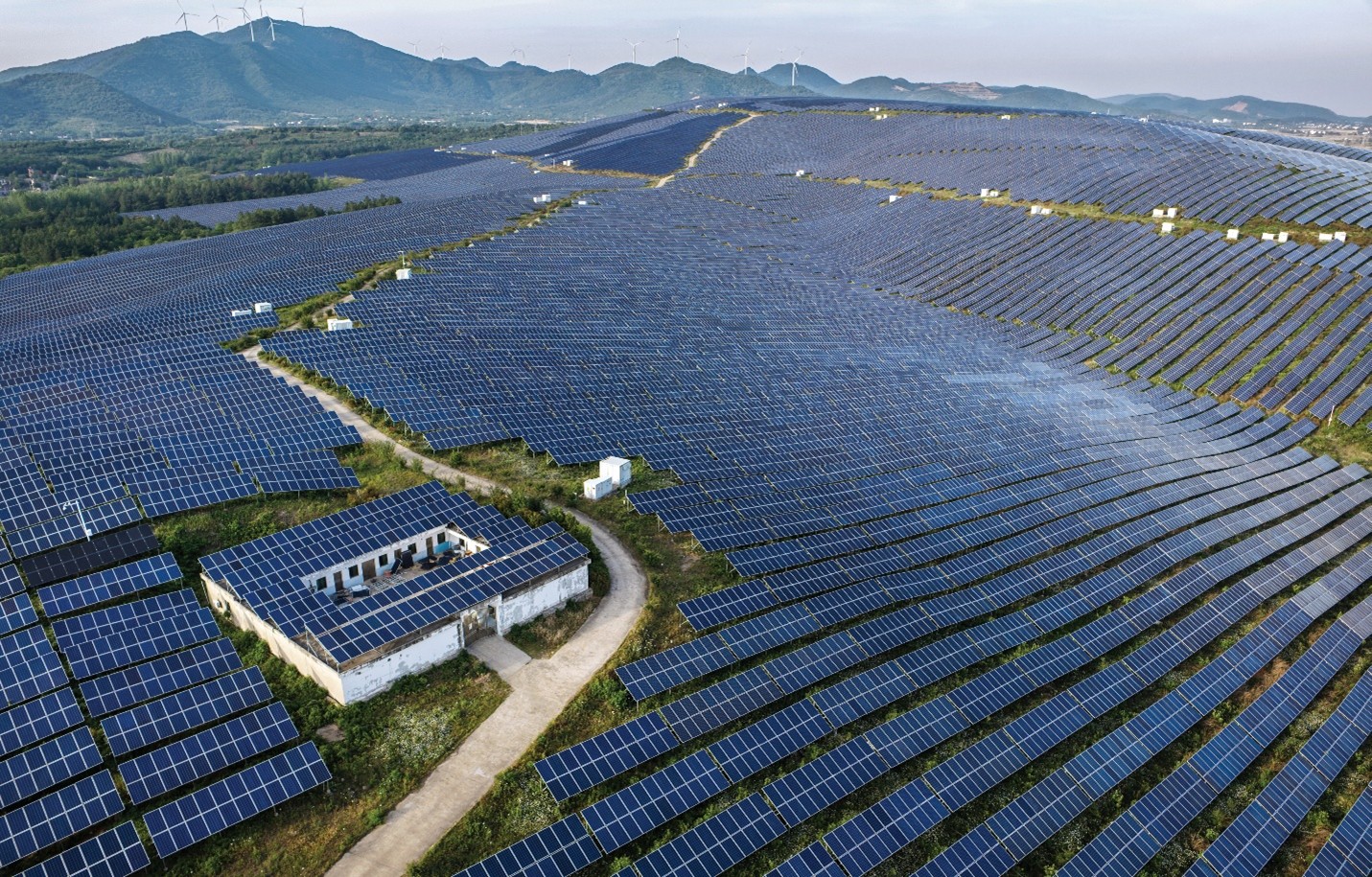
Source: Science magazine
The transformation has reshaped China’s landscape. Science notes that “vistas of smog, smokestacks, and coal heaps still exist, but glinting silicon panels now cover hills, deserts, and lakes.”
China’s build-out has global implications beyond emissions reductions. The country created an export industry worth nearly $180 billion in 2024, filling shipping containers with electric cars, solar cells, and wind turbine blades. By building up its own green energy system at unprecedented scale, China has made low-cost renewable energy technology accessible to much of the rest of the world.
India crosses an emissions inflection point
India’s trajectory offers a different kind of hope. After decades of relentless coal expansion—consumption jumped 42% between 2015 and 2024—something remarkable happened in 2025: for only the second time in half a century, India’s power sector emissions actually declined. They fell 1% in the first half of the year, even as the economy grew robustly and total electricity generation increased. The pivot came from record renewable additions: 22 gigawatts in just six months, a 57% jump from the previous year. By July, renewables reached 50% of India’s installed power capacity, hitting a 2030 target five years early.
This isn’t a full energy transition (India still plans new coal plants), but it marks a fundamental shift from “renewables can’t keep up with our growth” to “renewables are starting to displace our fossil fuels.” For a rapidly industrializing nation to reach this inflection point suggests that the clean energy transition may be arriving faster than even optimists predicted.
The conservative argument against US climate initiatives was always: “but what about China and India? They’re the real problem, without them we’re just wasting our time.” Well, dudes, they’re on the right side of history on this issue. Where are you?
Clean energy investment surges past expectations
Global investment in green technology rebounded dramatically in 2025 after several years of decline. By September, investors poured $56 billion into clean businesses across sectors, including renewable energy, battery storage, and electric vehicles, exceeding 2024’s full-year total. Nuclear energy alone attracted about one-fifth of global venture capital funding in 2025, largely driven by AI’s appetite for reliable power. Major players moved aggressively: Brookfield Asset Management announced a $20 billion fund to support the clean energy transition, while JPMorgan Chase committed up to $10 billion in direct equity and venture capital for batteries, nuclear, and solar power.
Green energy stocks outperform traditional markets
For much of 2025, the S&P Global Clean Energy Index beat the S&P 500, Nasdaq 100, and MSCI World Index, up 46% by Christmas 2025. Jefferies’ analysts called these “the glory days” for green tech. The reversal came despite rollbacks of environmental regulations in some countries, as energy demand and falling technology costs made clean energy increasingly competitive. BloombergNEF, Bloomberg’s primary research service, noted that “in 2015, solar power seemed far from overtaking coal, constrained both by scale and economics. Yet, within a decade, solar costs have fallen so dramatically that the dynamic has entirely reversed. Solar is now two times cheaper than fossil fuel.”
Corporate sustainability investments accelerate quietly
Corporate America’s commitment to sustainability strengthened in 2025 even as public rhetoric cooled. Major consulting firms tracking actual spending and commitments found a striking disconnect between headlines and behavior. Accenture and the UN Global Compact surveyed global CEOs and found 99% planned to maintain or expand sustainability efforts, with nearly 90% saying the business case had grown stronger over the past five years. Deloitte reported that more than 80% of companies increased sustainability investments during the year, while CapGemini found similar percentages planning further increases for 2026.
The shift reflects sustainability’s evolution from performative reporting to operational integration. Europe’s mandatory disclosure rules (the Corporate Sustainability Reporting Directive) are forcing companies to report genuine progress rather than aspirational goals, killing off green-washing in the process. At MIT, researchers studying sustainable supply chains found 85% of companies maintaining or accelerating their practices despite political headwinds. The pattern that emerged: companies are embedding sustainability into executive compensation, supply chain decisions, and capital allocation—they’re just talking about it less. As one sustainability professional put it, the era of “bold slogans and grand promises” has ended; the era of quiet, measurable integration into core business operations has begun.
Economies decouple growth from emissions at scale
Countries responsible for 92% of the global economy are now “decoupling” emissions from economic growth, a trend that has accelerated since the Paris Agreement was signed in 2015. The most pronounced decouplings occurred in Norway, Switzerland, and the UK, which grew their economies while shrinking emissions. Many emerging economies also achieved decoupling, including Brazil, Colombia, Egypt, Jordan, and Mozambique. China’s CO2 emissions have been flat for 18 months and may have peaked. While global emissions continue to rise, they’re growing far more slowly than economic output; the structural shift from “growth requires more carbon” to “growth despite less carbon” is unmistakable.
Ireland ends coal power generation
Ireland joined a small but growing group of European countries that have completely ended coal-fired electricity generation. Several others, including Greece and Italy, are set to follow in the coming years, continuing Europe’s rapid phase-out of its dirtiest fossil fuel.
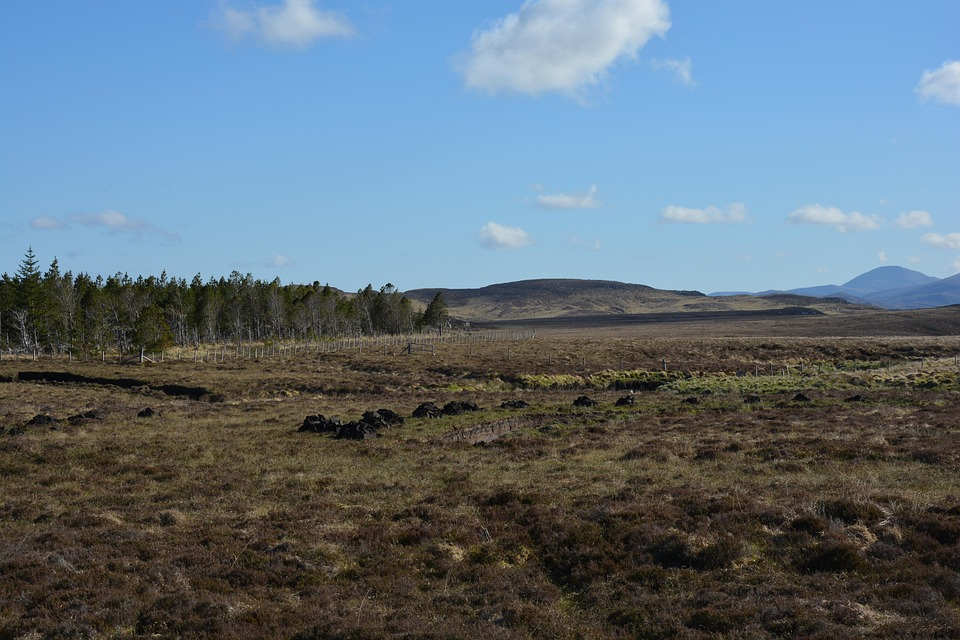
Ireland is also rewetting its peatland; peat is an organic material that’s about halfway to being a fossil fuel. A traditional heat source, especially among the rural poor, peat bogs were drained, then the peat was cut, dried, and burned. Incredibly iconic smell that lingers in the air everywhere. Also, an environmental disaster that Ireland, both the Republic and Northern Ireland, is reversing. “[M]aintaining and enhancing the resilience of intact, natural peatlands may be the best and most cost-effective defense against climate change. Going one step further on the mitigation ladder, re-wetting and restoration of degraded peatlands has been named a “low-hanging fruit, and among the most cost-effective options for mitigating climate change” by Achim Steiner, UN Under-Secretary General and Executive Director UN Environment Programme. (Society for Ecological Restoration, Peatland Restoration in Ireland & Globally, 2025)
PUBLIC HEALTH BREAKTHROUGHS
A revolutionary HIV prevention drug reaches Africa
Lenacapavir represents a genuine breakthrough in HIV prevention: a twice-yearly injection that showed 100% efficacy in preventing infections among women in clinical trials and 96% efficacy among men, transgender individuals, and non-binary people. The U.S. FDA approved it in June 2025. Then something unprecedented happened: the first doses arrived in Eswatini and Zambia in November, the same year as U.S. approval. This shattered the typical pattern where new treatments take years or even decades to reach the countries with the highest HIV burden.
The speed resulted from coordinated action by the U.S. State Department, Gilead Sciences, and the Global Fund, which committed to provide at least 2 million doses at cost to high-burden countries. Gilead also struck deals to make the drug available in low- and middle-income countries for $40 per year, the same cost as current daily pills, but with the convenience and adherence advantages of just two shots annually. As one public health official noted, “For the first time, a new HIV medicine is reaching communities in sub-Saharan Africa in the same year as its U.S. approval.” By World AIDS Day 2025, clinics in Eswatini were administering the first injections.
Disease elimination victories multiply (except in Red States)
The year brought a cascade of disease elimination certifications. Georgia, Suriname, and Timor-Leste were certified malaria-free. Mauritania, Papua New Guinea, Burundi, Senegal, Fiji, and Egypt eliminated trachoma, a neglected tropical disease that causes blindness. Guinea and Kenya eliminated sleeping sickness, a parasitic disease spread by the tsetse fly.
Most remarkably, Cabo Verde, Mauritius, and Seychelles eliminated both measles and rubella, becoming the first sub-Saharan African countries to achieve this milestone. These successes demonstrate that sustained vaccination campaigns and public health infrastructure can eradicate diseases even in resource-limited settings.
Across much of the US, contrarily, communicable diseases that we thought we’d wiped out have surged. Measles cases went from zero in 2020 to 1800 (and climbing) in 2025. Some combination of social media disinformation (“vaccines contain toxic chemicals … and nanobots!”) and political convenience (“science is socialism”) has empowered a rising tide of “vaccine hesitancy” and a resultant tide of illness and death. (A child from west Texas who died of measles in 2025 was the first child death in the US in over 20 years.)
Cervical cancer vaccination reaches 86 million girls
Ambitious targets to vaccinate 86 million girls against cervical cancer in the countries where incidence is highest were reached early in 2025, preventing an estimated 1.4 million deaths. The achievement came from coordinated efforts across dozens of countries to expand vaccination programs and overcome logistical barriers to reaching remote populations.
Gene therapy achieves a breakthrough year
Scientists called 2025 “a breakthrough year for gene editing,” with multiple medical milestones achieved. A first-of-its-kind gene therapy for Huntington’s disease slowed the rate of cognitive decline by 75% in a small trial, giving patients decades more of “good quality life.” Another trial using base-editing technology showed promise for treating T-cell acute lymphoblastic leukemia, with the majority of participants entering remission. Researchers also conducted the first use of a CRISPR technology tailored to an individual patient, and successful trials began for treating chronic granulomatous disease and lung damage from genetic mutations. These advances demonstrated that collaboration between academia and industry can develop mutation-specific strategies for rare diseases once considered untreatable.
Brain-machine interfaces restore lost speech
An ALS patient regained the ability to speak to his daughter through revolutionary sound decoders and AI software—part of a new wave of brain-machine interfaces that could transform life for paralyzed individuals. The technology represents years of refinement in understanding neural patterns and translating them into intelligible speech, offering hope to thousands living with conditions that have robbed them of their voices.
CONSERVATION & WILDLIFE RECOVERY
 Green sea turtles: from endangered to thriving
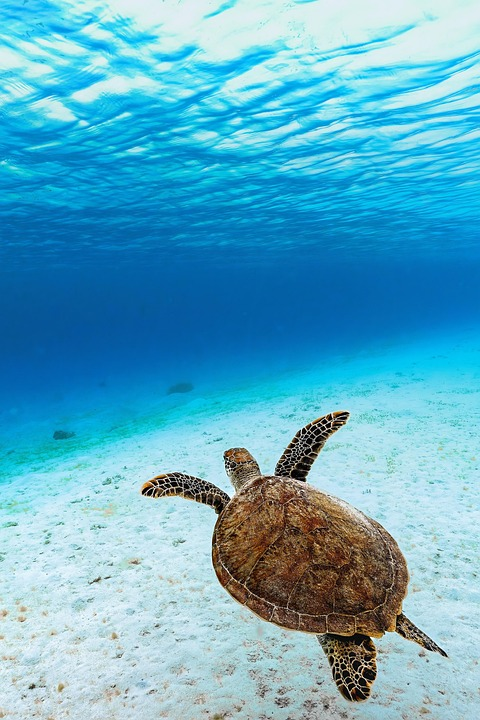
The green sea turtle’s journey from the brink of extinction to “least concern” status represents one of the most dramatic conservation comebacks on record. In October 2025, the International Union for Conservation of Nature reclassified the species, which had been listed as endangered since 1982. The global population has increased by roughly 28% since the 1970s, following decades of sustained conservation efforts: legal protections against international trade and hunting, beach patrols protecting nesting females and their eggs, turtle excluder devices in fishing nets, and community-based initiatives to reduce egg harvesting.
The recovery was so robust that the species skipped intermediate categories like “vulnerable” and “near threatened” entirely. Notable success stories include Hawaii, where nesting females increased from under 100 in the 1970s to more than 800 annually, and Australia’s Raine Island, where surveys in 2025 recorded 20,000 nesting turtles in a single season, a 50% increase since 2014. The Seychelles witnessed a tenfold population surge after banning turtle hunting in 1968. The comeback demonstrates that when nations, scientists, and communities coordinate efforts over decades, even species hunted nearly to extinction can recover.
Twenty species downlisted from threatened status
The latest IUCN Red List update recorded at least 20 species moved from higher-risk categories to lower-risk ones, thanks to habitat restoration, invasive species control, and targeted conservation efforts. The ampurta, a rat-sized Australian marsupial, moved from near-extinction to “least concern” as its territory expanded by more than 48,000 square kilometers despite dry conditions and food shortages. Multiple bird species showed notable recovery, including the Rodrigues Warbler and Rodrigues Fody in Mauritius, and the Guadalupe Junco in Mexico. Conservation works—when sustained.
Rhinoceros populations continue recovery
Both black and greater one-horned rhinoceros populations showed meaningful increases in 2025. The global black rhinoceros population rose from 6,195 to 6,788 individuals, while the greater one-horned rhinoceros reached around 4,075 across India and Nepal. Mozambique reintroduced 10 black rhinos into Zinave National Park, creating the first founder population there in decades. While rhinos remain heavily threatened by poaching and habitat loss, even modest increases represent significant victories given the species’ slow reproduction rates and the continued demand for their horns.
High Seas Treaty enters force
The world ratified the first treaty to protect the high seas, the vast areas of ocean beyond any nation’s jurisdiction. The agreement, which becomes legally binding in January 2026 after ratification by more than 60 countries, provides an international framework for preserving biodiversity in international waters and commits nations to conserving at least 30% of land and sea areas. The treaty fills a critical gap in ocean governance, as nearly half of Earth’s surface had previously lacked comprehensive protection.
French Polynesia establishes world’s largest marine protected area
French Polynesia is committed to protecting 100% of its marine territory through the Blue Nature Alliance, creating the world’s largest marine protected area. The designation safeguards vast stretches of coral reefs, critical fish spawning grounds, and migration routes for whales, sharks, and sea turtles across millions of square kilometers of the South Pacific.
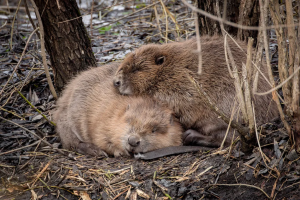 Eurasian beavers return to England
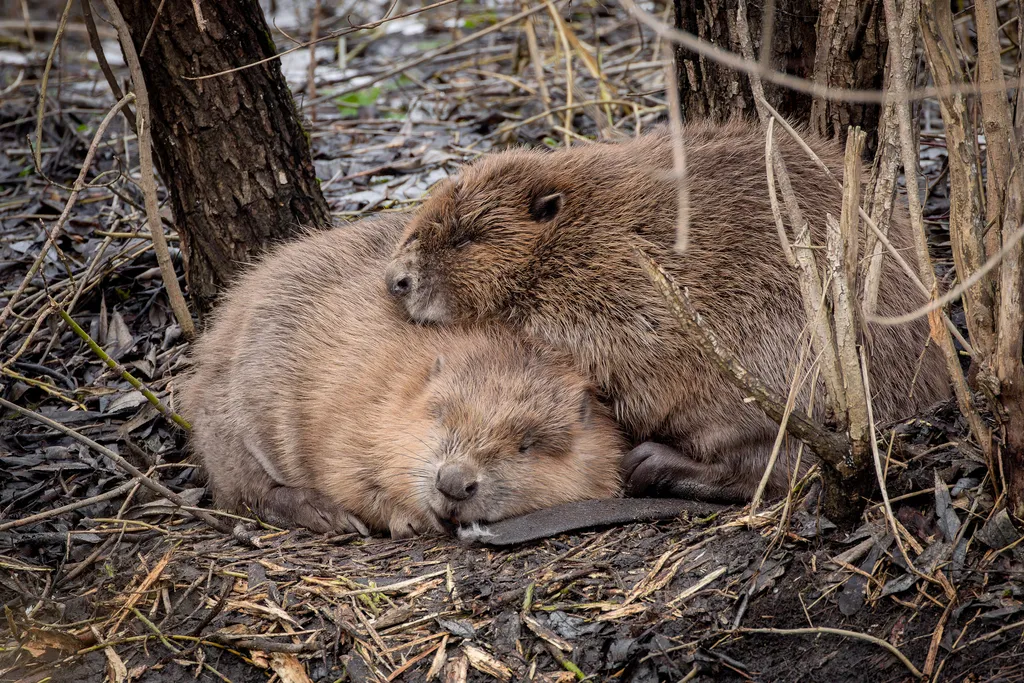
England authorized licensed wild releases of beavers for the first time in centuries. (A certain Victorian hat fashion was hard on the beaver population, which was hunted to extinction.) In March, the first beavers were released into a lake in Purbeck, Dorset. Later in the year, a wild beaver was spotted in Norfolk—the county’s first in over 500 years. Beavers are ecosystem engineers whose wetlands support biodiversity, improve water quality, and help mitigate flooding. Their return signals the success of rewilding efforts and marks a milestone in restoring native British fauna.
SOCIAL PROGRESS
Marriage equality advances in Asia and Europe
Legalization of same-sex marriage took effect in Thailand and Liechtenstein, expanding the number of countries recognizing marriage equality. Thailand became the first Southeast Asian nation to legalize same-sex marriage, representing a significant shift in a region where LGBTQ rights have faced considerable resistance.
Poland abolishes its last “LGBT-free” zones
Poland eliminated its final remaining “LGBT Ideology Free” zones. These zones had been established in recent years during the administration of the ruling Law and Justice party, which was voted out in 2024. The abolition represents a reversal of discriminatory local policies and a step toward greater inclusion.
Kazakhstan criminalizes bride kidnapping
The kidnapping of girls for forced marriage became a crime in Kazakhstan, the largest country in central Asia, under new rules that prohibit alyp qashu, a long-running tradition in which brides are abducted and subjected to physical and psychological abuse. The historic version was a form of elopement used when the parents disapproved of a match. Some freakish perversion in recent decades converted it to a quasi-criminal assault that sometimes involves ransom for the woman’s return. The criminalization represents a significant protection for women’s rights and bodily autonomy.
Cell phone bans expand in schools worldwide
Countries as disparate as South Korea and Sweden banned the use of cell phones in schools, joining a movement that now encompasses more than 40% of the world’s education systems. The restrictions reflect growing concern about phones’ impact on learning, attention, and social development, as well as emerging research on the mental health effects of constant connectivity during school hours.
Nota bene: it’s a start. Here’s the ugly reality: laptops are worse, by far, than cellphones in the classroom. Researchers note that between 40 – 60% of a student’s in-class time on laptops are spent on non-class activities, and it’s clear that note-taking on laptops is vastly inferior to notes taken by hand (Ravizza, et al, “Logged In and Zoned Out: How Laptop Internet Use Relates to Classroom Learning,” Psychological Science, 2017; Mueller, et al, “The Pen Is Mightier Than the Keyboard: Advantages of Longhand Over Laptop Note Taking,” Psychological Science, 2014; Eagan, et al, “Unregulated use of laptops over time in large lecture classes,” Computers & Education, 2010). Collectively, these three articles have been cited nearly 3000 times by other researchers.
Just fyi.
INNOVATION & TECHNOLOGY
Agrivoltaics demonstrate dual-use potential
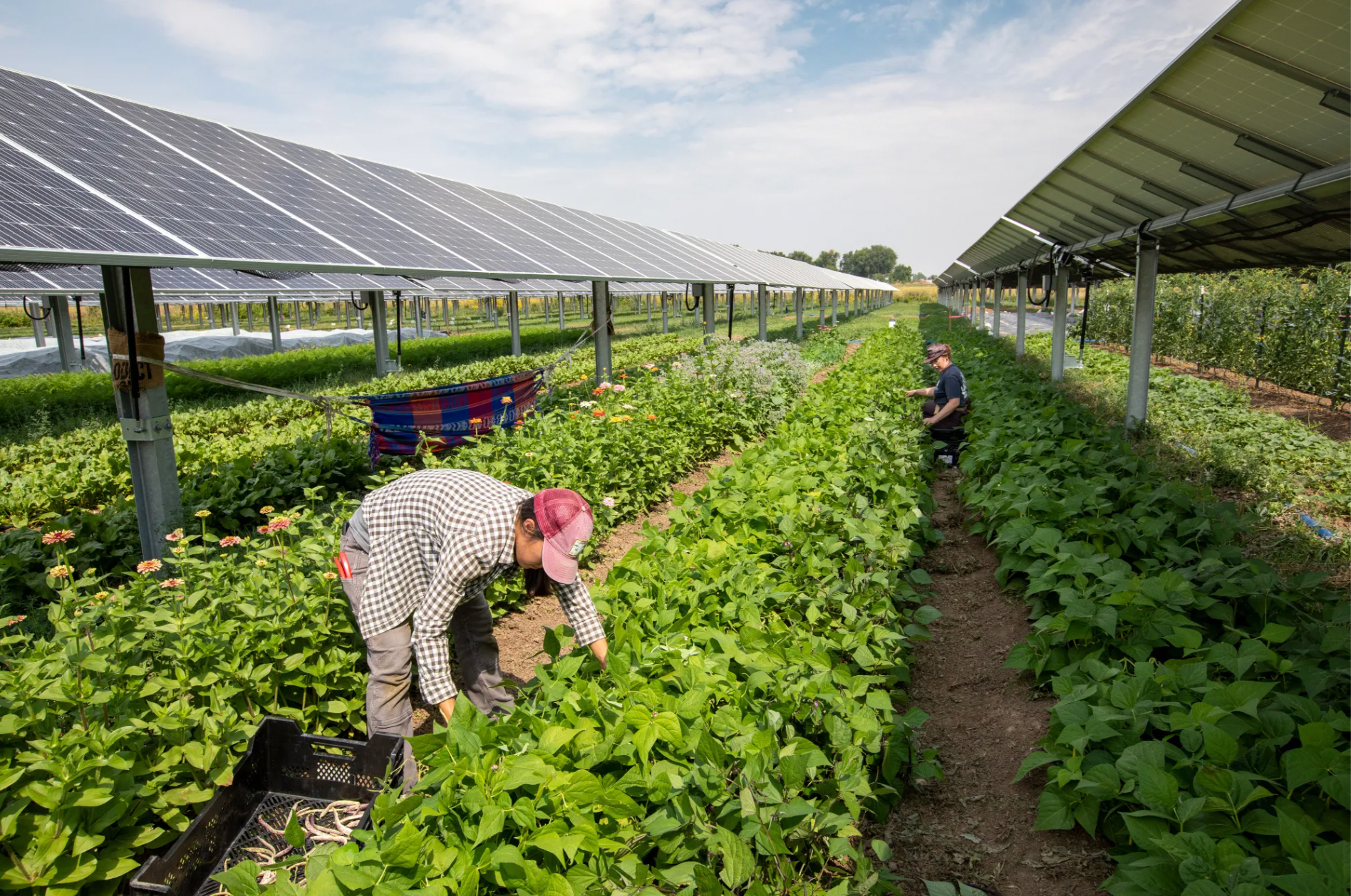
At Jack’s Solar Garden in Longmont, Colorado, more than 3,000 solar panels glint in the sun, powering some 300 homes in the community while providing shade to the fruits, vegetables, and herbs growing below. The practice, known as “agrivoltaics,” combines agriculture and solar power generation on the same land, demonstrating that food production and clean energy need not compete for space. The approach is expanding across the United States – with about 600 sites so far – and globally as farmers discover that some crops actually thrive in the partial shade of solar panels, which can reduce water needs and protect plants from heat stress. Sheep grazing is the most common animal use so far.
Source: UC Berkeley
Japan builds world’s first 3D-printed train station
Japan constructed the world’s first 3D-printed train station building at Hatsushima. The structure’s parts took a week to print and reinforce with concrete, then a team assembled them in less than six hours—demonstrating how additive manufacturing could revolutionize construction speed and efficiency while reducing material waste.

