





In celebration of an ancient tradition, recognizing that the new year starts with the arrival in March of spring, we wanted to share our second New Year’s resolution (after “Don’t Underwrite Lobotomies,” 1/2026).
“Yachts” have always been a curious flashpoint in the investor community. A half-century before J.P. Morgan sailed about in his floating palace, The Corsair (versions 1, 2, and 3), yachts were emblems of clueless avarice. The Gilded Age short-seller and noted wit William R. Travers supposedly uttered the question “but where are the customers’ yachts?” while looking at Wall Street men’s yachts in Newport harbor.
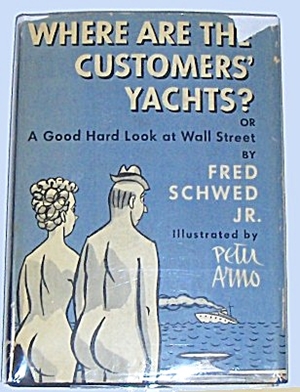 Fred Schwed, a stockbroker and professional trader bankrupted in the Crash of 1929, used the query as the title of his 1940 book, which enshrined it in the folk wisdom of Wall Street forever. Schwed’s amiably acidic text might be captured in three sentences that feel – 80 years on – painfully contemporary:
- Wall Street is built to deliver smooth, reliable income to the people selling advice, while handing the bumps, bruises, and blown‑up dreams to the people buying it.
- Almost nobody, pro or amateur, can actually see the future, but the whole ecosystem works very hard to act as if it can, turning “investing” into a pricey form of speculation dressed up in charts and lingo. (Hmm… most recently, “proprietary algorithms.”)
- The real problem, though, is that investors want to believe those stories, and that eagerness to be reassured is what keeps them quietly funding other people’s yachts instead of just compounding toward a modest boat of their own.
How many yachts have you funded? The figures in various international registries come to about 5,900 private superyachts (boats over 100’ in length) sailing today and another 600 slated to be finished by the end of 2026. That’s $11 billion a year now, projected to pop to $15 billion by 2030.
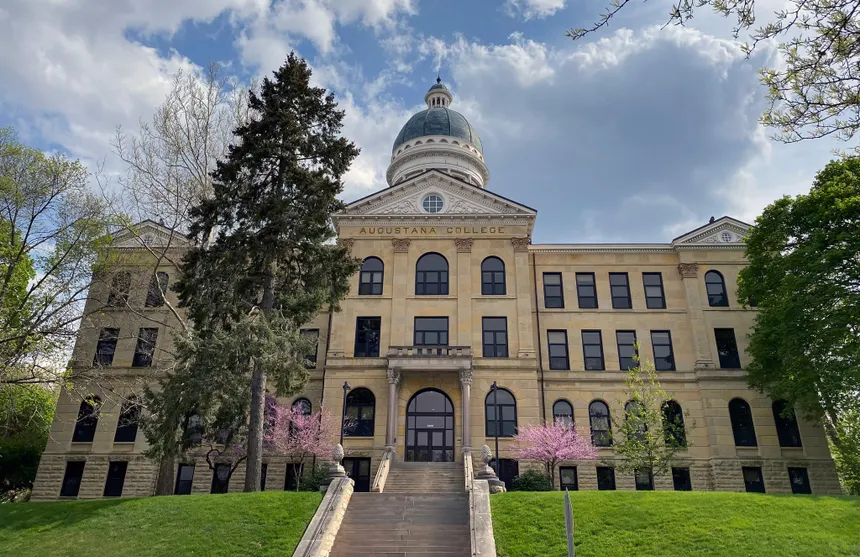
I teach in Old Main, whose (old) main hallway is about 160 feet long. There are about 1,700 private yachts bigger than the building I occupy.
The top 100 yachts, all over 85–90 meters (280–300 feet) and almost entirely owned by billionaires and royal families, typically have a full-time crew of 25-50 (including baristas and … umm, massage therapists), run their engines 24/7 (gotta keep the water out and the air dry even when the boss isn’t around), suck down 500-1500 gallons of fuel per hour when running at cruising speed, and are typically occupied from a couple weeks to a couple months a year.
Among the more notable yachts you’re paying for are Bezos and Brin’s boats.
Jeff Bezos, Amazon founder: Koru (and Abeona)
Koru, Jeff Bezos’ 127‑meter (about 418‑foot) sailing superyacht, was delivered in 2023 at a cost north of $500 million and annual upkeep around the mid‑eight figures. Steel hull and aluminum superstructure under three roughly 70‑meter masts, it accommodates about 18 guests with roughly 36–40 crew, and layers on the expected amenities: multiple Jacuzzis, a pool, and a warm, wood‑heavy interior pitched as “timeless” rather than flashy. The name “Koru,” taken from Māori for a fern spiral, is meant to evoke new beginnings and growth.
Abeona is Bezos’ 75‑meter dedicated “shadow vessel” for Koru. At roughly 1,900 gross tons, with an estimated value around $75–100 million, Abeona exists to haul the infrastructure of billionaire leisure: a helipad, tenders and smaller boats, toys, extra fuel and stores, space for luxury vehicles, and berths for a crew typically quoted north of twenty and up toward the 30–35 range when fully staffed. In practice, she is the floating logistics platform that makes Koru’s serene imagery possible, absorbing much of the cost, complexity, and labor that never appears in the brochure shots.

Source New York Post, August 2024
How centibillionaires stay centibillionaires: Amazon announced 27,000 layoffs in 2022-2023, another 14,000 in October 2025, and 16,000 more announced January 28, 2026. CEO Andy Jassy frames it as “removing bureaucracy” while Amazon pours $125 billion into AI infrastructure.

Bezos doesn’t do irony
In 2010, Jeff Bezos addressed Princeton’s graduating class with a meditation on gifts versus choices. “Cleverness is a gift, kindness is a choice,” he told them, recounting a childhood lesson from his grandfather: “One day you’ll understand that it’s harder to be kind than clever.” He closed with a series of rhetorical questions: “Will you be clever at the expense of others, or will you be kind?… When it’s tough, will you give up, or will you be relentless?… Will you be a cynic, or will you be a builder?”
Sixteen years later, the answers are in. Clever? Undeniably. Kind? The 57,000 Amazon employees laid off since 2022 might have thoughts. Builder? Of monopolies, certainly. Relentless? In tax avoidance and union-busting, absolutely.
“In the end, we are our choices,” Bezos concluded. “Build yourself a great story.”
He built himself a yacht instead. Two, actually.
In February 2026, about three weeks ago, as we write this, Bezos ordered the Washington Post to fire one-third of its staff, including 300 journalists. Among them: Caroline O’Donovan, the reporter who covered Amazon. The entire Middle East desk. The sports section. Most of the Metro desk, down from 40 reporters to 12. Former executive editor Marty Baron called it “a case study in near-instant, self-inflicted, brand destruction” and blamed it directly on Bezos’s fear of Trump retaliation against Amazon and Blue Origin.
Two days before the layoffs, Defense Secretary Pete Hegseth visited Blue Origin’s spaceport. Bezos called it a “huge honor” and praised Hegseth for “building The Arsenal of Freedom.” The $2+ billion Space Force contract was presumably worth the cost: 300 journalism careers, the credibility of a 150-year-old institution, and whatever remained of the promise that “the paper’s duty will remain to its readers and not to the private interests of its owners.”
Sergey Brin, Google co-founder: Dragonfly
The latest Dragonfly is a new 142‑meter (about 466‑foot) yacht, delivered in late 2024. Public estimates tag this Dragonfly at roughly 9,000–9,500 gross tons and around $450 million in build cost, with the usual long‑range, full‑displacement profile: multiple decks, pools and spas, extensive guest accommodations, and a private‑resort level of onboard amenities and technology. Brin’s earlier puny 74‑meter yacht of the same name has been reported as for sale, in case you’re interested.
How centibillionaires stay centibillionaires: Google’s founding motto, long discarded, was “do no evil.” In late December 2025, Sergey Brin dissolved or relocated 15 California limited liability companies in a span of 10 days. Among them was the entity managing Dragonfly. The move wasn’t about sailing to Nevada, yachts don’t do that, but about legal domicile. California was considering (i.e., did not enact) a one-time 5% tax on residents’ worth over $1 billion, and Brin, worth $267 billion, wasn’t interested in contributing $13 billion toward healthcare and K-14 education in the state that nurtured Google from dorm-room project to global surveillance engine.
This is the same Sergey Brin whose company has spent 2025 “eliminating bureaucracy” through a rolling series of workforce reductions. Google cut hundreds in January across hardware and engineering. More hundreds in February from HR and Cloud divisions. In August, the company announced it had eliminated 35% of its managers. Executives call the reductions “quite successful” and promise to “continue it.”
The juxtaposition is stark: Brin’s yacht management company flees to Nevada to avoid a hypothetical tax while Google employees are being offered “voluntary” exits and told the company needs to “be more efficient as we scale up so we don’t solve everything with headcount.”
And don’t even start poking around Mark Zuckerberg ($300 million Launchpad plus Wingman) and the Meta mess.
Here’s what we need to remember: We paid for those yachts. Not directly – there was no line item on your credit card statement for “Dragonfly hull maintenance” or “Koru champagne fund.” But every Gmail you’ve sent, every search query you’ve typed, every YouTube video you’ve watched has generated data. That data gets packaged, analyzed, sold to advertisers, and used to build monopolies. The proceeds funded Brin’s fortune. The yacht is just the most visible manifestation of an extraction you never consented to and likely never realized was happening.
The tech billionaire’s playbook is remarkably consistent:
- Offer a “free” service (Gmail, Facebook, Amazon’s subsidized shipping)
- Harvest user data, attention, and labor
- Extinguish alternatives (think: small shops in your town), build a monopoly market position
- Extract extraordinary profits
- Buy yachts, flee taxes, lay off workers
- Repeat
These aren’t moral actors. They’re not your friends. The relationship is extractive, not reciprocal. You provide data, attention, purchasing patterns, social connections, and in return you get… a service you didn’t realize you were paying for.
The Wall Street Journal, of all people, is sounding the alarm about this extractive imbalance. Carol Ryan lays out the argument:
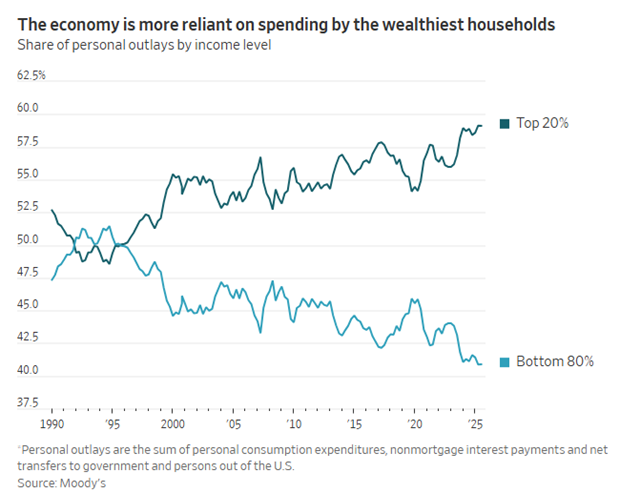
But debate about how much tax billionaires pay is likely to grow as America’s fiscal situation deteriorates and its wealth gap widens. Data from the Federal Reserve shows that only the richest 1% of households have grown their share of overall U.S. wealth since 1990. Their share hit a record 32% in the third quarter of 2025, equivalent to $54.8 trillion …
Gains made by the billionaire class, the very top 0.1% of households and a subset of the 1%, have eclipsed the merely extremely rich.
The impacts of this are visible in booming sales at businesses that cater to the ultrarich. Wealth concentration is so intense that it is even causing a divergence among luxury-goods companies: Brands such as Cartier or Hermès that cater to the super wealthy are soaring, while sales at labels that rely on affluent middle-class consumers are slack.
Meanwhile, the bottom half of American households have lost ground. (“Billionaires’ Low Taxes Are Becoming a Problem for the Economy,” WSJ.com, 2/18/2026)
The Journal offers a striking visual capture of an economy increasingly run for the benefit of the ultrarich.
What you can do about it
As a guy with 10 Gmail accounts (six of which are “burner” accounts used to annoy marketers) and “The Repair Shop” streaming on Amazon Prime, I’m not here to pick on you. Amazon’s convenience is real. Gmail works remarkably well. But transparency and respect have value too, and there are alternatives worth considering. The goal isn’t purity; it’s rebalancing the relationship so you’re not quietly funding extraction you never consented to.
Extract yourself from the Amazon ecosystem
- Create a circuit-breaker for your shopping impulse: Never click “buy now.” Put stuff in your cart, then give yourself a 24-hour cooling-off period. Don’t save payment information. Make yourself type in the d**mned credit card details each time. The friction helps break the “one-click” hypnosis.
- Consider alternative retailers:
- Bookshop.org shares profits – $45,615,057.08 so far – with independent bookstores. When you order through them, a portion goes to the bookstore you designate, like The Atlas Collective in Moline, Illinois, River Lights in Dubuque, Iowa, or any other shop on their network. (And yes, you pay for shipping because they pay for shipping.) As an aside, you do not own any of the content on your Kindle; you merely pay for access rights which Amazon can – and frequently does – revoke.
- UncommonGoods, a B-corp, offers unique items from small makers and artisans, with a focus on actual craftsmanship rather than algorithm-optimized commodity junk. They’ve so far contributed $3.1 million to groups from the International Rescue Committee to American Forests. (Work this choice through: pay for the yacht, pay to feed a child whose home has been destroyed. Your choice.)
- Your actual town: Walk into an actual store. Talk to an actual human. Yes, you might pay 10-15% more. Yes, you won’t get overnight shipping. But you also won’t be training Amazon’s AI on your purchasing patterns or subsidizing the next round of warehouse worker layoffs.
- The “free shipping” trap: That’s not free. You’re paying $140/year for a Prime membership, or you’re paying in data harvest and algorithmic manipulation. Make informed choices about whether the tradeoff is worth it.
Extract yourself from the Google ecosystem
- ProtonMail (proton.me) offers genuinely private email with end-to-end encryption. Swiss-based, funded by users, not by selling your data. Chip and I are migrating there, bit by bit. Free tier available; paid plans start around $4/month.
- Privacy-first browsers and search engines:
- DuckDuckGo doesn’t track searches or build profiles
- Brave Browser blocks trackers by default
- Firefox with privacy extensions gives you control over data collection
- The convenience calculation: Yes, Gmail integration with Google Calendar and Drive is smooth. But that smoothness costs you comprehensive surveillance of your communications, contacts, and calendar. ProtonMail now offers calendar and drive functionality—slightly less polished, but with your privacy intact.
Extract yourself from the Meta ecosystem
This one’s harder because Facebook has achieved something close to utility status for many communities, especially outside major metros. But consider:
- Do you actually need Facebook? Many people keep accounts “to stay in touch” while acknowledging they haven’t posted or actively engaged in years. If that’s you, deactivate and see what you lose. Probably less than you think. I have one of the very earliest public Facebook accounts and manage to visit it about once a year.
- Instagram: Owned by Meta. Same surveillance infrastructure, by which I mean: every photo you upload gets analyzed by AI to identify faces, objects, locations, and emotional content. Every post you like, every account you follow, every ad you pause on for three seconds longer than average gets logged, analyzed, and fed into a model that predicts your behavior, political leanings, purchasing intent, relationship status, and psychological vulnerabilities. That profile gets packaged and sold to advertisers, political campaigns, and anyone else willing to pay. The photos are yours; the data extracted from them belongs to Meta. Consider whether aesthetic dopamine hits are worth the extraction.
- WhatsApp: Also, Meta-owned. Signal offers equivalent functionality with genuine end-to-end encryption and no Meta data mining.
Support actual journalism
The information ecosystem is collapsing because we’ve accepted “free” news subsidized by surveillance capitalism. Consider:
- Subscribe to real news sources: Your local newspaper (if one still exists, Pittsburgh is about to lose its historic daily Post-Gazette). The New York Times. The Wall Street Journal. The Atlantic, launched in 1857 and doing some stunningly good reporting online today. Nautilus, an amazing new publication in print and online, for science and nature writing. Heck, chip in to support pubs that are useful but don’t force you to contribute: The Conversation, a platform on which active researchers translate what they’re passionate about into language that’s meaningful to you, or … oh, dare I suggest MFO. Publications that employ actual reporters doing actual reporting. And, as a matter of full disclosure, all are publications which Chip and I (not MFO, except for the WSJ) pay to read.
- Recognize the hidden cost of “free”: When you get news from Facebook or Google News, you’re not getting neutral information delivery. You’re getting algorithmically selected content optimized for engagement (read: outrage) and advertiser revenue. The editorial judgment has been replaced by machine learning trained on what makes you click, not what helps you think. That’s quite apart from the fact that most of this content, created by AI or by some poor soul being paid $0.03 a word or a penny a click, inspired Cory Doctorow’s screed, Enshitification: Why Everything Suddenly Got Worse and What to Do About It (2025, and the link goes to Bookshop.org).
And what about your beloved iPad?
Apple is not as evil as, say, Meta. Tim Cook, to his credit, does not own a yacht, but the Apple ecosystem is probably more addictive and harder to escape. The company’s business model, basically selling expensive hardware rather than selling you to advertisers, creates better privacy incentives than Google’s, but they’re still collecting data: device identifiers, location, app usage, and what you search for in the App Store. Research from Trinity College Dublin found iPhones send data back to Apple every 4.5 minutes on average, even when you’ve explicitly opted out of data sharing. The real genius is the ecosystem lock-in: iCloud, iMessage, AirDrop, and seamless device handoffs are designed to make leaving painful, which is why my students lament, “My whole life is in iCloud, I can’t stop using an iPhone!”
Two things to think about: First, go to Settings → Privacy & Security and actually look at what you’ve allowed. Location services, ad tracking, analytics sharing, most of it’s on by default. Second, consider whether you’re paying Apple $10/month for iCloud storage because you need it or because their free tier (5GB) is deliberately stingy. External hard drives still exist.
The bottom line: it’s not about abstinence
Here’s the thing about this advice: it’s not all-or-nothing.
Suggesting you completely abandon Amazon, Google, and Meta in 2026 is like suggesting you stop using electricity in 1926. These companies have achieved something close to infrastructure status. For many people, especially folks outside major metros (I spent six blissful years in Durant, Iowa, population 1800), especially with limited mobility or time, Amazon genuinely solves real problems. Gmail works. Facebook connects people to distant relatives and old friends in ways that matter.
The goal isn’t digital monasticism, though that sounds kind of cool. It’s informed, incremental rebalancing.
Think about it like diet advice. Nobody’s telling you to never eat sugar or fat. But when you understand that Coca-Cola spent decades funding research to shift blame for obesity away from sugar toward dietary fat, you make different choices. You don’t quit soda entirely (though some people do), but you stop treating it as a harmless default beverage. You recognize the manipulation and adjust accordingly.
Same principle here:
- You don’t have to quit Amazon entirely. But maybe check Bookshop.org first for books, or walk into The Source in Davenport instead of clicking “buy now.” Friction is your friend.
- You don’t have to abandon Gmail immediately. But maybe create a ProtonMail account for sensitive communications. Use it for finances, health records, anything you’d rather not have Google’s AI training on.
- You don’t have to delete Facebook if it’s genuinely connecting you to people who matter. But maybe turn off location tracking. Decline “personalized” ads. Recognize that every interaction is data being packaged and sold.
The broader point is about power and accountability. Right now, we have almost none. These companies have structured themselves as intermediaries between you and… everything. Email. Communication. Shopping. News. Social connection. They’ve inserted themselves into the infrastructure of daily life, then built fortunes by harvesting and monetizing your behavior.
You can’t fix that alone. This requires antitrust enforcement, privacy legislation, and a fundamental restructuring of how we think about digital services. But while waiting for that (and don’t hold your breath—these billionaires are very good at buying political parties as much as yachts), you can make incremental changes that reassert some agency over your own data, attention, and dollars.
The yachts will keep sailing. But maybe, just maybe, you don’t have to be the one paying for the fuel.

