
Howdy, Stranger!

It looks like you're new here. If you want to get involved, click one of these buttons!

Here's a statement of the obvious: The opinions expressed here are those of the participants, not those of the Mutual Fund Observer. We cannot vouch for the accuracy or appropriateness of any of it, though we do encourage civility and good humor.
  • Fidelity Report on IRA, 401K & 403B Accounts by Age
    Average balances are 2-2.5 times higher than they were in Q1 2009 thru Q1 2019. Many own primarily Target Date Funds
    FIDELITY® Q1 2019 RETIREMENT ANALYSIS: ACCOUNT BALANCES REBOUND
  • The inventor of the ‘4% rule’ just changed it
    This isn't the change I would have expected....
    Bengen says based on the current environment he thinks a new retiree should be safe if they start with a withdrawal rate of…no more than 5%.
    “That’s what I use myself,” Bengen told me when we spoke by phone.
    ....retirees right now have one saving grace: Very low inflation.

    https://marketwatch.com/story/the-inventor-of-the-4-rule-just-changed-it-11603380557
  • How I Use A Barbell Investing Strategy To Avoid Financial Ruin
    FD - So you know more about investing than the professionals quoted in Barron’s?
    It's not about knowing more, it's about backing up a "new" concept with real numbers. The best teacher is the market.
    I posted the following list several times:
    1) US stocks are over value, the rest of the world is undervalue. US stocks did better in the last 10 years.
    2) The GMO team and Arnott have been wrong for 10 years.
    3) Gundlach was way wrong when he predicted the 10 year will be at 6% in 2021. Gundlach, the bond king, and his fund DBLTX was beaten by TGLMX for 1-3-5-10 years.
    4) Bogle was wrong when he predicted stocks/bonds performance based on the past and averages.
    5) Inflation and interest rates can only go up. Both wrong for years.
    6) inverted yield signals recession = wrong. High PE, PE10 signal the end of the bull market...wrong again for years.
    7) There is no way stocks will have a V recovery in March 2020 based on blah, blah, whatever...and they did.
    8) The economy is bad, unemployment is high, the debt is huge = bad future stock market. The reality? Stocks are still up.
    I can add more.
    9) Investing in value, high yield, low SD are better just to find that the "stupid" SPY beat all/most of them;-)
    10) There is no way to have a better risk-adjusted performance. I have done it for years.
    Basically, I was always questing many "experts", research and rule of thumps. Most investors would do better with simple, very cheap indexes (Bogle) + hardly trade. The following is optional: use 20% (maybe 30%) to find better risk/reward funds, this task isn't easy and very limited. Examples: PRWCX,VLAIX,VWINX,PIMIX for several years.
  • The Best Taxable-Bond Funds -- M*
    msf, great explanation but this is what I have learned about bonds and bond funds
    1) "A duration of five years means that you're "driving" at 5% per 1% rate change." that formula only works for treasuries but you can find it in so many articles. It does not even work for a common index such as BND which also have Corp+MBS bonds.
    2) I'm mainly a bond investor and most of the money I made was in MBS/securitized where skilled managers can find nuggets in different categories within securitized, especially after a meltdown. I also made more money in Muni HY which act differently.
    3) Most investors use high-rated bonds as ballast and dampen volatility but even these go down in a black swan and why I sell to cash. This year from peak to trough the following investment grade bond lost the following: VSIGX(Treasuries) 2.5%... VBTLX(US tot bond index) over 6%...VCIT(Corp IG)=over 13%.
    So only "pure" treasury fund is a real ballast but even that was down. These high-rated funds recovered within weeks but in the last 3 months the above 3 indexes are down while the lower-rated funds are still making money.
  • World's Largest Solar Farm to Be Built in Australia - But They Won't Get The Power
    Nikola Tesla changed all the early theories about electron flows and AC electricity.
    Mr. Thomas Edison and friends were attempting to figure how to move "dc" electricity throughout a community for electric lighting. A very costly proposition at the time and not efficient for the use of electrons.
    I recall studying the early course material for electronics in the late 1960's. A fairly common question among the students revolved around electron flow in various materials, which is the basis for causing AC or DC current/voltage potentials.
    The instructor suggested that one could pursue studies at a PhD level to obtain a better understanding.
    I decided at my young age, for my purposes of learning and passing this early class and the more advanced classes to follow, that I would accept the fact that electrons exist and some very brilliant folks had discovered way before my time how to "manipulate" the electrons.
    I also recall that several of my large text books contained the common title words of "theory of"; which for me was a "I'll take your word for it" moment. I took the authors at their word and that I needed to concentrate on how to discover (trouble-shoot) why a group of electrons started at point "A" and didn't finish their mission at point "B" or other locations.
    Hole flow was interesting for our young minds, as we did not have a prior need for such pondering.
    Today, of course; few seldom consider the power of electrons at their fingertips via their phones and personal computers.
  • World's Largest Solar Farm to Be Built in Australia - But They Won't Get The Power
    4,500-kilometre (2,800 miles) high-voltage direct current (HVDC) network.
    This shows how far behind the times I am. I had thought (and it used to be true) that AC was better than DC for power transmission. From National Geographic, 2012:
    An updated, high-voltage version of DC, called HVDC, is being touted as the transmission method of the future because of its ability to transmit current over very long distances with fewer losses than AC. And that trend may be accelerated by a new device called a hybrid HVDC breaker, which may make it possible to use DC on large power grids without the fear of catastrophic breakdown that stymied the technology in the past. ...
    [HVDC is] better suited to places where electricity must be transmitted extraordinarily long distances from power plants to urban areas. It also is more efficient for underwater electricity transmission. ...
    Far-flung arrays of wind farms and solar installations could be tied together in giant networks. Because of its stability and low losses, HVDC could balance out the natural fluctuations in renewable energy in a way that AC never could.
    https://www.nationalgeographic.com/news/energy/2012/12/121206-high-voltage-dc-breakthrough/
    "If you have the transmission of electricity over very large distances between countries, then the flow of energy changes from liquid fuels – oil and LNG – to electrons." (Original article.)
    Electrons "flow" only in DC. "The electrons in an AC circuit don’t really move along with the current flow. Instead, they sort of sit and wiggle back and forth." At least the basic laws of physics haven't changed.
    https://www.dummies.com/education/science/science-electronics/electronics-basics-direct-and-alternating-current/
  • World's Largest Solar Farm to Be Built in Australia - But They Won't Get The Power
    Another sign renewables are worth paying attention to.....
    .....the Power Link doesn't just involve building the world's largest solar farm, which will be easily visible from space. The project also anticipates construction of what will be the world's longest submarine power cable, which will export electricity all the way from outback Australia to Singapore via a 4,500-kilometre (2,800 miles) high-voltage direct current (HVDC) network.
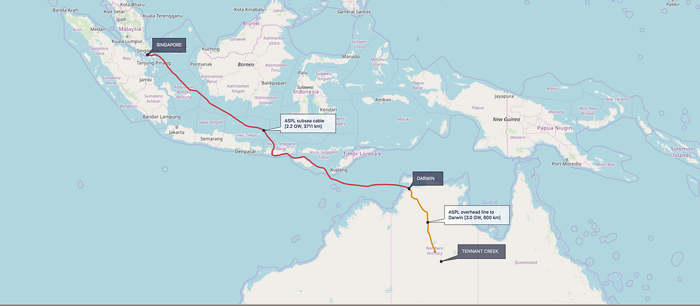
    image
    https://sciencealert.com/world-s-largest-solar-farm-to-pipe-power-internationally-from-australia-under-the-sea
  • How I Use A Barbell Investing Strategy To Avoid Financial Ruin
    +1 hank I found Barron's to be worthwhile as well-just made sure to skip perma-bull Alan Abelson's melancholy market insights !
  • William Bengen Revisits the Safe Withdrawal Rate At Retirement
    Bengen says based on the current environment he thinks a new retiree should be safe if they start with a withdrawal rate of…no more than 5%.
    https://fa-mag.com/news/choosing-the-highest-safe-withdrawal-rate-at-retirement
  • How I Use A Barbell Investing Strategy To Avoid Financial Ruin
    @Baseball_Fan, I haven’t followed many of @FD1000‘s posts as members’ reputed past performance doesn’t interest me. However, I do enjoy learning about new innovative funds, the trends among various markets, changes at the fund houses where I invest, Fed policy, and different ways of constructing portfolios. So those who have studied FD’s performance posts are the ones that may want to respond. I do enjoy reading Barrons. It may well be that some here are better investors than the ones quoted there. But, I don’t feel Barrons is a waste of money either. I think it’s been helpful to me over many years. Have read it since the early 70s (which pre-dates MFO) :)
    Here’s the quote I earlier referenced. My recollection as to the specific article may have been incorrect. This is from an article that appeared in April 2020 in Barrons. However, I think there has been more said in Barrons. I just don’t have the wherewithal to go back and reread every copy.
    - “Industrial analyst Deane Dray also believes safety is important, but he recommends investors take a so-called barbell approach. He suggests an 80% weighting in safer stocks, while reserving 20% for more-cyclical names.” (Article posted online by Barrons April 1, 2020)
    -
    Here’s what I was able to dig up on Dray’s experience. Doesn’t mean he knows more than any of us. But he doesn’t sound like a lightweight either.
    Experience
    RBC (Royal Bank of Canada) Capital Markets Managing Director Since Sep 2014 - (tenure 6 years 2 months) - Sellside equity research analyst covering the Multi-Industry & Electrical Equipment sector.
    Citi Global Research Director - Jun 2010 - Sep 2014 (4 years 4 months)
    New York City Senior equity research analyst covering the Multi-Industry & Electrical Equipment sector. Global sector leader of Industrials. Global sector leader of the water sector
    FBR Capital Markets Senior Industrials Analyst
    FBR Jan 2009 - Jun 2010 (1 year 6 months)
    New York Senior equity research analyst covering the Multi-Industry & Electrical Equipment Sector.
    Goldman Sachs Vice President
    Goldman Sachs 1997 - 2009 12 years
    Greater New York City Area Senior equity research analyst covering
    the Multi-Industry & Electrical Equipment Sector.
    Lehman Brothers Vice President
    Lehman Brothers 1987 - 1997 10 years
    Greater New York City Area
    Education
    New York University - Leonard N. Stern School of Business
    Master of Business Administration (M.B.A.)Finance
    1980 - 1982
    Brown University
    Bachelor's DegreeDouble major: Political Science and Law & Society
    1976 - 1980
    Activities and Societies: Cum Laude Deerfield Academy Deerfield Academy
    Deerfield Academy 1972 - 1976
    Licenses & Certifications Chartered Financial Analyst
    Sourced from Linkedin https://www.linkedin.com/in/deane-dray-cfa-1b1b53a2
  • How I Use A Barbell Investing Strategy To Avoid Financial Ruin
    Hi All, hmm, candidly, I personally do not doubt that FD1K is a better investor than many professionals, regardless if he does or does not know more about the markets than the professionals, excuse me, so called professionals. He might not be caught up in market dogma, group think, career risk, other people's money, etc...wasn't their some website that tracked the "guru's" and how their predictions panned out, most of them had a batting average of well below 40%...
    My real life experience has shown me that many MBA holders from some well known schools are not really that sharp, no common sense, no practical knowledge, BS'd their way thru school, Daddy paid their way thru, had the right connections, taught by career academics who have never walked the walk. I saw a homework assignment come off a fax *ya, it was a few years ago from a co worker from a "Top 10 MBA program" and I thought, WTF, I've had way tougher questions when I was going to the local community college that the class was being taught by a guy who was a youngish retired executive from a tech company and had a net worth over $75MM, came to class like he just cleaned his garage, uber casual. Also was in a executive program class with a gal who was an analyst from a top investment firm...I wouldn't give them a dime of my dough to invest, I have no idea how she got that job but she sure had the credentials from an east coast school etc...no business acumen at all! My old boss had a MBA from the same "Top 10"MBA progam...to quote my finance director....a mental midget when it came to running a business and understanding finance, etc.
    Don't buy into the experts etc, think for yourself, think clearly, be open minded.
    Best to all,
    Baseball_Fan
  • How I Use A Barbell Investing Strategy To Avoid Financial Ruin
    “When you hear the phrase "barbell strategy" among investment professionals it has a wide spectrum of meaning ...”
    That’s been my experience as well. I recall a recent Barron’s “Mid-Year Roundup” (or whatever they call it) in which a couple money managers alluded to moving to the barbell approach. Seems to me they feel the “middle-ground” investment approach is in trouble now because typical income-earning investments aren’t working. That’s due to not just low rates on investment grade bonds. EM & HY bonds hadn’t done much either this year up to that point. And look at the disaster PRFDX - once considered a conservative fund - has experienced lately.
    In short, I think some professional managers had decided to “gamble” a bit more out on the “growthier” risk end of the portfolios, but also to keep a higher amount in cash and high quality bonds. One even alluded to expecting losses with his bonds, but felt they offered some protection in the event of a severe market sell off. (Sorry. No link - I read the print Barrons and don’t have time to track the story down. Additionally, Barrons is tough to link due to its paywall.)
    Footnote - EM bond funds may have turned around since that story, especially if unhedged, as the dollar’s now weakened substantially. Just checked PRELX. It’s flat over 13 weeks and ahead 2.4% over the past 4 weeks, reflecting the weaker dollar.
  • Jesse Livermore – Upside Down Markets – Understanding Fiscal and Monetary Policy
    We seek to answer the simple question: against a horrible economic backdrop, how can the stock market be near all-time highs? Jesse explains in detail the impact that fiscal policy has had on the market and may have in the future.
    jesse-livermore-upside-down-markets-understanding-fiscal-and-monetary-policy-invest-like-the-best
  • Maximal Drawdowns
    +1 sma That's why I look at the worst 3 month period(not limited to calendar quarters) listed at Schwab for any funds I invest in. The period covered seems to go back to the 2007-2008 timeframe.
  • Why rising rates isn't that bad for bonds
    It's all good, FD. PIMIX is still good for long term holders. I'm meeting my goals. That is what is important to me. Keep convincing yourself that getting 5% per year with low SD is the only game in town. I guess there's a reason people live in Georgia :o}
    Again, the thread is not about me but after you couldn't come up with anything to debunk the original post you resort to make it personal. I never said that what I do is the only game in town, it works extremely well for our portfolio. I actually posted many times that the average Joe should buy several funds (indexes+managed) and hardly trade.
    But, please don't worry about me. I posted the following about a week ago, so I will just copy it below.
    Remember, since I retired in 2018, we have enough money to sustain our standard of living for another 40-50 years if our portfolio will make just 4% annually including inflation. Our portfolio is 35+ times our annual expense without our SS. This is why I set up the following goals: make 6% average annually with the lowest SD I can get (preferably under 3) and never lose 3% from any last top. We don’t care about maximizing performance anymore but to meet our specific goals. To do that I use mainly bond mutual funds + several short term trades (hours-days) using stocks/ETF/CEFs/other. The 3 year results are much better than my goals. I never lost more than 1% from any last top in the last 3 years. Below is a copy from my Schwab accounts as of yesterday 10/14/2020 which is about 95% of our total money. There is no way to achieve these results without being a good trader and why I posted other funds too
    3 year performance/SD...SPY 13.1%/17.7...VBINX (60/40) 10%/11.1....VWIAX (40/60) 7.04/6.6%...PIMIX 3.75%/5.6....IOFIX 0.2%/23.7
    My portfolio performance was 9.9% annually for 3 year with SD=2.18
    Below you can see an image of performance as of 10/14/2020 from Schwab. Column 1=one year...Column 2=YTD...Column 3=one year...Column 4=3 years
    image
    Below is the SD for one year and 3 years
    image
    BTW, welcome to MFO.
  • Fixed income investing
    Why would you choose this over say BIV? or the more volatile FTBFX?

    Plug the symbols into Portfolio Visualizer and you'll see why. Not only does TCW have the best returns dating back to 2007 (with no down years) but lowest SD and highest Sharp. It's not even really close.
    Huh? Do you also graph them $10k growth for 10-9-8-7-6-5-4-3-2-1y-ytd? That's the first thing I do.
    From 8y on in, the other two match or much more often outperform TGMLX, except for ytd.
    Same 4* rating as Fido bond too.
    TGMLX has rather nicer behavior last March, but that's it.
    Check it out:
    http://quotes.morningstar.com/chart/fund/chart.action?t=TGLMX
    So I was just asking what the compelling argument is.
    Good outperformance by it 2007-2011, yes. A long time ago.
  • 25 Surprising Facts About Warren Buffett
    He looks to a poem when markets decline.
    (From) his 2017 letter to shareholders, .... “The light can at any time go from green to red without pausing at yellow. When major declines occur, however, they offer extraordinary opportunities to those who are not handicapped by debt. That's the time to heed these lines from Kipling's If
    If you can keep your head when all about you are losing theirs ...
    If you can wait and not be tired by waiting ...
    If you can think -- and not make thoughts your aim ...
    If you can trust yourself when all men doubt you ...
    Yours is the Earth and everything that's in it.

    Source / Above Excerpted From
  • How I Use A Barbell Investing Strategy To Avoid Financial Ruin
    if you've won the game stop playing.
    Ah, the Suze Orman approach to investing (circa 2007):
    Do you enjoy spending money? Oh, yes. My greatest pleasure is still flying private. I spend between $300,000 to $500,000, depending on my year, on flying private.
    What do you do with the rest of your money? Save it and build it in municipal bonds. I buy zero-coupon municipal bonds, and all the bonds I buy are triple-A-rated and insured so that even if the city goes under, I get my money.
    (Even Orman concedes that in this low interest rate environment she puts some money into stocks, though most is still in munis.)
    I'd like to introduce the "Dumbbell portfolio"
    :-)
    Universal Basic Income being discussed
    The idea isn’t new. As [David] Frum notes, Friederich Hayek endorsed it. In 1962, the libertarian economist Milton Friedman advocated a minimum guaranteed income via a “negative income tax.” In 1967, Martin Luther King Jr. said, “The solution to poverty is to abolish it directly by a now widely discussed measure: the guaranteed income.” Richard Nixon unsuccessfully tried to pass a version of Friedman’s plan a few years later, and his Democratic opponent in the 1972 presidential election, George McGovern, also suggested a guaranteed annual income.
    https://www.theatlantic.com/politics/archive/2014/08/why-arent-reformicons-pushing-a-guaranteed-basic-income/375600/
    Virtually every fund prospectuses (including those pertaining to bond funds) contains the warning: “You may lose money”.
    That includes not only bond funds but money market funds, including Treasury MMFs. It's a matter of understanding what the risks are and rationally evaluating whether particular choices are worth the risks to you. (I know that sounds like motherhood; the key word is rationally.)
  • Swimming With The Target-Date Whale
    Again, Fed's Bazooka has yet to be fired:
    As companies furloughed millions of workers and stock prices plunged through late March, Treasury Secretary Steven Mnuchin offered a glimmer of hope: The government was about to step in with a $4 trillion bazooka.
    The scope of that promise hinged on the Federal Reserve.
    NYT Article:
    https://nytimes.com/2020/10/21/business/economy/fed-lifeline-funds.html